Govt rolls out mission to rejuvenate Yamuna
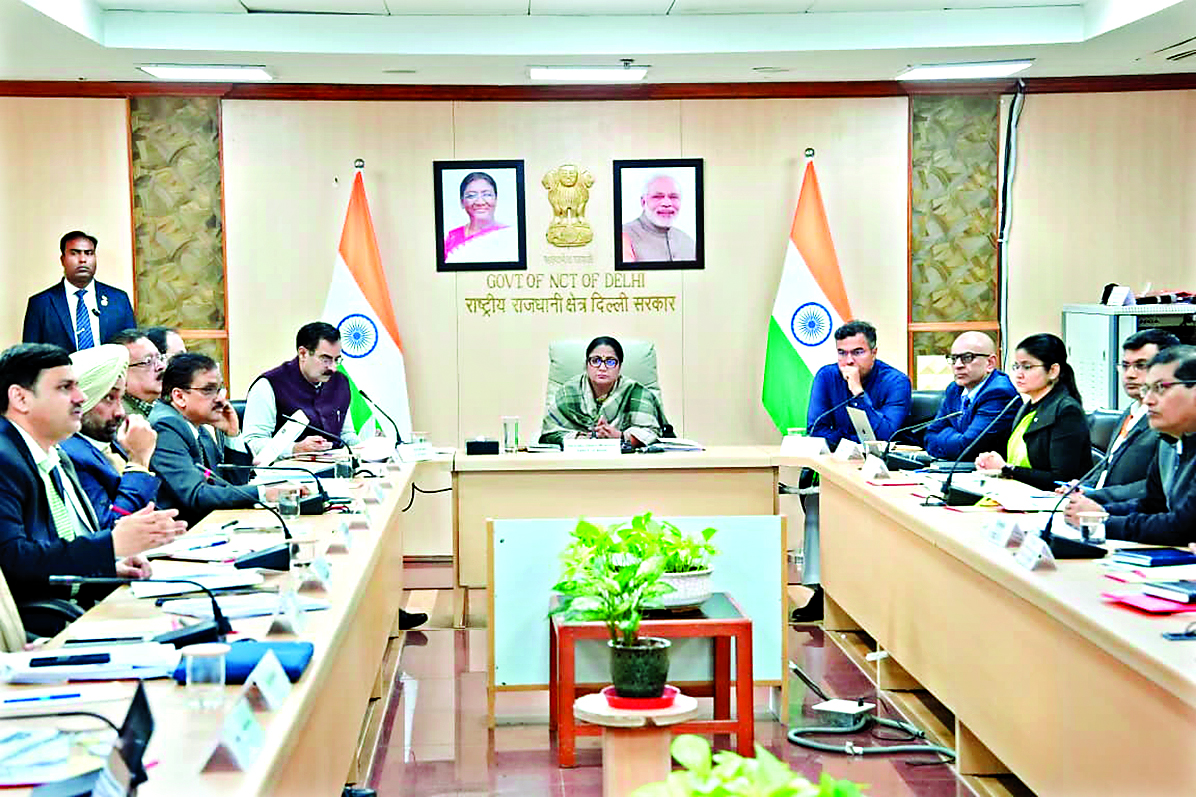


New Delhi: Chief Minister Rekha Gupta on Wednesday unveiled a comprehensive, mission-mode action plan to rejuvenate the Yamuna, asserting that the river is not merely a water body but “the lifeline of Delhi” and must be restored through scientific planning, strict timelines and close coordination with neighbouring states.
Chairing a high-level review meeting at the Delhi Secretariat, the Chief Minister reviewed the status of sewage treatment, drain cleaning, sewer connectivity in unauthorised colonies and pollution control measures. “The Yamuna is not just a River, it is Delhi’s lifeline. Our government is committed to restoring it through scientific planning, fixed timelines and coordinated action,” she said. A key pillar of the plan is a massive expansion of sewage treatment capacity. At present, 37 sewage treatment plants (STPs) treat about 814 million gallons per day (MGD) of wastewater. The government has set a target to raise this capacity to 1,500 MGD. “This is Delhi’s largest-ever sewage mission for Yamuna rejuvenation,” the Chief Minister said.
Officials informed the meeting that 56 MGD capacity will be added by upgrading existing facilities by December 2027. Another 170 MGD will come from 35 new decentralised STPs, while large plants near major drains will add 460 MGD by December 2028. “The biggest benefit will be that no untreated sewage will enter the Yamuna,” the Chief Minister emphasised.
Work on sewer connectivity is also being accelerated. Out of 675 JJ clusters, sewer work has been completed in 574, while single-point sewage collection is being arranged in 65 clusters. Under “Mission 2028”, all 1,799 unauthorised colonies will be connected to the sewer network between December 2026 and December 2028. “Unless every household is connected to the sewer network, the Yamuna cannot be fully restored,” she said.
For the first time, a technology-driven monitoring system has been introduced. Monthly water quality testing is being conducted at 47 identified hotspots, while drone surveys of drains connected to Najafgarh and Shahdara are being completed. “Drone mapping will help us accurately identify pollution sources and stop them at the root,” the Chief Minister said. She also stressed that inter-state coordination is crucial. “Coordination with neighbouring states is essential to make the Yamuna clean,” she said, noting that drains from Haryana and Uttar Pradesh contribute significantly to pollution. She said she would personally raise the issue with the Chief Ministers of both states.