From Garbage Mountains to Green Energy
Rekha Government’s ‘Trash to Transformation Model’


A Historic Step Toward a Clean, Healthy and Self-Reliant Delhi
For decades, the landfill sites at Ghazipur, Bhalswa, and Okhla stood as painful reminders of Delhi’s waste crisis. These sites are not just heaps of garbage but also symbols of pollution, health risks, and poor urban management. Today, Delhi is at a turning point as the Chief Minister Rekha Gupta-led Delhi government no longer sees waste as a burden, but as a resource. The Rekha government has made it clear that removing garbage mountains is not just about cleaning the city, but it is about using technology, fixed timelines, and transparent systems to deliver real change that improves daily life for citizens.
Mission Mode for a Landfill-Free Delhi
The promise made to the people is now visible on the ground. The Delhi government has set a target to eliminate legacy waste from Bhalswa and Okhla landfills by 2026–27. Further, work is moving ahead under the 3-T model of Technology, Transparency, and Target.
Earlier, only 7,500 metric tonnes of waste were processed per day. Now the capacity has increased to more than 35,000 metric tonnes per day. This means Delhi is not only managing new waste but also clearing decades-old garbage at a faster pace. For residents, this results in cleaner surroundings, reduced foul smell, and better public health conditions.
Through continuous bio-mining, about 76.65 lakh metric tonnes of waste have already been treated across the three landfill sites, and 45 acres of land has been reclaimed. It is pertinent to note that the garbage mountains that once rose nearly 60 meters high at Bhalswa and Okhla have now reduced to 30 to 40 meters. This visible reduction means cleaner air and safer neighborhoods for nearby communities
Going Beyond Cleanliness
The approach of the Delhi government has gone beyond cleanliness. The results of this transformation are multi-dimensional.
• Reduction in landfill size is lowering pollution levels
• Waste is being processed locally in a scientific manner
• Green energy production is increasing
• Dairy and rural communities are getting new income opportunities
This approach is moving Delhi toward a circular economy where waste becomes a resource. The direct benefit for citizens is better health, cleaner neighborhoods, and new economic opportunities.
From Political Will to Real Results
Regular review meetings, fixed timelines, and ground inspections under the CM Rekha Gupta-led government have accelerated this mission. For the first time, waste management has moved beyond paperwork to measurable outcomes.
This is improving the quality of life for Delhi’s residents in a visible and meaningful way.
From Cleanliness to Self-Reliance
Delhi’s changing skyline shows that long-standing problems can be solved with clear intent and strong policy action. Garbage mountains are gradually turning into green energy, reclaimed land, and cleaner air. This is not just about sanitation. It is about rebuilding Delhi’s identity as a cleaner, healthie,r and more self-reliant city.
Turning Waste into Wealth: The Delhi Way
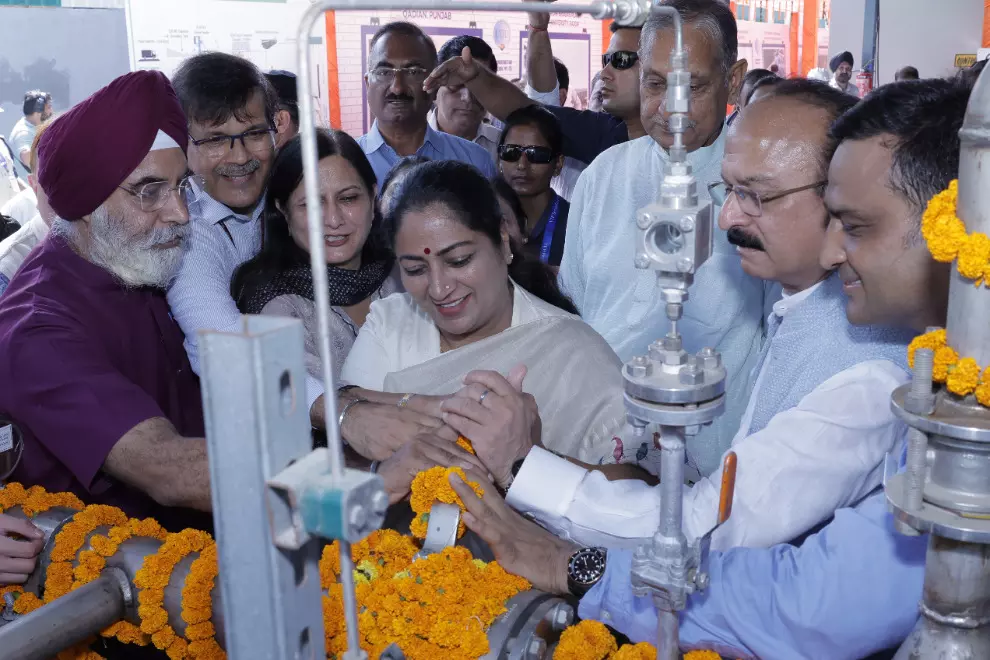
A major shift in policy is that waste is now being converted into energy and income. The waste-to-energy plant at Narela-Bawana processes 3,000 tonnes of waste every day. Work has also begun to increase the capacity of the Okhla plant to 2,950 tonnes per day. This ensures that garbage is converted into electricity instead of polluting the environment, directly benefiting households through cleaner power generation.
For wet waste management, bio-gas and CBG plants are being developed. At Nangli in Najafgarh, India’s first 200 TPD cow dung-based bio-gas plant has been operational. It produces clean energy and strengthens the local rural economy. Dairy owners receive 65 paise per kilogram for cow dung, creating an additional source of income. This also reduces untreated waste flowing into the Yamuna, which improves environmental health for the entire city.
Transformation in Traditional Mandis
The Rekha government has also expanded scientific waste management to key wholesale markets such as Azadpur Mandi. Plans are underway to set up compressed bio-gas and organic fertilizer units in Azadpur, Ghazipur, Okhla, and Narela mandis.
The clear instruction is simple. Waste must not be burned.
It must be scientifically processed. This reduces air pollution and generates clean fuel and organic manure. For traders and nearby residents, this means a cleaner work environment and better air quality.