
Delhi’s air hits young lungs
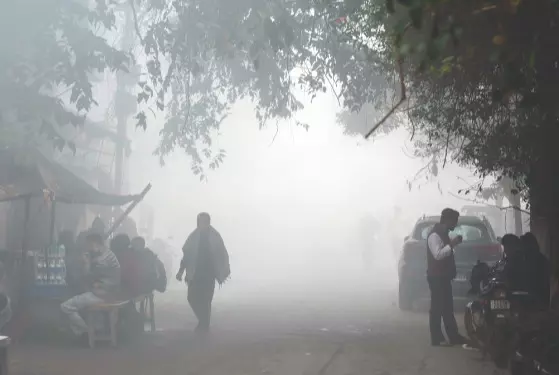


New Delhi: As Delhi’s air quality index continues to breach the 400 mark, paediatricians across the Capital are witnessing a disturbing trend: healthy children are falling ill with conditions they never had before. From breathing distress to skin inflammation, the city’s toxic air is taking a heavy toll on young bodies.
While speaking to some media, Dr Vivek Jain, senior director and unit head of Paediatrics at Fortis Healthcare, says children now fear hospital visits during pollution spikes. “They dread this season because they need more than just a cough syrup. Many require oxygen support,” he says.
One such case involved a three-year-old boy from Noida with no prior lung issues. After a week of severe smog exposure, he developed rapid breathing and dangerously low oxygen levels. “No infection was detected.
This was pure pollution-triggered airway inflammation,” Dr Jain explains.
The child required hospitalisation and oxygen support for several days. Fine particulate matter and toxic gases
inflamed the bronchioles, narrowing the airways and impairing oxygen flow.
Pollution has also reactivated dormant respiratory conditions. A seven-year-old girl from Ghaziabad, symptom-free most of the year, experiences recurrent wheezing every winter. During high pollution periods, she develops persistent cough and night-time wheeze, requiring nebulisation and steroid therapy.
“Air pollutants act as powerful non-allergic triggers, increasing airway sensitivity and inflammation,” says
Dr Jain.
ENT issues are also resurfacing. A five-year-old boy from Shalimar Bagh, who had undergone tonsil surgery earlier, began experiencing nasal blockage, mouth breathing and snoring as AQI levels worsened. “Pollutants trigger lymphoid tissue inflammation, leading to re-enlargement of adenoids,” Dr Jain says, adding that medication failed and surgical intervention became necessary.
Even infants are not spared. A six-month-old baby from Vaishali develops severe skin inflammation every winter despite proper care. “Pollution damages the skin barrier, increases water loss and inflammation, making standard treatments less effective,” Dr Jain explains.
Reduced physical capacity is another alarming sign. An 11-year-old girl from Rohini, previously active in sports, reported breathlessness after mild activity during smoggy days. Tests ruled out infection. “Short-term exposure to polluted air can impair lung
function even in healthy children,” Dr Jain says.
To protect children during high AQI periods, Dr Jain advises limiting outdoor exposure, using high-efficiency air purifiers, and ventilating homes only when pollution levels dip, typically around midday. He recommends avoiding indoor smoke, using well-fitted
N95 masks outdoors, keeping children hydrated, focusing on antioxidant-rich diets, and planning activities based on AQI levels.



