Delhi logs 50 hours of dense fog in January, highest since 2019


New Delhi: Delhi saw around 50 hours of dense fog in January so far, the maximum in the month since 2019, a senior India Meteorological Department (IMD) official said on Tuesday.
Senior IMD scientist R K Jenamani also said the cold wave spell in Delhi in January this year was the longest in a decade.
“Delhi recorded a minimum temperature equal to or less than 4 degrees Celsius on 7 days (January 3 to January 9) in 2013, with the lowest minimum temperature of 1.9 degrees Celsius on January 6,” he said.
This year, the national capital recorded a cold wave spell from January 5 to January 9, with the lowest minimum temperature of 1.9 degrees Celsius on January 8, according to the IMD data.
“Delhi has recorded around 50 hours of dense fog this month so far, which is the highest since 2019,” Jenamani said.
The senior meteorologist attributed the long spell of intense cold to a large gap between two western disturbances, which meant frosty winds from the snow-clad mountains blew in for a longer-than-usual period. The city has recorded below-normal maximum temperatures this month so far due to dense fog that reduced sunshine hours. Low day temperatures mean early cooling and early fog formation in the evening, he said. The Safdarjung observatory had logged a minimum temperature of 3.8 degrees Celsius on Monday, 1.9 degrees Celsius on Sunday, 2.2 degrees Celsius on Saturday, 4 degrees Celsius on Friday and 3 degrees Celsius on Thursday.
Monday was also the fifth consecutive day that Delhi’s minimum temperature was lower than most hill stations in Himachal Pradesh and Uttarakhand.
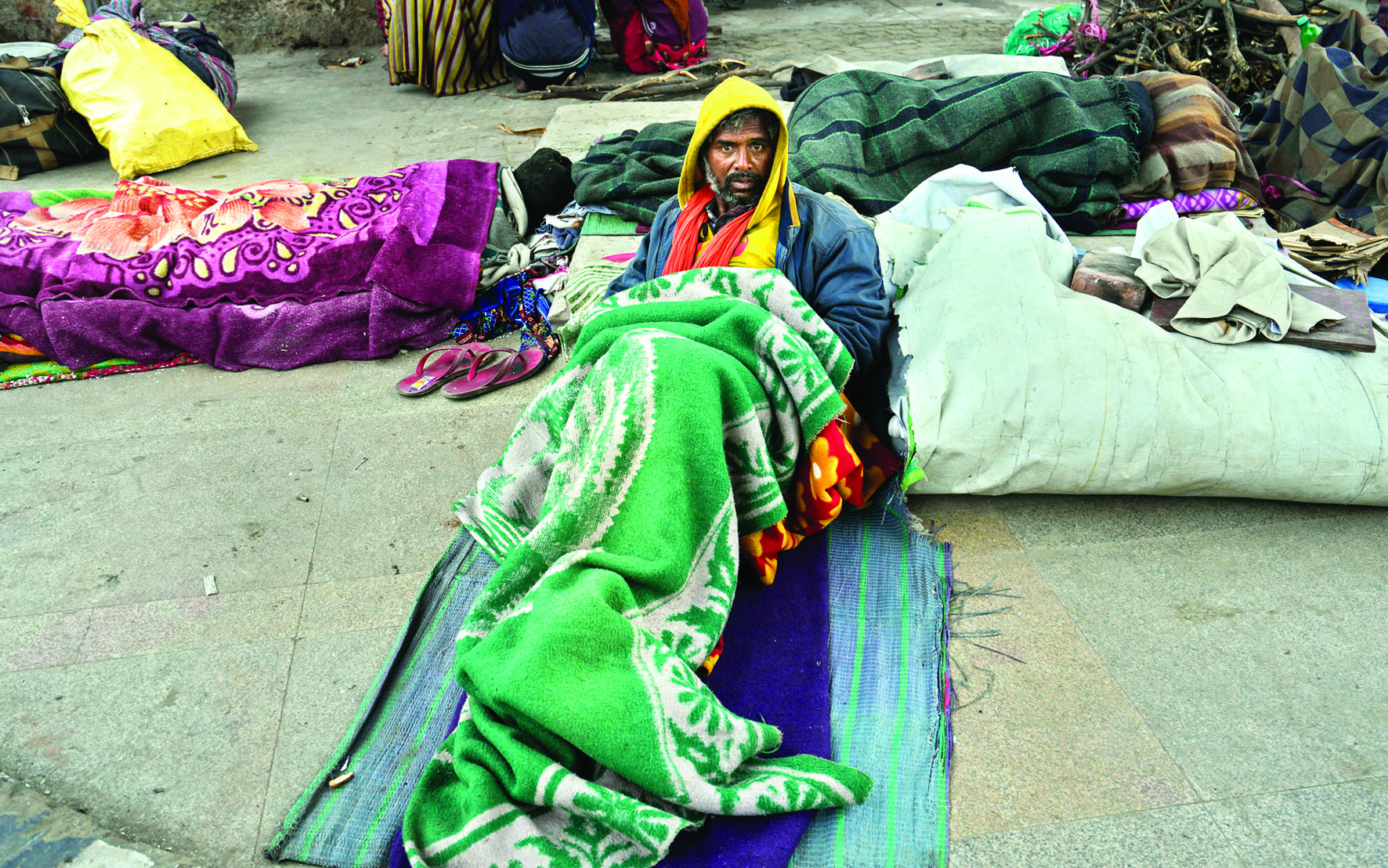
Chilly weather in Delhi since the start of January strained power grids and posed challenges to homeless people. It also prompted the Delhi government to extend winter vacations in schools till January 15.
Meanwhile, Delhi’s air quality remained severe for a second consecutive day on Tuesday due to unfavourable meteorological conditions though pollution levels are likely to ameliorate in the coming days, forecasting agencies said.
The city’s air quality index had deteriorated to the “severe” category on Monday after a gap of around two months, prompting the Commission for Air Quality Management (CAQM) to direct all NCR states to implement anti-pollution curbs with greater vigour.
Delhi’s 24-hour average AQI stood at 407 at 4 pm on Tuesday. It was 434 on Monday and 371 on Sunday.