
Delhi govt to fuse hospitals into AIIMS-style giant
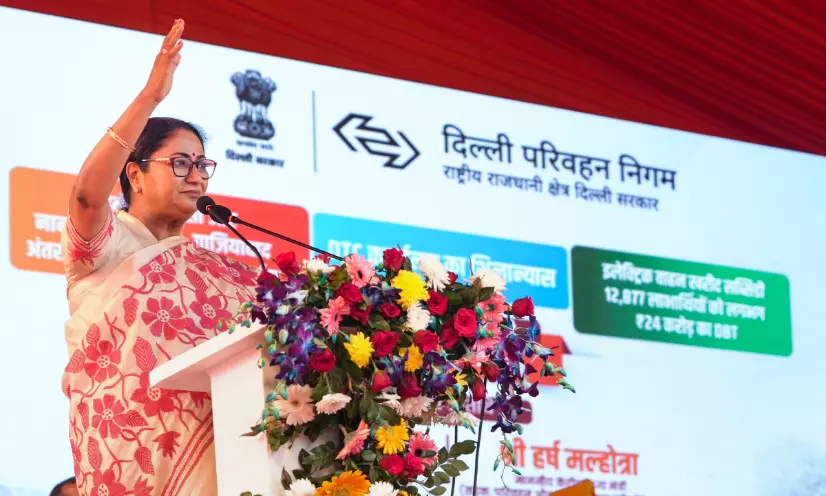


New Delhi: The Delhi government has unveiled an ambitious plan to integrate major state-run medical institutions to strengthen healthcare delivery and significantly expand medical education capacity, Chief Minister Rekha Gupta said on Sunday.
The proposed integration will bring together Guru Teg Bahadur Hospital (GTB), Delhi State Cancer Institute (DSCI), and Rajiv Gandhi Super Speciality Hospital (RGSSH) into a single autonomous institution, modelled on the lines of All India Institute of Medical Sciences. In parallel, the government is working to develop Institute of Human Behaviour and Allied Sciences (IHBAS) into a second National Institute of Mental Health and Neurosciences.
Highlighting the vision behind the move, the Chief Minister said, “The integration of key medical institutions in Delhi will not only strengthen healthcare services but also significantly improve medical education.” She added that the initiative is expected to “pave the way for a substantial increase in MBBS and postgraduate (PG) seats.” A central focus of the plan is to address the shortage of specialist doctors by expanding PG training opportunities. Gupta noted that fragmented resources and manpower across institutions have led to underutilisation. “By integrating similar departments and pooling faculty, we can optimise resources and automatically increase PG seats,”
she said. Under existing medical norms, an associate professor can guide two PG students, while a professor can supervise three. With the consolidation of faculty from the three hospitals, the number of PG seats is expected to rise significantly without proportionate new hiring. Officials indicated that key departments such as radiology, pathology, and anaesthesia are likely to witness a major jump in seat availability. Radiology seats, currently limited, could increase to around 22, while pathology may see nearly 26 seats and anaesthesia up to 48. The expansion will also be supported by filling vacant faculty positions across institutions.
The integration will further enable the introduction of PG courses in specialised areas that currently lack such programmes. At DSCI, new seats are expected in fields such as radiation oncology, nuclear medicine, cancer research, and intensive care. Similarly, RGSSH is likely to introduce super-speciality PG seats in cardiology and cardiac surgery. Emphasising the long-term impact, Gupta said, “A key objective of this project is to significantly increase PG seats so that more doctors can receive specialist training and the quality of healthcare can be enhanced.”
The Chief Minister also outlined plans to expand MBBS seats in the future by increasing bed capacity, patient load, and faculty strength. Supporting infrastructure such as hostels, modern laboratories, and lecture theatres will be developed to ensure a better academic environment. Reiterating the broader vision, Gupta said, “Delhi will be developed as a national hub for medical education and research.” She added that the initiative aims to “optimize the use of faculty, infrastructure, and advanced medical equipment, offering students better training and enhanced research opportunities.” The government believes that this integrated model will not only improve patient care but also position Delhi as a frontrunner in advanced healthcare, medical education, and research.



