Delhi activates six new air quality monitoring stations


New Delhi: In a significant boost to its fight against air pollution, Delhi has activated six new Continuous Ambient Air Quality Monitoring Stations (CAAQMS), taking the Capital’s total network to 46, the highest in the country. The new stations are already streaming live data, strengthening real-time pollution tracking and paving the way for tighter, data-driven interventions.
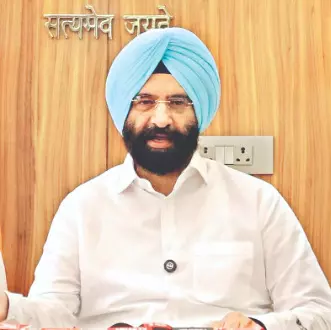
Announcing the development, Environment Minister Manjinder Singh Sirsa said the expansion reflects the government’s commitment to scientific and transparent air quality management under the leadership of Chief Minister Rekha Gupta.
“These new stations mark a leap in data-driven action against pollution. Live data already empowers targeted interventions, and CPCB integration will ensure seamless, city-wide insights, proving Delhi’s commitment to cleaner air is measurable and relentless,” Sirsa said.
The six stations have been installed at Jawaharlal Nehru University (JNU), Indira Gandhi National Open University (IGNOU), ISRO Earth Station near Malcha Mahal in Central Ridge, Delhi Cantonment, Commonwealth Sports Complex, and Netaji Subhash University of Technology (West Campus). Data from these locations is now available on the Delhi Pollution Control Committee (DPCC) website.
Officials said the stations are currently under close performance evaluation, with full integration into the Central Pollution Control Board (CPCB) network expected within a week. Once integrated, the data will contribute to the national Air Quality Index (AQI) system, improving overall accuracy and coordination. With 30 stations managed by DPCC and additional units operated by IMD/IITM and CPCB, Delhi’s expanded network provides hyper-local readings of PM2.5, PM10 and other pollutants. Authorities said the data will also be used to study pollution’s impact on flora and fauna across different ecosystems in the city.
Highlighting the broader strategy, Sirsa added, “Under CM Rekha Gupta’s guidance, we’re acting decisively on mitigation as well as monitoring. These systems debunk myths with facts, from vehicular emissions to dust control, building public trust through transparency and science-backed progress.” The activation follows parallel measures such as the ‘Vayu Rakshak’ enforcement drive involving 100 personnel and plans to set up 14 more monitoring stations. “Pollution demands sustained action, and our expanded network guarantees accountability at every level,”
the Minister said, asserting that Delhi remains at the forefront of urban air quality management in India.