
PNGRB launches study on vehicular fuels amid India’s energy transition
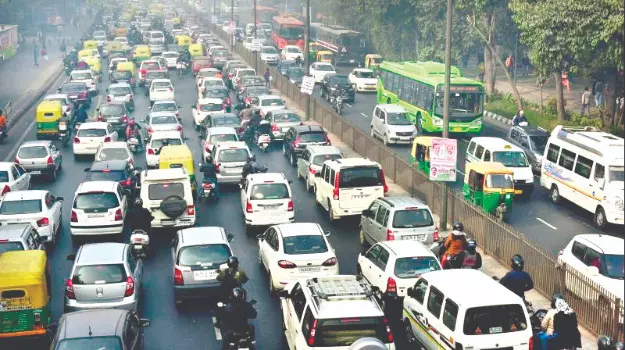


New Delhi: With transport accounting for nearly half of particulate pollution in Indian cities and road vehicles contributing the bulk of urban emissions, the Petroleum and Natural Gas Regulatory Board (PNGRB) on Tuesday launched a comprehensive study to reassess vehicular fuels as India navigates its energy transition.
The study, titled Comparative Assessment of Vehicular Fuels in India’s Energy Transition: A Multi-Dimensional Approach, is being undertaken by TERI under the aegis of PNGRB, with participation from city gas distribution entities including IGL, MGL, GAIL Gas, Gujarat Gas, Assam Gas, Green Gas and the Association of CGD Entities (ACE).
Data presented at the launch highlighted the scale of the challenge. India faces persistently poor air quality, with six of the world’s ten most polluted cities in 2022. In cities such as Delhi and Bengaluru, transport contributes up to 49% of particulate matter emissions, while diesel-heavy fleets remain a major source of nitrogen oxides (NOx) and PM₂.₅. Current PM₂.₅ levels in many urban centres exceed World Health Organisation annual guidelines by more than ten times.
The presentation also showed that older heavy-duty diesel vehicles emit NOx at levels up to 14 times higher than those of BS-VI-compliant vehicles, reinforcing the urgency of cleaner fuel transitions. Switching half of diesel buses to CNG and electric alternatives, the study noted, could significantly reduce daily particulate emissions in urban areas.
At the same time, India’s broader energy context complicates a single-technology solution. Coal continues to dominate the primary energy mix at 58%, while crude oil accounts for 29% and natural gas just 7%. Although non-fossil generation capacity has reached nearly 50%, its share of electricity generation remains around 25%, even as electricity demand rises due to air-conditioning, data centres, and industrial electrification.
“Knowledge-backed products will always be welcomed and supported by stakeholders. The government should focus on knowledge-driven decisions,” said Anil Kumar Jain, Chairperson of PNGRB, underscoring the need for evidence-led policy making in the transport sector.
Against this backdrop, the PNGRB-led study will compare electric vehicles, natural gas-based vehicles, and petrol and diesel options across technical, environmental, economic, social and geopolitical parameters. It will also develop emission-based weightage frameworks to guide incentives and identify conditions under which natural gas can act as a credible transition fuel between now and 2047.
TERI Director-General Vibha Dhawan said the assessment would factor in affordability, infrastructure readiness, and energy security, alongside emission-reduction goals, to support balanced transport policy choices in a rapidly growing economy.



