
PM’s ‘no policy ping-pong’ doctrine anchors Budget: FM
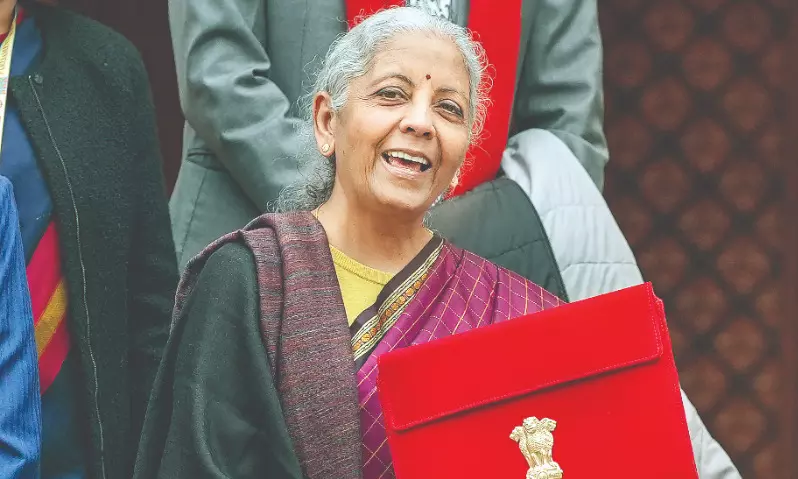


New Delhi: Prime Minister Narendra Modi’s emphasis on avoiding “policy ping-pong” has shaped the Union Budget 2026-27, which is anchored in policy stability while laying the pathways for the long-term vision of a ‘Viksit Bharat’ at its core, Finance Minister Nirmala Sitharaman said.
Framed as the first Budget of a new five-year fiscal cycle and the second quarter of the 21st century, it prioritises capital expenditure, infrastructure expansion and structural reforms over populist measures, while maintaining fiscal discipline.
By emphasising predictable policymaking, sustained investment and multi-year planning extending to 2047 and beyond, the Budget seeks to strengthen economic resilience, crowd in private investment and position India for durable, export-led growth.
“People want stability, and that is why they have elected Prime Minister Modi for the third time. Stability is inherent in that vote, and it is equally reflected in the way policies are executed through successive budgets,” Sitharaman said.
She said the Prime Minister’s third consecutive electoral victory represented a clear public endorsement of political and policy stability, which the government sees as central to India’s long-term growth strategy.
Emphasising the government’s focus on policy continuity, she said the Prime Minister has consistently stressed the need to avoid abrupt shifts in direction. “The Prime Minister always speaks of avoiding ‘policy ping-pong’. Once a policy direction is announced, the government remains steady in its execution,” she said.
Sitharaman said the Budget should not be viewed merely as a one-year financial exercise, but as part of a longer planning horizon. The finance minister noted that the Budget marks the first year of the second quarter of the 21st century, the first year of a new government term, and the beginning of a new five-year fiscal cycle.
“We are also looking ahead to 2047 and beyond, up to 2050. The focus is on building a Viksit Bharat by the centenary year of Independence and preparing India over the next 25 years for future challenges and opportunities,” she said. According to the finance minister, this long-term perspective will guide policymaking across sectors, with an emphasis on sustained growth, institutional strength and economic resilience in the decades ahead.
Speaking about public expenditure towards infrastructure development, Sitharaman said capital expenditure is one of the success stories of this government. The CPSE route and budgeted provisions for various government departments have yielded remarkable results in infrastructure development after the COVID pandemic, she pointed out.
However, the role of states in utilising 50-year interest-free loans has been equally impressive, with many states showcasing signature projects and demonstrating their capacity to absorb more funds, she added.
Moreover, the finance minister said the government will soon constitute a High-Level Committee on Banking for Viksit Bharat to draw up a blueprint to create mega-lenders capable of meeting the financing needs of a developed India.
“We want the committee to tell us what kind of things we need to do so that banking is made available for funding Viksit Bharat,” she said. Asked if it would suggest a merger of public sector banks, Sitharaman said one should not narrow it down like that.
“It is for India’s banking sector to be made big enough, big enough in the sense, made or primed to take care of Viksit Bharat funding. You have to reach Viksit Bharat destination...it (Viksit Bharat) needs money, it needs financing, it needs credit, it needs banking facility to reach the common man.” When asked about the timeframe for formation of the committee, she said, “We will do it at the earliest”.
“I propose setting up a ‘High Level Committee on Banking for Viksit Bharat’ to comprehensively review the sector and align it with India’s next phase of growth, while safeguarding financial stability, inclusion and consumer protection,” she had said in the Budget speech on February 1. To achieve scale and improve efficiency in the public sector NBFCs, as a first step, the Budget also proposed to restructure the Power Finance Corporation (PFC) and
Rural Electrification Corporation (REC).



