
From Vande Bharat to station revamp: Railways’ 2025 milestones lay foundation for 2026


New Delhi: Indian Railways has ended the year 2025 with a bang, paving the way for a faster, safer, and passenger-friendly railway system as the country readies itself for a new year - 2026 - on the horizon. And it is through innovation, indigenisation, and substantial infrastructure development work that the Indian Government on Sunday reported that Indian Railways has registered major milestones in passenger, freight, safety, station redevelopment, and connectivity schemes, which further cements Indian Railways as one among India’s growth momentum drivers.
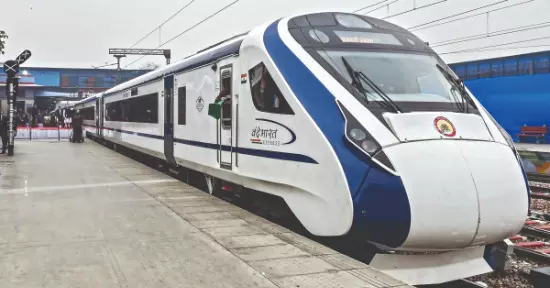
With its focus on commuters as the priority in its agenda, Indian Railways has increased the number of comfortable and affordable journeys while launching new-generation trains as well as upgraded railway stations featuring airport-like services, according to the end-of-year report by the Ministry of Railways. With new services of the Vande Bharat Express catching on and the first Vande Bharat Sleeper on the horizon, long-distance journeys by trains are on the cusp of a revolutionary change with increased speed, modern amenities, and faster times, as 15 new Vande Bharat Express services were launched in 2025, increasing the overall number of services in the railway network to 164, while the new sleeper model is destined to revolutionize overnight journeys for those traveling in the AC class.
Affordable comfort was further extended by the Amrit Bharat Express, which offered totally non-AC trains meant to provide a better travel experience for the common man. Thirteen Amrit Bharat trains were inducted during the year, bringing the cumulative at 30 running in the country.
Simultaneously, two Namo Bharat Rapid Rail trains began running in the Bhuj-Ahmedabad and Jaynagar-Patna sections, enhancing connectivity in the short to medium distance range in the high-traffic route sections. For managing rush and heavy gatherings, the Indian Railways ran a record 43,000 special train services throughout the year. Of this, over 17,000 services were used for the Maha Kumbh event, and the rest for Holi, summer travel, and Chhath Puja festivities.
The passenger facilities also experienced a noticeable makeover in the year 2025, with major renovations to stations under the Amrit Bharat Station Scheme on a large scale. As of the end of the year, 155 stations had been completely revamped to provide improved toilets, lifts and escalators, food courts, widened entrances, enhanced waiting areas, digital signage, and facilities for the Divyangjans.
Renovation activity has been initiated for the remaining 1,182 stations to transform railway stations into comprehensive regional nodes rather than just transportation nodes. The addition of regional cuisine in the catering services has also increased the flavour of the journey with a focus on cleanliness and quality.
Safety: The issue of safety has also received considerable attention throughout the year, and serious train accidents have decreased to a record low. From an average of 171 accidents every year from 2004 to 2014, the number of accidents now is the lowest at 11 in the period of 2025-26 till now.
The decrease, according to the Centre, has been due to a substantial boost in the safety budget of almost three times, massive installation of fog safety systems, improvement in signalling systems, and subsequent enhancement of Kavach, the indigenous Automatic Train Protection System.
Over 738 route kilometres, Kavach Version 4.0 has been introduced, and further installation is also impending. The application of AI, such as wildlife protection systems and warning systems for loco pilots, AI-based CCTV surveillance in stations and in coaches, and advanced signalling systems, further strengthened rail operations and safety. Railway infrastructure observed extensive upgrades to allow faster, comfortable, and reliable operations. Over 900 km of new lines were opened, while 6,880 km of track renewal of rails had taken place, and total track renewal work had been done on 7,051 km of track during the period from April to November 2025.
Sector speeds had been increased to 130 kmph on select routes and to 110 kmph on over 4,000 km of track. The rate of electrification had also moved at a fast tempo, with almost the entire broad gauge rail network, to the tune of 99.2 per cent, having been electrified, putting the country ahead of various major rail networks in the world.
Several iconic projects were commissioned this year. Completion of the Udhampur-Srinagar-Baramulla Rail Link has provided Kashmir with all-weather rail connectivity. This includes such iconic structures as the Chenab Bridge, which is the highest railway arch bridge in the world. In Northeast India, the Bairabi-Sairang railway link has brought Aizawl to the railway map for the first time. This has provided significant integration. Commissioning of India’s first vertical-lift railway sea bridge in the form of the New Pamban Bridge has augmented connectivity between Rameswaram. This has helped to provide significant opportunities for integration between India and Sri Lanka.
Indian Railways is also making equal progress in its Mumbai - Ahmadabad High-Speed Railway, which reached over 55 per cent physical completion by November 2025 with the use of high-tech construction methods and technical collaboration with Japan.
Freight-wise: The Railways strengthened its second ranking freight carrier globally and progressively advanced towards the goal of handling 3,000 million tons of freight every year by 2029-30. Freight Corridors handled over 400 trains on a daily basis, reducing the burden on other lines and enhancing overall punctuality.
Construction of Gati Shakti Cargo Terminals, the highest-ever wagon manufacturing output, and streamlined freight tariffs were some of the contributing factors that helped the Railways register record achievements, including the milestone of one billion tons of freight loading in FY 2025-26. Record freight shipments like the inaugural food grain train to Anantnag and auto trains to Mizoram signified the enhancement of logistical reach in remote and special areas.
Indigenisation continued to be a key agenda of the growth story with conglomerate manufacturing of LHB coaches and electric locomotives under the Make in India and Atmanirbhar Bharat campaign. PPP-driven manufacturing of locomotives at Madhepura, Marhowra, and Dahod not only enhanced domestic capabilities but also helped in meeting international demand with export offerings.
Sustainability and Digital Transformation: The pace of both sustainability and digital transformation accelerated during the year, with over 2,600 stations turned into solar-powered stations and free Wi-Fi services made operational at over 6,100 stations. The launch of the RailOne app marked the rise of a single integrated digital platform for passengers, and Aadhaar-verified schemes for ticketing have reduced abuse.
As the year 2025 comes to an end, the Railways in India have given back to the country a total of 42 projects, having a cost of over Rs 25,000 crores, making it a year of taking firm steps and achieving results.



