
All key sensitive sectors protected under India-US Interim trade pact: Commerce Secy
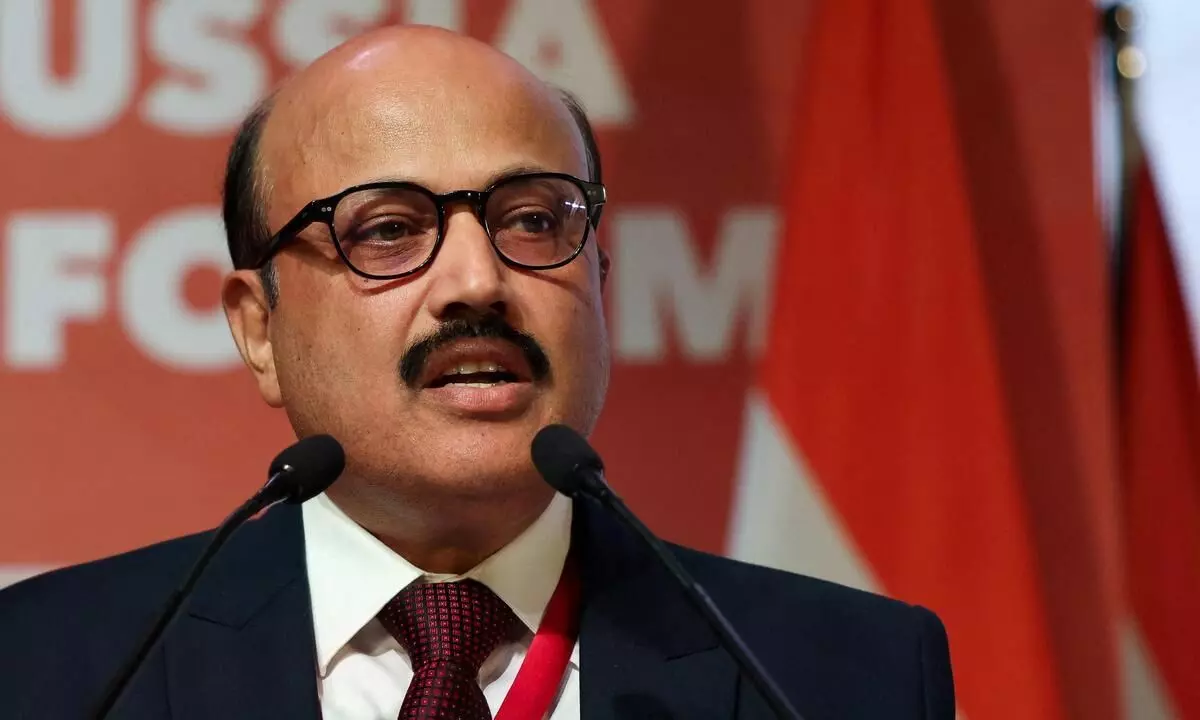


Nuremberg: India has always negotiated with a "clear mindset" on sectors that are "very" sensitive for the country in trade pacts and has protected all those key segments under the interim trade agreement with the US, Commerce Secretary Rajesh Agrawal said. He also said that both teams are working to convert the joint statement into a legal agreement, which is expected to be finalised and signed before the end of March. "India has always negotiated all agreements with a clear mindset, anything that is very sensitive to India, anything where we feel our farmers, fishermen, dairy, they are going to be impacted, we have been very clear to our partner countries that India can not open up or provide access," he told reporters here. "If you look at all the agreements that we have done in the last year, five trade agreements that we did -- all the sensitive sectors have been protected. In the US, all the key sensitive sectors have been protected. Wherever there is a little sensitivity, we have used tariff rate quota mechanisms to ensure that any market access is limited in nature and it doesn't impact our farmers," he added.
Under the interim trade pact, which was announced earlier this month, India has fully protected sensitive agricultural and dairy products such as maize, wheat, rice, soya, poultry, milk, cheese, ethanol (fuel), tobacco, certain vegetables and meat, as no duty concessions have been granted to the US on these goods under the pact. These goods are sensitive as it involves the livelihood of small and marginal farmers of the country. In other Free Trade Agreements (FTA), India has not extended any import duty concessions on sensitive agri and dairy products. It has recently finalised FTAs with the European Union, the UK and Australia. Agriculture and allied activities such as animal husbandry form the backbone of India's rural economy, employing over 500 million people. Unlike in developed economies, where agriculture is highly mechanised and corporatised, in India, it is a livelihood issue. India's agriculture sector is currently protected by moderate to high tariffs or import duties and regulations to shield domestic farmers from unfair competition. The US agri exports to India were USD 1.6 billion in 2024. Key exports include Almonds (in shell, USD 868 million); Pistachios (USD 121 million), Apples (USD 21 million), Ethanol (ethyl alcohol, USD 266 million). The secretary is here for the Biofach 2026 show, where over 100 Indian exhibitors and about 20 states are showcasing their organic products. The European Union (EU) is a big market for these goods. "The teams are working on it, and by March, we are hopeful to make it (interim trade pact with the US) official," Agrawal said. Talking about the labour-intensive sectors, he said the pact with the US will give them an edge as compared to the competitor nations, which are facing higher tariffs than India in the American market.
The reciprocal tariffs on India will be reduced to 18 per cent, while it is 35 per cent for China and 20 per cent for Vietnam. "Since the US has been a strong market for the labour-intensive sector, with this interim agreement, there will be an advantage to our labour-intensive sectors. They will be able to grow unhindered. "So my sense is that Indian exporters will be able to compete with their competitors, revive and rejuvenate the supply chains that they might have missed out during the Christmas time and see that Indian exports not only grow but do well as they were doing last year, and also grow in the coming years," the secretary said. Labour-intensive sectors such as textiles, apparel, marine, gems and jewellery were impacted due to the steep 50 per cent tariffs imposed by the US. The Trump-administration has removed the 25 per cent punitive tariffs and will cut down the reciprocal tariffs to 18 per cent from 25 per cent.



