Adani sets 1 bn tonnes cargo target by 2030 as APSEZ crosses 500 mn tonnes milestone
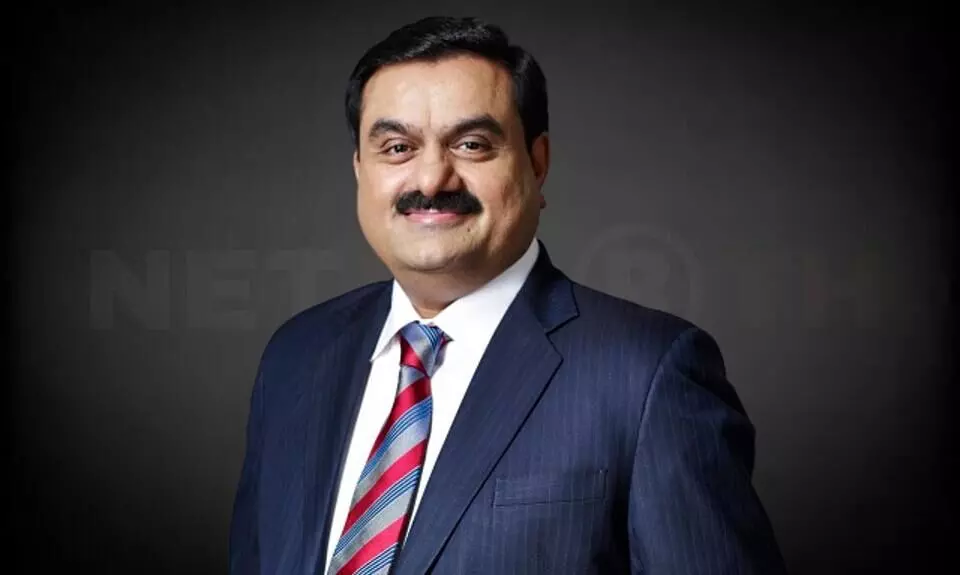


New Delhi: Billionaire Gautam Adani on Friday said his conglomerate's port arm is targeting cargo volumes of 1 billion tonnes by 2030, after the company surpassed 500 million tonnes milestone, underscoring the rapid scale-up of India's largest port operator.
Speaking on the occasion of Adani Ports and Special Economic Zone (APSEZ) crossing the milestone, Chairman Adani said the group's ports network has expanded into an integrated system of 20 ports across India and international locations, positioning it as a key enabler of trade and logistics flows.
He said APSEZ's logistics and marine services businesses are expected to grow fivefold over the next five years, as India enters a phase where logistics capacity will become a strategic driver of economic growth.
The milestone marks a significant step in the ports-to-energy conglomerate's ambition to scale up infrastructure capacity in line with India's rising trade and industrial demand.
Highlighting the pace of expansion, Adani said it took the company 16 years to reach its first 100 million tonnes of cargo, but subsequent growth accelerated sharply, with the last 200 million tonnes added in just four years.
Adani also outlined organisational changes aimed at improving execution, including a shift to a flatter, three-layer structure to push decision-making closer to operations and enhance responsiveness.
He added that the company is increasing its focus on frontline empowerment and partner ecosystems to support long-term growth, while crediting employees and on-ground workers for building the business.
"It is often said that an explorer is shaped by the path he undertakes, just as the path awaits an explorer worthy of it. I have long believed that there are no final destinations in the life of an explorer.
"There are only moments of pause, when you look back with wonder at the distance you have travelled, and then find within yourself the strength to begin again," he said.
Calling the crossing of 500 million tonnes of cargo an "extraordinary achievement of APSEZ", he said the achievements of this scale are never just about numbers but about legacy.
"Numbers measure performance. Legacy measures something deeper. It measures the audacity of vision, the endurance of belief, and the courage to target what most would not even dare imagine," he said.
Dwelling into the group's business philosophy, Adani said great organizations are built twice - first, in the mind through hope, self-belief, conviction, and second, in the real world, where dreams are constructed, moment by moment, brick by brick, hand by hand.
Milestones such as those achieved by APSEZ can never be measured in business terms alone. "They are about our people - about those who chose to believe in me, to walk with me and to build with me," he said. "They are about our memories - of struggles, of victories, of setbacks - all of which came to define the Adani spirit."
Mundra in Gujarat, APSEZ's first port, gave vision to the group's philosophy, its first physical form. "It is here that our belief became reality, courage became commitment, and conviction became concrete."
"I still clearly remember many trips, driving overnight in an old Contessa car, from Ahmedabad to Mundra... There were really no roads to Mundra in the 1990s, and even I am amazed that we did it.
"Because no one in their right mind would have driven through the night to a place that, at the time, looked less like the future of ports and Indian logistics and more like a giant endless marshland at the very edge of western India," he said.
In moments of despair, his long-time confidant, Malay Mahadevia, broke into the iconic song "Rote hue aate hain sab. Hansta hua jo jaayega. Woh muqaddar ka Sikandar Woh muqaddar ka Sikandar Jaan-e-man kehlayega," he recalled.
"Somehow, in the middle of that vast emptiness, the philosophy of a song celebrating Alexander the Great became our own private anthem. And perhaps, without even fully realizing it, this gave voice to something deep within us - the stubborn belief that if destiny does not come to you on its own, then you must go out and build it yourself," he said.
Adani said the truth about all great institutions ever built is this: they do not begin because the future is fully visible; they begin because their conviction is stronger than their doubts.
"That, my friends, is the story of Mundra," he said. "Mundra was the spark. This spark became the nucleus of APSEZ. APSEZ became the nucleus of the Adani Group. And the Adani Group became the nucleus for Indian infrastructure."
From the shores of India, the idea then scaled to Hazira, to Dahej, to Kandla (all in Gujarat), to Dhamra (in Odisha), to Krishnapatnam (in Andhra Pradesh), to Kattupalli in Tamil Nadu, to Gangavaram in Andhra Pradesh, to Ennore in Tamil Nadu, to Karaikal, to Vizhinjam in Kerala and then beyond India's shores to Australia, Israel, Sri Lanka, and Tanzania.
"What we built is not a collection of assets. It is a living network. 20 ports. One system. One operating philosophy. One overriding purpose of Nation Building," he said.