‘Worst year on record’: Foreign investors pull Rs 1.6 lakh crore from Indian equities in 2025
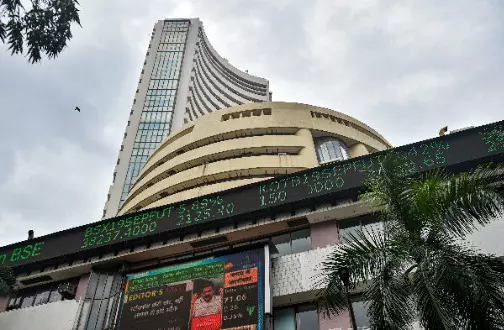


New Delhi: Foreign investors staged an unprecedented retreat from Indian equities in 2025, withdrawing a record Rs 1.6 lakh crore, or about $18 billion, as a combination of volatile currency movements, global trade frictions and elevated valuations weighed on risk appetite. The scale of the outflows marked the worst year on record for equity flows into India, even as market participants look to a turnaround in 2026.
Rising US bond yields, a stronger dollar and persistent geopolitical uncertainty prompted global capital to gravitate towards developed markets, draining funds from emerging markets, including India. Potential US tariff actions and broader trade tensions added to the cautious mood, while bouts of rupee depreciation eroded dollar-based returns and pushed up hedging costs for foreign investors.
Despite the weak performance this year, expectations for a recovery remain intact. “We expect FPIs to return sustainably in India as nominal growth and earnings pick up in CY26. Closure of the trade deal with the US should narrow tariff differentials, while Fed rate cuts will keep the dollar soft, favouring emerging-market assets,” said Garima Kapoor, deputy head of research and economist at Elara Securities India.
Domestic factors are also expected to support a revival in flows. Vikas Gupta, chief executive officer and chief investment strategist at OmniScience Capital, said India’s earnings growth relative to peers, policy continuity and reforms, particularly around the Union Budget, could act as important triggers for renewed foreign interest.
Still, uncertainty on the global macroeconomic front continues to influence foreign portfolio investor behaviour. “The trajectory of global interest rates, especially the timing and pace of rate cuts, along with developments on tariffs, will be key drivers,” said Himanshu Srivastava, principal manager for research at Morningstar Investment Research India. He added that a moderation in US bond yields and a softer dollar could support a revival in equity inflows.
Data from depositories show that foreign portfolio investors had pulled out Rs 1.58 lakh crore from Indian equity markets as of December 26, while investing more than Rs 59,000 crore in debt during the same period. The equity outflow surpassed the previous record withdrawal of Rs 1.21 lakh crore in 2022 and followed a marginal net inflow of Rs 427 crore in 2024. In contrast, 2023 had recorded robust equity investments of Rs 1.71 lakh crore.
Analysts attribute the exodus to a mix of global and domestic pressures. Persistently high US interest rates and elevated bond yields improved risk-free returns in developed markets, encouraging capital rotation and strengthening the dollar, which tightened financial conditions for emerging markets, Srivastava said. Geopolitical risks related to energy prices, supply chains and trade disputes periodically weighed on sentiment through the year.
At home, elevated valuations in select segments prompted tactical profit-taking. Sorbh Gupta, head of equities at Bajaj Finserv Asset Management, said these moves reflected short-term adjustments rather than a reassessment of India’s long-term growth prospects. Monthly data highlight the volatility in flows. FPIs were net sellers in eight of the 12 months in 2025, with buying limited to April, May, June and October. Heavy selling early in the year saw over Rs 78,000 crore withdrawn in January alone, followed by cumulative outflows of Rs 1.16 lakh crore by the end of March amid escalating trade tensions. A brief recovery between April and June brought net investments of Rs 38,600 crore, but selling resumed from July to September. After a short-lived return in October with Rs 14,610 crore of inflows, FPIs again turned sellers in November and December on weak global cues.
The equity sell-off was cushioned by strong domestic institutional buying, supported by rising systematic investment plan inflows from retail investors. In contrast to equities, FPIs showed a clear preference for debt, attracted by India’s inclusion in global bond indices, favourable yield differentials and portfolio rebalancing during volatile equity conditions. The phased inclusion of Indian government bonds under the Fully Accessible Route in indices such as the JP Morgan Global Emerging Markets Index created steady demand from passive funds, Srivastava said. Gupta of OmniScience Capital noted that foreign investors likely booked gains in equities and rotated part of those funds into debt under the FAR to lock in higher interest rates ahead of an expected rate-cutting cycle, with potential upside from capital gains once cuts materialise.with agency inputs