
UP finalises 13.39 crore voters after purge of around 2 crore names
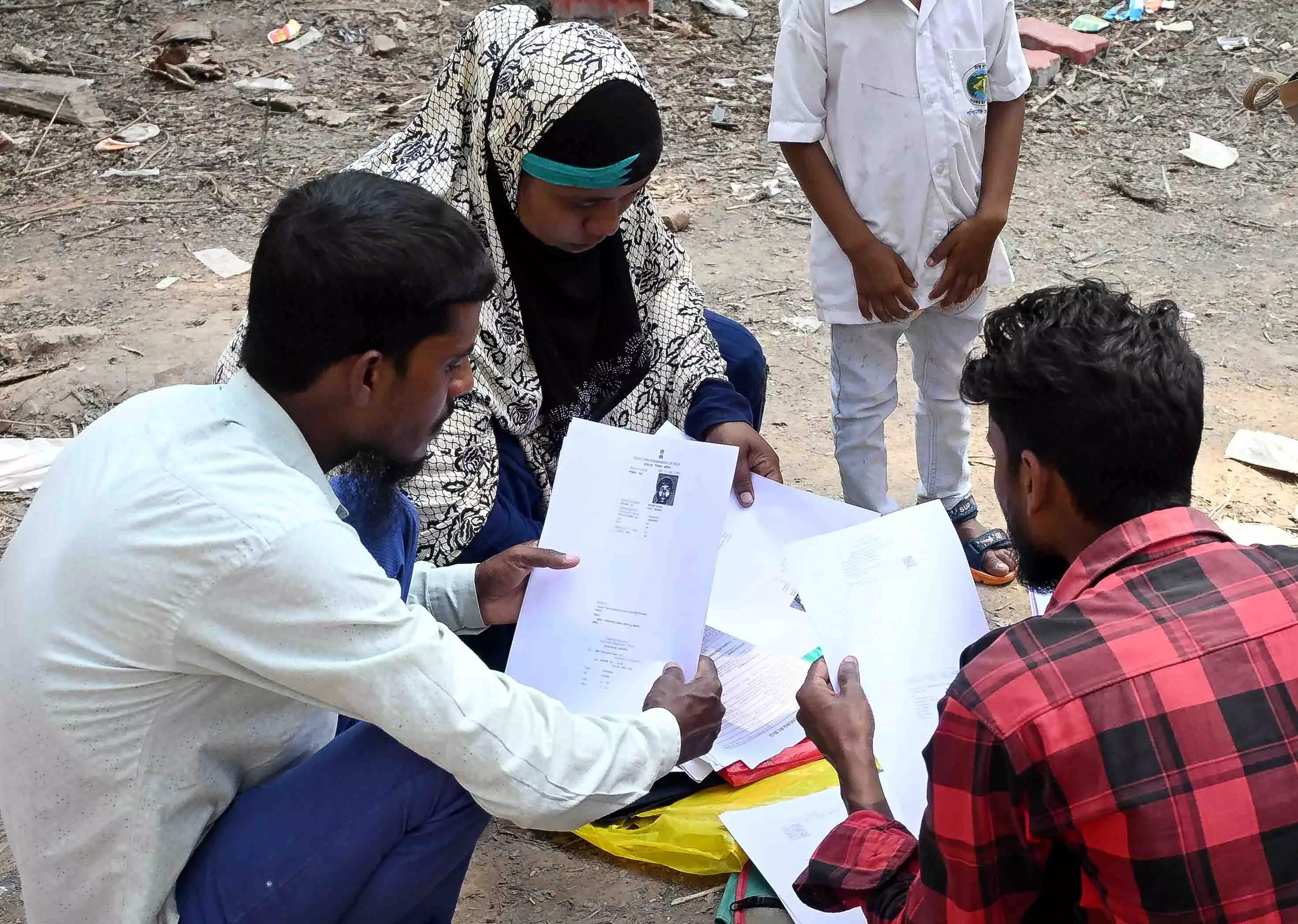


Lucknow: Uttar Pradesh has finalised an electorate of 13.39 crore voters following a sweeping revision exercise that combined large-scale deletions with fresh enrolments, reshaping the state’s electoral rolls ahead of upcoming elections. The final list, published on April 10 after a 166-day Special Intensive Revision (SIR), reflects a net increase of more than 84 lakh voters even as around two crore names were removed during verification, underscoring both expansion and consolidation in the country’s largest electoral base.
Chief Electoral Officer Navdeep Rinwa said the revision, conducted between October 27, 2025 and April 10, 2026, aimed to improve accuracy by removing duplicate, shifted and unverifiable entries while ensuring that eligible citizens were added. “If a name present in the draft roll is missing in the final list, it is either due to a Form-6 application or a decision taken by the Electoral Registration Officer after due hearing,” he said, adding that no deletion was carried out without following due process.
The final roll places the total number of voters at 13,39,84,792, comprising 7,30,71,071 male voters and 6,09,09,525 female voters, along with 4,206 third gender voters. Compared to the draft roll published on January 6, which had 12,55,56,025 voters, the electorate grew by 84,28,767. The increase includes 42,27,902 male voters, 42,00,778 female voters and 87 third gender voters.
A notable feature of the revision is the surge in young voters. The number of electors aged 18 to 19 rose sharply from 3,33,981 in the draft roll to 17,63,360 in the final list, an increase of 14,29,379. Despite the jump, this age group accounts for about 1.32 per cent of the total electorate. The gender ratio also improved from 824 to 834 female voters per 1,000 male voters, indicating a gradual narrowing of the gap.
Officials described the verification process as one of the most extensive undertaken in the state. Around 1.04 crore voters were identified as “non-mapped” during field checks, while 2.22 crore entries showed logical discrepancies. After notices were issued starting January 14 and hearings conducted between January 31 and March 27, a substantial number of such entries were removed, leading to the deletion of roughly two crore names.
The exercise covered all 75 districts, 403 assembly constituencies and polling stations statewide. It involved 75 district election officers, 403 electoral registration officers, 12,758 assistant EROs, 18,026 booth-level officer supervisors and 1,77,516 booth-level officers. In addition, 5,82,877 booth-level agents from recognised political parties participated in the process, alongside extensive public cooperation and awareness campaigns across media platforms.
Political parties were engaged throughout the revision, with five formal meetings held between October 2025 and January 2026 and 904 meetings conducted at the district level. A total of 107 memoranda were submitted by parties, including 85 from the Samajwadi Party, 10 from the Bharatiya Janata Party and nine from the Congress, among others. Officials said all complaints raised were addressed during the process.
Regionally, Prayagraj recorded the highest increase in voters at 3,29,421, followed by Lucknow with 2,85,961, Bareilly with over 2,57,000, Ghaziabad with 2,43,666 and Jaunpur with 2,37,590. At the assembly segment level, Sahibabad in Ghaziabad saw the largest rise with 82,898 additional voters, followed by Jaunpur (Assembly segment 366) with 56,118. Lucknow West, Loni and Firozabad also reported significant increases.
Rinwa said the scale of participation reflected coordinated efforts by election authorities, political stakeholders and voters. He also outlined a grievance redressal mechanism, noting that individuals dissatisfied with decisions can file a first appeal before the district magistrate within 15 days of the final roll’s publication, and a second appeal before the Chief Electoral Officer within 30 days of the district authority’s decision.
With 13.39 crore registered voters, Uttar Pradesh remains the country’s most consequential electoral arena, where even small changes in voter composition can influence outcomes across constituencies.



