
Temperatures plunge across north, east India
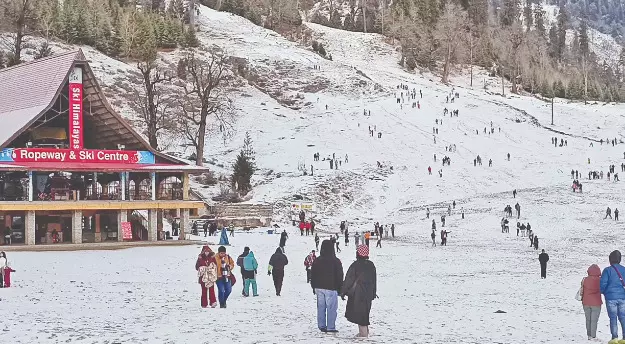


New Delhi: Winter tightened its grip across large parts of northern and eastern India on Tuesday, bringing snowfall to higher reaches, plunging night temperatures and widespread cold day conditions, including the first such spell of the season in the national capital. The chill disrupted daily life in several states, prompting administrative measures such as trekking bans, extended school vacations and coldwave alerts as the India Meteorological Department warned that low temperatures and fog were likely to persist over the next few days.
The IMD said light rainfall or snowfall was likely to continue in Jammu and Kashmir, Himachal Pradesh and Uttarakhand under the influence of a feeble western disturbance. Minimum temperatures dipped sharply across the western Himalayan region, falling below zero degrees Celsius at many places in Jammu, Kashmir, Ladakh, Gilgit-Baltistan and Muzaffarabad. A few locations in Himachal Pradesh and Uttarakhand recorded lows between zero and five degrees, while much of Uttar Pradesh and Rajasthan saw minimum temperatures ranging from five to ten degrees.
Himachal Pradesh remained in the grip of a piercing cold wave, with several places recording temperatures close to the freezing point. Tabo in Lahaul and Spiti was the coldest location, registering a minimum temperature of minus 10.8 degrees Celsius on Monday night, after recording minus 10.2 degrees the previous night, which was the lowest of the season until then. Meteorological officials said water pipes froze in many mid and higher hill areas, disrupting drinking water supply, while high-altitude tribal and uninhabited regions experienced arctic-like conditions, with temperatures staying 12 to 18 degrees below freezing.
Anticipating worsening weather, the administration in Kangra district imposed a complete ban on all trekking activities above 3,000 metres. Officials said the decision was taken to prevent accidents and ensure the safety of trekkers as snowfall and extreme cold were forecast to continue.
In the national capital, residents experienced the season’s first cold day, with the IMD indicating that similar conditions were likely to prevail on Wednesday as well. Maximum temperatures in Delhi hovered between 13 and 16 degrees Celsius. The IMD defines a cold day when the maximum temperature remains 4.5 to 6.4 degrees below normal. On Tuesday, Delhi’s maximum temperature was recorded at 15.7 degrees Celsius, 3.3 notches below the seasonal average, while the minimum temperature settled at 7.6 degrees Celsius, slightly above normal by 0.7 degrees.
In Jammu and Kashmir, Gulmarg in Baramulla district emerged as the coldest place on Monday night, recording a minimum temperature of minus 8.6 degrees Celsius. Light snowfall was reported in parts of the higher reaches, including stretches of the Mughal Road and upper areas of Ganderbal. Officials said minimum temperatures across the Kashmir Valley dipped further, with Srinagar recording a low of minus 4 degrees Celsius, down from minus 3.6 degrees the previous night.
Severe cold conditions were also reported from Rajasthan, where night temperatures dropped below 10 degrees Celsius in several areas. Four locations recorded minimum temperatures below five degrees. Dense fog compounded the chill, particularly in the early morning hours. Jaipur witnessed dense fog for the first time this season, while large parts of the Bikaner, Kota and Udaipur divisions remained shrouded in thick fog. Visuals of people lighting bonfires to keep warm were common, and authorities said night shelters had been set up at various locations in cities to provide relief to the homeless.
The cold spell prompted the Rajasthan administration to extend winter vacations in schools, especially for primary classes, in over a dozen districts. Among those affected were Jaipur, Ganganagar, Hanumangarh and Sikar, where intense cold and persistent fog were cited as the reasons for the extension.
In eastern India, Jharkhand issued a coldwave alert after temperatures fell below 10 degrees Celsius in 10 districts. A yellow alert was sounded for districts including Garhwa, Palamu, Latehar, Lohardaga, Gumla and Chatra. Officials said coldwave conditions were likely to continue in these areas until January 7. Data from the past 24 hours till 8.30 am showed Gumla as the coldest place in the state at 2.2 degrees Celsius, followed by Khunti at 3.7 degrees and Lohardaga at 3.9 degrees.
Further east, Kolkata recorded its coldest January day in recent years as the minimum temperature plunged to 10.2 degrees Celsius. According to official data, the city’s minimum temperature in January had fallen below 11 degrees only once in the last 15 years, in 2023, when it touched 10.9 degrees. The IMD forecast that the chill was likely to intensify across southern West Bengal over the next two days.
Dense fog is expected to prevail across most districts of northern West Bengal in the coming days, particularly during early morning hours, potentially reducing visibility. Cold day conditions are also likely in parts of Dakshin Dinajpur, Uttar Dinajpur and Malda.
Advising caution, the IMD said people, especially the elderly and those with pre-existing health conditions, should take necessary precautions as the cold spell continues to tighten its hold across several regions of the country.



