SC stays HC order on Shahi Idgah survey
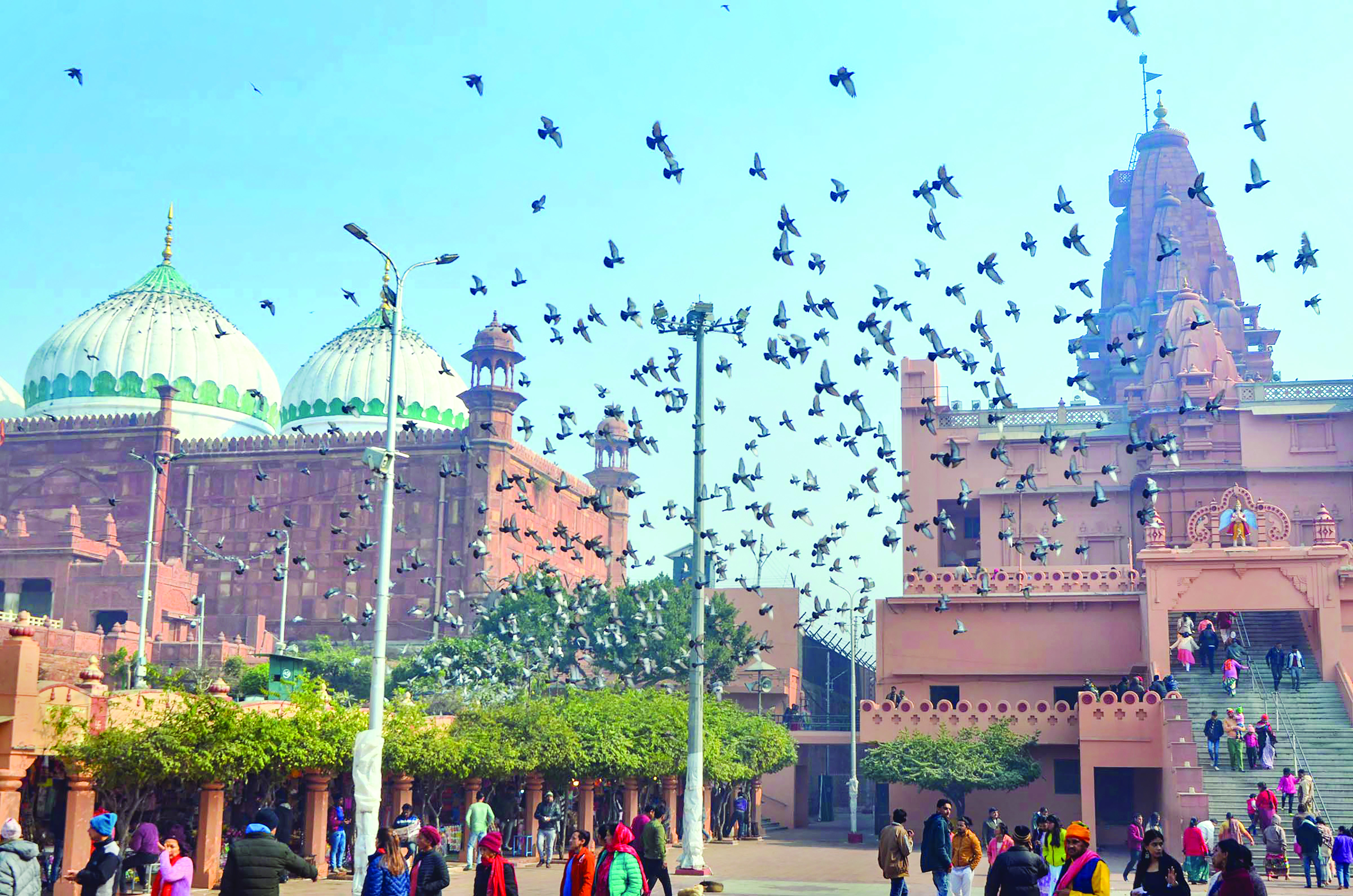


New Delhi: The Supreme Court on Tuesday stayed the execution of an Allahabad High Court order allowing a court-monitored survey of the Shahi Idgah mosque complex adjoining the Krishna Janmabhoomi temple in Mathura.
A two-judge bench, comprising Justices Sanjiv Khanna and Dipankar Datta, stayed the implementation of the December 14, 2023, order. The order had granted the Hindu side’s request for a court commissioner to oversee the survey of the mosque premises, which they claim bear signs of a former temple.
However, the apex court clarified that the high court proceedings in the dispute, including the suit’s maintainability under Order 7 Rule 11 of the Civil Procedure Code (CPC), will continue.
The bench raised concerns about the “vague” application filed before the High Court requesting the appointment of a court commissioner for the survey. “The prayer in the application is unclear,” remarked Justice Khanna to senior advocate Shyam Divan, representing Hindu bodies like Bhagwan Shri Krishna Virajman. “Such a vague application cannot justify appointing a court commissioner. You must be specific about the tasks you expect the local commissioner to undertake under Order 26 Rule 9 of the CPC. You cannot submit an omnibus application like this, leaving everything for the court to figure out,” Justice Khanna said.
Advocate Tasneem Ahmadi, appearing for the mosque management committee, argued that the High Court could not have passed the survey order while a separate application seeking to dismiss the suit, citing the Places of Worship Act 1991, was still pending. Ahmadi also highlighted another pending question before the High Court: the suit’s maintainability under Order 7 Rule 11 of the CPC.
She cited a recent Supreme Court judgment (Asma Lateef vs Shabbir Ahmad) stating that when an interim relief request in a lawsuit faces objections regarding maintainability or legal barriers from affected parties, the civil court must first establish a prima facie belief in the suit’s validity or lack of legal bars before granting the relief.
After considering Ahmadi’s arguments, the bench expressed reservations about the manner in which the application for the court commissioner was filed and acknowledged the legal issues arising from the case.
“Furthermore, the application for the local commissioner is extremely vague,” Justice Khanna pointed out. “Can such an application be accepted? We are staying the operation of the impugned order to the extent that the commission cannot be formed or function,” he said.
Divan opposed the order’s stay and urged the High Court be allowed to work out the modalities of the commission survey.
The bench issued a notice to the Hindu bodies, seeking their response by January 23, while reiterating that proceedings before the High Court, including the suit’s maintainability, will continue.
“Certain legal issues require consideration, including the question raised by a previous judgment of this court in Asma Lateef. While proceedings before the High Court can continue, the commission will not be formed or function in the meantime,” the bench stated in its order.
The Supreme Court was hearing a plea filed by the Committee of Management, Trust Shahi Masjid Idgah challenging the High Court’s order permitting the survey. The mosque committee argues that the High Court should have considered its petition to dismiss the lawsuit before deciding on any other miscellaneous applications.
The committee seeks dismissal based on the Places of Worship (Special Provisions) Act, 1991, which prohibits altering the character of religious sites. While allowing the survey, the High Court specified that the Mathura structure must not be harmed during the process, which it suggested could be overseen by a three-member commission of advocates.
The top court is also considering another petition filed by the mosque committee challenging the May 26, 2023 order of the High Court transferring all matters related to the dispute from a Mathura court to itself.