SC keeps Aravalli ruling in abeyance, flags ambiguity and regulatory gaps
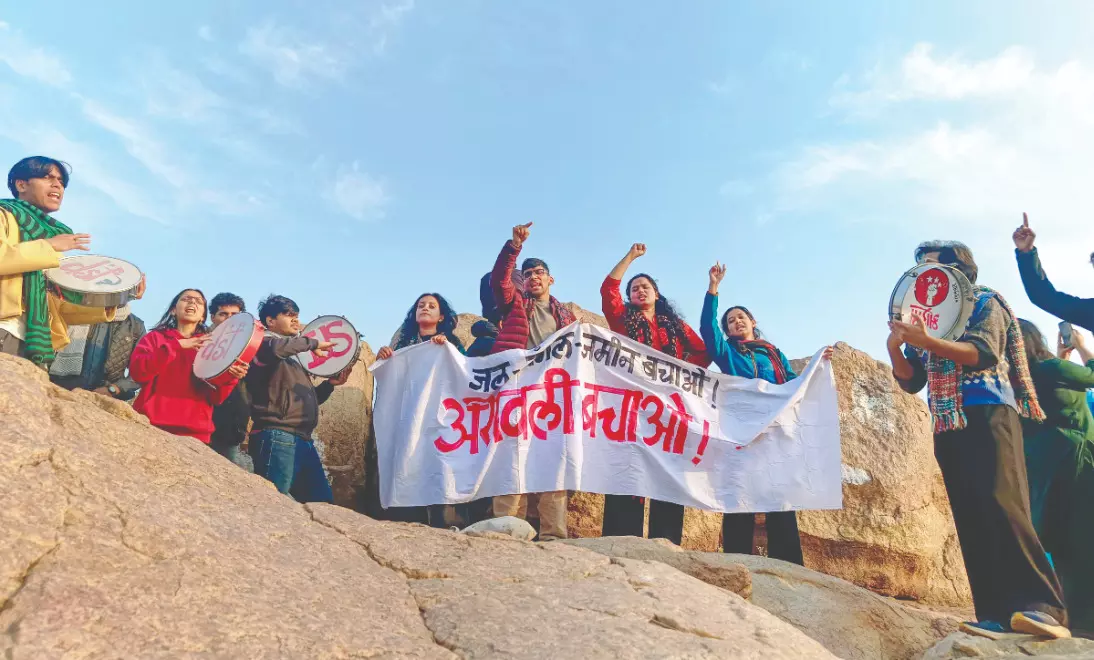


New Delhi: The Supreme Court on Monday kept in abeyance its own recent directions that had accepted a uniform definition of the Aravalli hills and ranges, deciding instead to constitute a high-powered expert panel to address what it described as critical ambiguities that could create regulatory gaps and weaken ecological safeguards for one of the world’s oldest mountain systems. The decision came amid sustained public dissent and criticism from environmental groups, who warned that the newly adopted criteria could significantly narrow the scope of protected areas and open large swathes of the Aravallis to mining and construction activity.
A three-judge vacation bench of the Supreme Court, headed by Chief Justice Surya Kant and comprising Justices J K Maheshwari and Augustine George Masih, said it appeared prima facie that both the recommendations of a government-appointed committee and the court’s judgment dated November 20 had failed to expressly clarify several vital issues. These omissions, the bench observed, warranted deeper examination before the framework was put into effect.
The court’s November 20 order had accepted a definition proposed by a committee of the Ministry of Environment, Forest and Climate Change. Under that proposal, an “Aravalli Hill” was defined as any landform in designated Aravalli districts with an elevation of 100 metres or more above local relief, while an “Aravalli Range” was described as a cluster of two or more such hills located within 500 metres of one another. The same order had imposed a ban on granting fresh mining leases within areas identified as Aravalli hills and ranges across Delhi, Haryana, Rajasthan and Gujarat until expert reports were received.
However, soon after the ruling, environmentalists and civil society groups raised concerns that the elevation threshold and distance criterion could exclude large parts of the Aravallis from protection. Critics argued that the definition would sharply reduce the area classified as ecologically sensitive, potentially allowing mining and construction in landscapes that are environmentally contiguous with the mountain system but technically fall outside the new parameters.
Taking note of the outcry, the bench said there had been “significant” public dissent, rooted in what it called a perceived lack of clarity in certain terms and directives issued by the court. “This public dissent and criticism appear to stem from perceived ambiguity and lack of clarity,” the bench said, adding that there was a dire need to probe and clarify the matter to prevent any regulatory gaps that might undermine the ecological integrity of the Aravalli region.
In its order passed in a suo motu case titled In Re: Definition of Aravalli Hills and Ranges and Ancillary Issues, the court underlined the ecological and socio-economic importance of the Aravallis. It described the mountain system as the green lungs of northwestern India that have, for centuries, sustained diverse ecosystems and supported the livelihoods of numerous communities. The bench noted that the Aravallis function as a crucial geographical barrier separating the arid northwestern desert from the fertile northern plains, and that their ancient geological formation hosts some of the country’s most significant mineral deposits.
At the same time, the court acknowledged long-standing allegations that the Aravallis have faced escalating human pressures. It referred to decades of unchecked urbanisation, deforestation and intensive resource extraction that are said to have placed immense strain on what it called an inherently fragile ecosystem. The bench recalled that since 2002, the apex court has been actively seized of issues relating to mining in the Aravallis and the need to protect their ecology.
Against this background, the court decided that before implementing the committee’s report or enforcing the November 20 directions, a fair, impartial and independent expert opinion must be obtained. The proposed high-powered panel, to be constituted by the court, will comprise domain experts and will undertake a comprehensive assessment of the committee’s recommendations after associating all relevant stakeholders.
The bench spelt out a series of questions that the panel would be required to examine. Among them is whether limiting the definition of Aravalli ranges to clusters of hills within a 500-metre distance creates what the court termed a structural paradox, where the geographical scope of protected territory is significantly narrowed. The panel will also consider whether such restrictive demarcation has the effect of broadening the category of non-Aravalli areas, thereby facilitating unregulated mining or other disruptive activities in ecologically connected terrains.
Another key issue flagged by the court is whether Aravalli hills with elevations of 100 metres and above constitute a contiguous ecological formation even when the distance between them exceeds the stipulated 500-metre threshold. The bench also pointed to widely cited criticism that only 1,048 hills out of a total of 12,081 in Rajasthan meet the 100-metre elevation criterion, potentially stripping the remaining lower ranges of environmental protection. If this assessment is found to be factually and scientifically accurate, the court said it would need to be determined whether an exhaustive scientific and geological investigation is required.
The expert panel’s mandate will include a definitive enumeration of specific regions that fall within the scope of the recommended definition, as well as a detailed identification of territories that would be excluded from protection. It will also assess whether concepts such as sustainable or regulated mining within newly demarcated Aravalli areas could still result in adverse ecological consequences, notwithstanding regulatory oversight.
In addition, the panel is expected to evaluate the short-term and long-term environmental impacts of implementing the proposed definition, including the risk that areas excluded from protection could face gradual degradation or erasure, thereby compromising the overall ecological integrity of the mountain range.
Pending the outcome of this exercise, the court directed that the recommendations of the ministry committee and the findings and directions contained in its November 20 judgment be kept in abeyance. The stay, the bench said, would remain in force until the proceedings reach a state of logical finality, to ensure that no irreversible administrative or ecological actions are taken under the current framework.
The court also reiterated an earlier safeguard, directing that until further orders, no permission shall be granted for mining in the Aravalli hills and ranges as defined in the August 25, 2010 Forest Survey of India report, without the court’s prior approval.
Notices were issued to the Centre and to the governments of Delhi, Rajasthan, Haryana and Gujarat, and the matter has been posted for further hearing on January 21.
Union Environment Minister Bhupender Yadav welcomed the court’s decision, saying the government remains committed to the protection and restoration of the Aravalli hills and ranges. Environmentalists who had opposed the new definition also greeted the order as a positive development.
Environmentalist Bhavreen Kandhari said the manner in which mining has been carried out in the Aravallis reflects administrative and governance failures, and described the court’s intervention as much needed. She said it was important that the proposed expert committee include ecologists and environmentalists, and not only bureaucrats.
Another environmentalist, Vimlendu Jha, described the court’s move as unprecedented. He said the fact that the Supreme Court took suo motu cognisance of the issue, examined it on merit, kept its own order in abeyance and asked the government to re examine the matter while constituting a new panel marked a rare judicial step.
The bench itself acknowledged that while it did not yet have scientific reasons or expert testimony to accept or reject the criticisms outright, the volume of applications and pleas seeking clarification made it clear that further scrutiny was necessary. By ordering an independent review, the court said it aimed to provide definitive guidance and prevent any weakening of environmental protections for the Aravalli region.