Russian oil tankers on way to China rerouted to India amid supply crunch
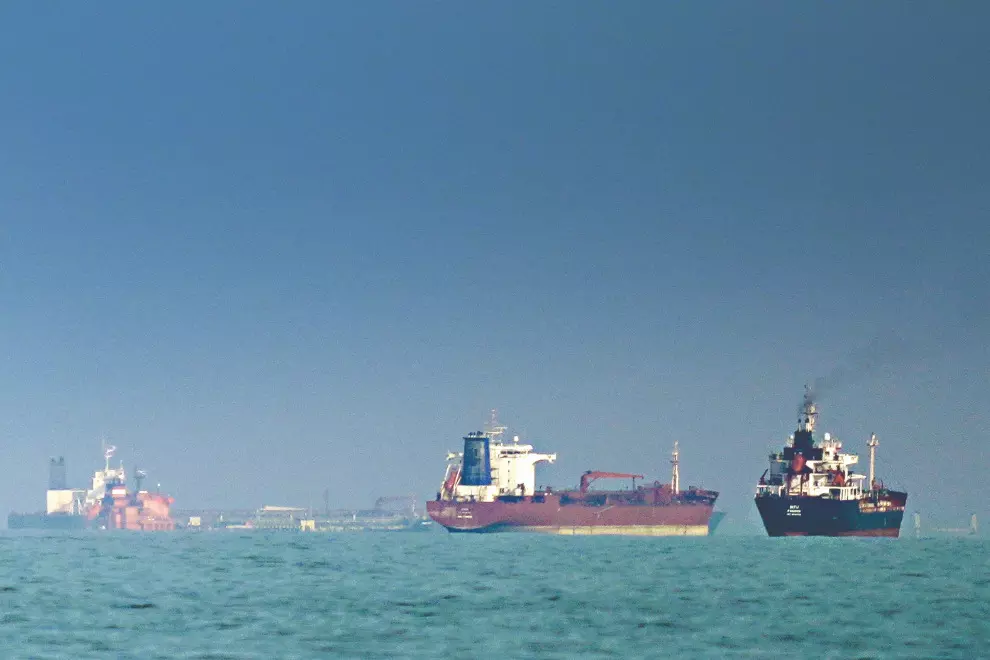


New Delhi: A series of oil tankers that were initially headed to China have altered course mid-voyage and are now bound for India, as New Delhi accelerates efforts to secure supplies amid disruptions triggered by the ongoing US-Iran conflict and instability in the Strait of Hormuz. Ship-tracking data and market intelligence indicate that at least seven vessels carrying Russian crude have switched destinations in recent weeks, reflecting a sharp shift in global energy flows as India moves to offset reduced availability from the Middle East.
One such vessel, the Aframax tanker Aqua Titan, is expected to arrive at New Mangalore port on March 21 carrying Russia’s Urals crude. The tanker had loaded its cargo at a Baltic Sea port in late January and initially signaled Rizhao in China as its destination. However, in mid-March, while navigating Southeast Asian waters, it reversed course and began heading toward India. The change in route coincided with a temporary US waiver that allowed India to increase purchases of Russian oil.
According to data from Vortexa Ltd., the rerouting trend extends beyond a single shipment. At least seven tankers have diverted to India from China, with all major Indian refiners actively seeking Russian crude. The shift follows a rapid increase in procurement, with refiners securing around 30 million barrels of Russian oil within a week of the waiver. The buying surge comes as India attempts to cushion the impact of supply disruptions after Iran effectively blocked traffic through the Strait of Hormuz, a critical chokepoint through which about 20 per cent of global oil and liquefied natural gas supplies pass. India’s dependence on energy imports has added urgency to these efforts. The country relies on imports for nearly 90 per cent of its energy needs, with 40 to 50 per cent of crude oil and a significant share of LNG and LPG shipments passing through the Strait of Hormuz. The disruption has already contributed to a squeeze in LPG availability, with reports of shortages affecting cities such as Mumbai and Bengaluru.
Another tanker, the Suezmax vessel Zouzou N., has also changed course and is now headed to Sikka on India’s west coast, with an expected arrival date of March 25. The ship, carrying Kazakhstan’s CPC Blend crude, had departed from Novorossiysk on the Black Sea and was originally headed toward Chinese waters before turning around in early March.
Despite heightened tensions in the region, some Indian vessels have successfully navigated the Strait of Hormuz. The Indian-flagged LPG carriers Nanda Devi and Shivalik recently completed their transit, with Nanda Devi delivering 46,500 metric tonnes of LPG to Vadinar port in Gujarat for ship-to-ship transfer. Officials confirmed that both vessels passed through the sensitive waterway safely.
External Affairs Minister S Jaishankar has stated that India does not have a blanket arrangement with Iran regarding the passage of its ships, even as the government continues to monitor developments in the Persian Gulf.
Meanwhile, Indian-flagged tanker ‘Jag Laadki’, carrying around 80,886 metric tonnes (MT) of crude oil, arrived at Mundra Port in Gujarat on Wednesday. A day earlier, LPG carrier ‘Nanda Devi’ arrived at Vadinar port in Gujarat’s Devbhumi Dwarka district, carrying 46,500 metric tonnes of liquefied petroleum gas (LPG) navigating through the Strait of Hormuz. On Monday, another vessel - ‘Shivalik’ - carrying LPG docked at Mundra Port. Adani Ports, which operates Mundra Port, said in a statement that the crude oil carried by Jag Laadki was sourced from the United Arab Emirates (UAE) and loaded at Fujairah Port there.