Partial ATF hike for domestic carriers; international operators bear full brunt
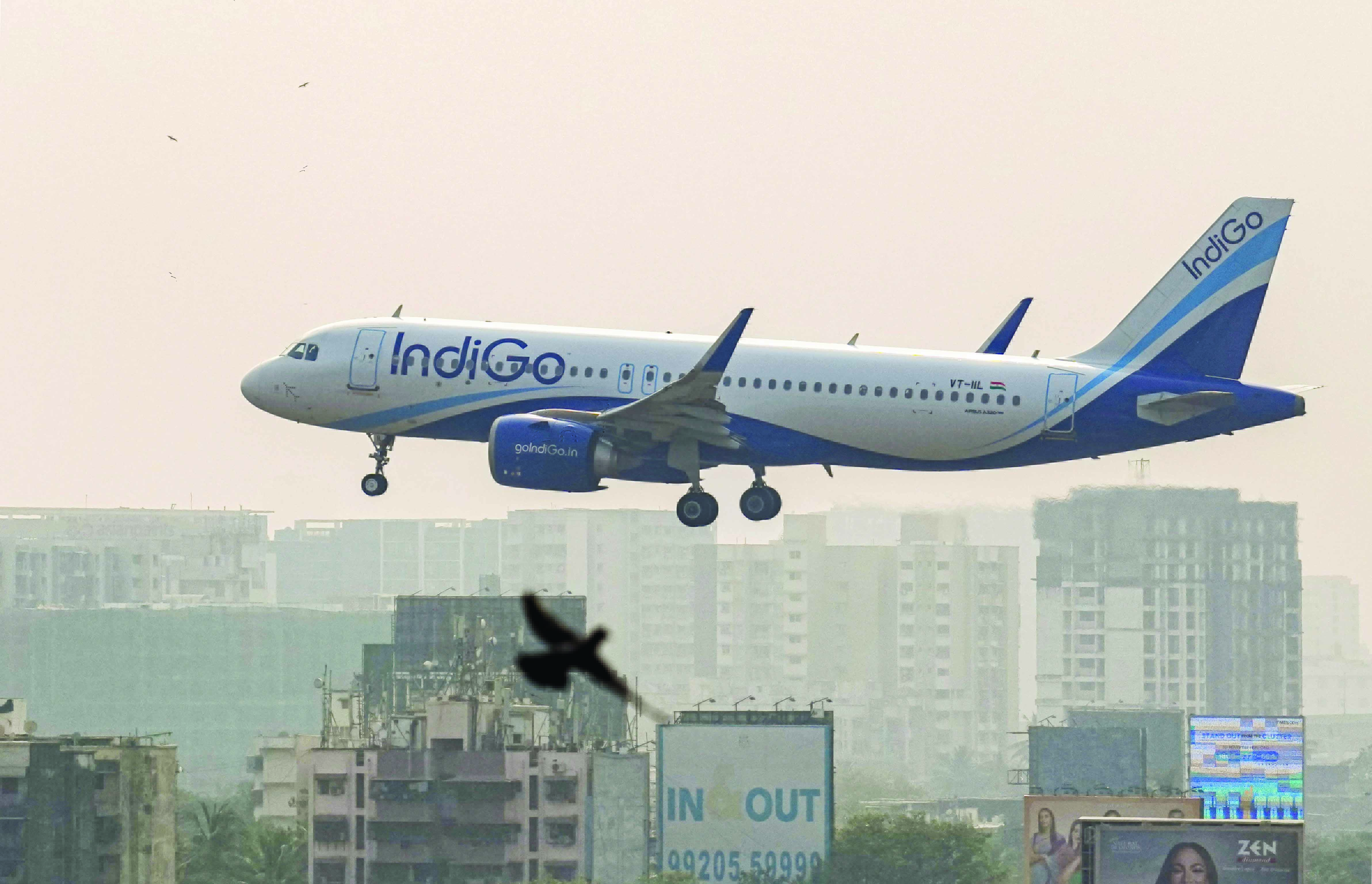


New Delhi: The Centre on Wednesday announced a calibrated increase in aviation turbine fuel prices for domestic airlines, cushioning the impact of an unprecedented global surge driven by the ongoing conflict in West Asia and disruptions in critical energy supply routes. While global benchmarks suggested that jet fuel prices in India could have more than doubled from April 1, state-owned oil marketing companies, in consultation with the ministries of petroleum and civil aviation, passed on only a partial increase of about 25 per cent, translating to roughly Rs 15 per litre, in a move aimed at protecting both airlines and passengers from a sharp cost shock.
The decision comes against the backdrop of extraordinary volatility in global energy markets, triggered in part by the closure of the Strait of Hormuz, a key maritime route through which a significant share of the world’s oil and fuel supplies pass. Officials said that under a fully market-linked system, aviation turbine fuel prices would have surged by over 100 per cent. Instead, domestic carriers will face a much lower increase, with prices in Delhi rising by Rs 8,289.04 per kilolitre, or 8.56 per cent, to Rs 1,04,927.18 per kilolitre from Rs 96,638.14 per kilolitre in March.
In contrast, international airlines and non-scheduled operators will bear the full impact of the price surge. For these carriers, aviation turbine fuel prices have risen by Rs 1,10,703.08 per kilolitre, or 114.5 per cent, reaching Rs 2,07,341.22 per kilolitre, marking the first time that jet fuel prices have crossed the Rs 2 lakh per kilolitre threshold. The previous peak was recorded in 2022, when prices touched around Rs 1.1 lakh per kilolitre following the Russia-Ukraine conflict.
Explaining the rationale, the Ministry of Petroleum and Natural Gas said that aviation turbine fuel prices in India have been deregulated since 2001 and are revised monthly based on international benchmarks. “Due to the closure of Strait of Hormuz and extraordinary situation in global energy markets, the price of ATF for domestic markets was expected to increase by more than 100 per cent on April 1,” the ministry said, adding that a staggered increase was adopted “to insulate the domestic travel costs from the substantial increase in international prices.”
Civil Aviation Minister Rammohan Naidu Kinjarapu described the move as “pragmatic and forward-looking,” noting that it balances market realities with the need to shield passengers from sudden fare spikes. “This calibrated approach will help shield passengers from sharp fare increases, ease the burden on domestic airlines, and support the continued stability of the aviation sector at this crucial juncture,” he said, adding that it would also ensure smooth cargo movement and maintain critical air connectivity for trade and logistics.
Fuel costs account for nearly 40 per cent of an airline’s operating expenses, making them a key determinant of ticket prices and profitability. Officials indicated that an unrestricted increase in aviation turbine fuel prices could have forced airlines to either significantly raise fares or reduce flight operations. By limiting the immediate pass-through of costs, the government aims to prevent such disruptions and maintain stability in a sector that handles over 4.5 lakh domestic passengers daily.
Asangba Chuba Ao, joint secretary in the civil aviation ministry, said the partial increase would keep operational costs manageable and avoid the need for additional fuel surcharges. “This move prevents potential industry-wide crisis and allows airlines to maintain competitive pricing for domestic passengers,” he said, adding that carriers are expected to recalibrate their pricing strategies in response to the revised fuel costs.
Airlines had already begun adjusting to rising fuel prices in recent weeks. Several carriers had introduced or increased fuel surcharges, with domestic ticket surcharges ranging around Rs 200 and long-haul international routes seeing increases of up to $200. Industry insiders had warned that a steep rise in fuel costs could lead to demand contraction, particularly in a price-sensitive market like India, potentially forcing airlines to cut capacity on certain routes.
Industry stakeholders broadly welcomed the government’s intervention. IndiGo said the partial hike would help insulate domestic travel costs, while SpiceJet Chairman and Managing Director Ajay Singh described the decision as a “significant relief” at a time of global uncertainty. Akasa Air also said that such measures contribute to a stable operating environment and enable airlines to manage costs more effectively.
Despite the moderated increase, some upward pressure on fares is expected. Industry estimates suggest that a 25 per cent increase in aviation turbine fuel could raise overall operating costs by around 10 per cent. Officials, however, indicated that there are mechanisms in place to monitor airfares and intervene if abnormal pricing trends emerge.
The current surge in fuel prices has also been compounded by operational challenges arising from the conflict in West Asia. Airspace restrictions have forced airlines to take longer routes for flights to Western destinations, leading to higher fuel consumption and increased costs. At the same time, global jet fuel prices have nearly doubled since late February, rising to $195.19 per barrel for the week ended March 27 from $99.40 per barrel a month earlier, according to industry data.
The broader energy landscape has also seen significant price movements. Commercial LPG prices were increased by Rs 195.50 per 19-kg cylinder, taking the price in Delhi to Rs 2,078.50. The increase was attributed to a 44 per cent jump in the Saudi Contract Price, from $542 per tonne in March to $780 per tonne in April, amid supply disruptions linked to the Strait of Hormuz closure. Around 20 to 30 per cent of global LPG supplies have been affected by the disruption.
Domestic cooking gas prices, however, remain unchanged at Rs 913 per 14.2-kg cylinder in Delhi, with oil marketing companies incurring an under-recovery of Rs 380 per cylinder to shield consumers. The government said cumulative losses on LPG could reach approximately Rs 40,484 crore by the end of May, following total losses of Rs 60,000 crore last year, which were shared equally between public sector oil companies and the government.
Prices of regular petrol and diesel have also been kept unchanged, even as global petroleum prices have risen sharply. In Delhi, petrol continues to retail at around Rs 94.72 per litre and diesel at Rs 87.62 per litre. However, prices of premium fuels have been revised upward, with 100-octane petrol rising by Rs 11 per litre to Rs 160 and select branded diesel variants increasing by Rs 1.50 per litre.
The government also highlighted that India’s domestic LPG prices remain among the lowest globally, with comparable rates significantly higher in neighbouring countries such as Pakistan, Sri Lanka and Nepal.
Within the aviation sector, the calibrated fuel price increase is seen as part of a broader effort to maintain stability amid global disruptions. Officials noted that smooth air connectivity is critical not only for passenger travel but also for cargo movement and supply chains. Ensuring manageable fuel costs for domestic carriers is therefore considered essential for sustaining economic activity.
At the same time, the divergence between domestic and international fuel pricing underscores the government’s attempt to balance competing priorities. While domestic airlines benefit from moderated costs, international operations remain fully exposed to global price movements, reflecting standard market practices.
As the situation in global energy markets continues to evolve, officials indicated that pricing decisions would remain responsive to prevailing conditions.
Meanwhile, IndiGo on Wednesday announced revised fuel charges ranging from Rs 275 to Rs 10,000, which will push airfares higher for many domestic and international flights amid the rise in jet fuel prices.
For domestic flights, the revised fuel charges will be Rs 275 to 950, and in the case of international flights, the fuel charges will vary from Rs 900 to Rs 10,000. The charges, which will depend on the distance, will be applicable from 0001 hours on April 2.
The fuel charge will be Rs 275 for domestic flights on routes that are 0-500 kms long and Rs 400 for flights that fly 501-1,000 kms.
The amount will be Rs 600 for 1,001-1,500 kms, Rs 800 for 1,501-2,000 kms and Rs 950 for distances above 2,000 kms.