No fuel worry, Puri tells LS
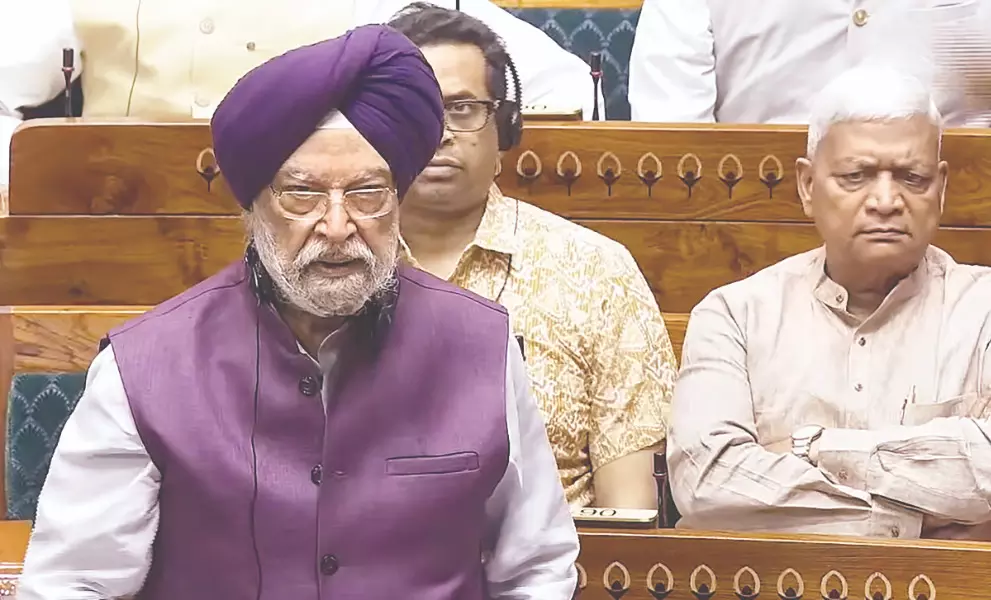


New Delhi: Union Minister of Petroleum and Natural Gas Hardeep Singh Puri on Thursday assured Parliament that India’s energy supplies remain robust despite global disruptions caused by the conflict in West Asia, emphasising that strategic diversification and emergency measures have kept fuel availability normal nationwide.
During his address in the Lok Sabha, Puri highlighted that the world is facing an unprecedented energy crisis, triggered by the disruption of commercial shipping through the Strait of Hormuz—a first in recorded history—due to military tensions involving Iran, Israel, and the United States. With nearly 20 per cent of global crude, natural gas, and LPG flowing through the strait, this situation poses serious challenges for energy-importing nations like India. “This is a historic moment in modern energy history... Despite India’s non-involvement in the conflict, we must navigate its repercussions,” he stated.
Puri reassured that India’s crude oil supply remains comfortable, with imports now exceeding volumes previously passing through Hormuz thanks to alternative routes. Before the crisis, 45 per cent of India’s crude imports came via the strait; now, over 70 per cent are sourced from other regions. He credited sustained diplomatic efforts and a long-term diversification policy that has expanded India’s sourcing from around 40 countries, compared to 27 in 2006-07.
Refineries are operating at high capacity, some even above 100 per cent, with no shortages of petrol, diesel, aviation fuel, kerosene, or fuel oil. Retail outlets across the country are fully stocked, and supply chains remain smooth. For natural gas, domestic production of about 90 MMSCMD is complemented by imports and alternative procurement, especially after supplies from a Gulf facility were affected.
A recent Natural Gas Control Order issued on March 9 places high priority on ensuring that households and transportation sectors have an uninterrupted supply of piped gas and CNG. Meanwhile, the industrial and fertiliser sectors are receiving regulated but sufficient allocations. Puri expressed confidence, stating, “I am pleased to report that shortages have been largely offset through alternative sourcing. India’s gas production and supply arrangements are resilient enough to withstand prolonged conflict,” assuring that power for homes and industries remains secure.
Addressing fears about cooking gas shortages, Puri highlighted that India, which once imported nearly 60 per cent of its LPG from Gulf countries, has diversified its sources to include the United States, Norway, Canada, Algeria, and Russia. In just five days, refineries increased LPG production by 28 per cent, emphasising a focus on domestic output.
“Our top priority is that no household—especially India’s 33 crore families—faces LPG shortages. Domestic supply is fully protected, and delivery schedules are unchanged,” he emphasised.
Commercial LPG supply is carefully managed, with a coordination committee of oil marketing companies working with state governments to prioritise genuine users.
Puri further announced that the supply of commercial cylinders will begin from Thursday, while addressing the Lok Sabha.
Puri also cautioned against panic buying, noting that demand spikes are driven more by anxiety than actual shortages, based on field reports. To curb hoarding and diversion, measures such as stricter delivery checks, minimum booking gaps, and enforcement actions have been put in place.
To ease LPG pressure, the government has temporarily authorised alternative fuels like kerosene, biomass, RDF pellets, and coal for specific sectors. Additional kerosene has been allocated through the public distribution system.
Despite volatile international LPG prices, consumer prices have remained stable, thanks to government absorption of much of the cost increase. “For a PMUY household, the additional expense is less than 80 paise per day,” Puri stated, noting that oil marketing companies are compensated to maintain steady retail prices.
State governments are vigilantly monitoring supplies, conducting anti-diversion raids, and ensuring smooth distribution. “This is not a moment for rumours. India is facing the most severe global energy disruption in history. Crude oil flows are steady, gas is prioritised for homes and farms, LPG production is up, and prices are protected,” Sujata Sharma, Joint Secretary in the Ministry of Petroleum and Natural Gas said, urging citizens to avoid panic and conserve fuel. She further stressed while addressing press persons here in the national capital that despite the crisis, India’s crude oil supply remains stable. Thanks to proactive government efforts, nearly 70 per cent of imports now arrive through alternative routes.