Nearly 95 lakh electors do not find name in draft rolls of three states, one UT
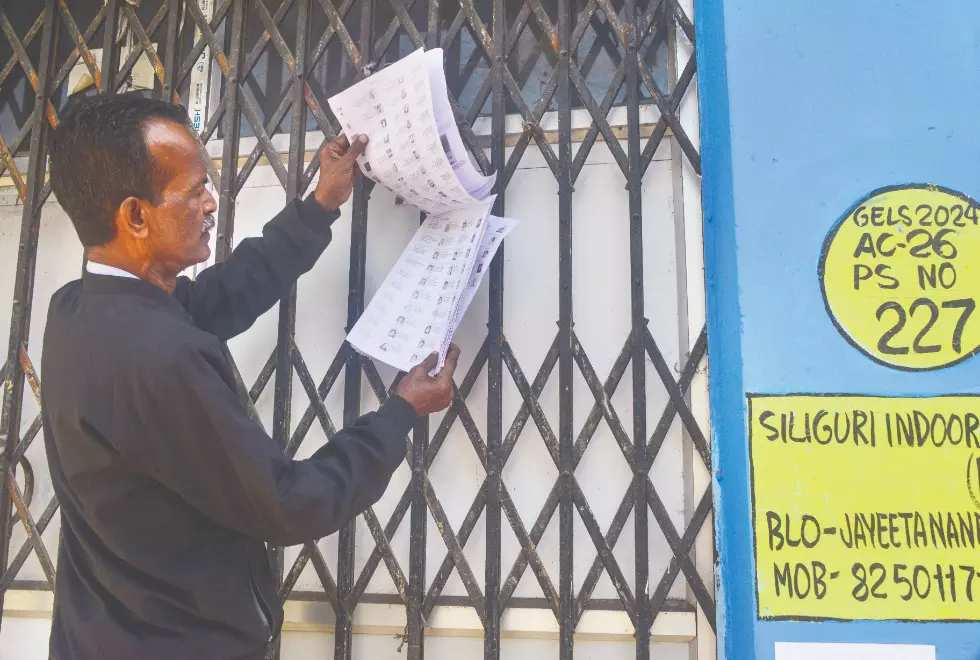


New Delhi: Nearly 95 lakh electors across four states and Union Territories did not find their names in the draft electoral rolls published on Tuesday following the first phase of the Special Intensive Revision (SIR) undertaken by the Election Commission of India, according to officials. The revised draft lists, released after weeks of door-to-door verification and enumeration, showed large numbers of deletions in Madhya Pradesh, Chhattisgarh, Kerala and the Andaman and Nicobar Islands. Election authorities said the exercise was aimed at cleaning electoral rolls by removing deceased voters, duplicate entries and names of those who have shifted permanently, while stressing that eligible voters whose names were missing could still apply for inclusion before the final rolls are notified.
In Madhya Pradesh, the scale of deletions was the largest among the four regions. Of the total 5,74,06,143 electors in the state, 5,31,31,983 submitted enumeration forms during the SIR, which began on November 4 and continued for more than a month. As a result, 42,74,160 voters did not submit the required forms and their names did not appear in the draft list released on December 23. Madhya Pradesh Chief Electoral Officer Sanjeev Kumar Jha told reporters that among these, 8.46 lakh names, or 1.47 per cent of the electorate, were of deceased persons. Another 31.51 lakh voters, or 5.49 per cent, were found to be absent from their recorded addresses or to have shifted elsewhere, while 2.77 lakh were identified as being registered in more than one place. He clarified that voters enrolled at multiple locations would be retained in the rolls at only one polling booth.
Jha said eligible voters could file claims and objections from December 23 to January 22, after which the Election Commission would take a final decision. “No name can be removed from the draft list without prior notice,” he said, citing provisions of the SIR guidelines. He added that aggrieved voters could appeal to the district magistrate and, if necessary, to the Chief Electoral Officer under Section 24 of the Representation of the People Act, 1950. Volunteers are being trained to help voters file appeals, he said, adding that the commission was committed to a transparent and inclusive revision process. Madhya Pradesh has 230 Assembly seats and 29 Lok Sabha constituencies spread across 55 districts, with the revision involving district electoral officers, electoral registration officers, assistant officers and booth-level officers deployed at more than 65,000 polling stations.
In Kerala, the draft voters’ list published on Tuesday showed that 24,08,503 names had been removed from the rolls after the enumeration stage of the SIR. Before the exercise began, the state had 2,78,50,855 registered voters. The draft list now includes 2,54,42,352 electors, reflecting a deletion rate of 8.65 per cent. Chief Electoral Officer Rathan U Kelkar said 6,49,885 of the deleted names belonged to deceased voters, while 6,45,548 voters were untraceable despite repeated visits by booth-level officers. Another 8,16,221 voters were found to have permanently shifted from their registered addresses. In addition, 1,36,029 duplicate voters and 1,60,830 voters falling under other categories were identified during the exercise.
Kelkar said objections and grievances related to the draft list could be submitted until January 22, and the final electoral roll for Kerala would be published on February 21. He said a voter mapping exercise was also undertaken as part of the SIR, with 93 per cent of voters mapped by December 18. Most unmapped cases were reported from urban and semi-urban areas such as Thiruvananthapuram, Kottayam and Ernakulam. “The mapping exercise is still continuing,” he said, adding that electoral registration officers would decide on hearings for non-mapped voters once the process is completed. Notices detailing the reasons for hearings and the documents required would be served through booth-level officers, with hearings decentralised to avoid inconvenience to the public. Responding to questions on the number of untraceable voters, Kelkar said booth-level officers had visited addresses three times to serve enumeration forms but were unable to locate the voters despite their best efforts.
In Chhattisgarh, the SIR revealed that out of 2,12,30,737 electors as of October 27, about 27.34 lakh names did not appear in the draft rolls. According to a press note issued by the state’s Chief Electoral Officer, 1,84,95,920 voters, or around 87 per cent of the electorate, submitted enumeration forms by December 18. The door-to-door verification exercise found that 6,42,234 voters, or 3 per cent, had died, while 19,13,540 electors, about 9 per cent, had shifted their residence or were absent from their recorded addresses. In addition, 1,79,043 voters, accounting for about 1 per cent of the electorate, were found registered at more than one location. The CEO’s office said the names of such voters would be retained at only one place, while genuine voters could be added back during the claims and objections period from December 23 to January 22. The final electoral rolls for the state are scheduled to be published on February 21.
In the Andaman and Nicobar Islands, the draft rolls showed that about 64,000 electors were missing from the list. Out of a total electorate of around 3.10 lakh, these voters did not figure in the draft published on Tuesday. As in other regions, officials said those whose names were missing could still apply for inclusion, and electoral registration officers would take a final call before the publication of the final rolls.
Across all four regions, election officials underlined that the SIR was part of a nationwide exercise covering a dozen states and Union Territories. The final electoral rolls, after completion of the claims, objections and hearing process, are expected to be issued in February next year, with authorities reiterating that no eligible voter would be left out of the process.