
Liberty not State’s gift but obligation, passport authority can’t seek itinerary for renewal: SC
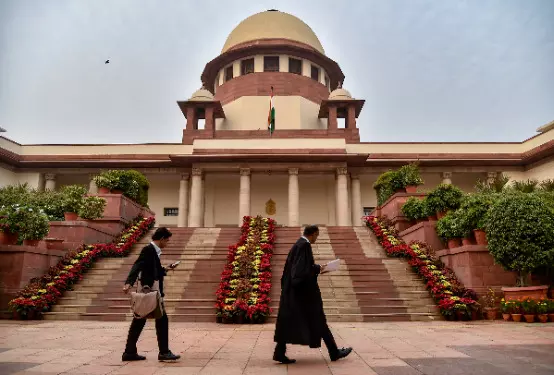


New Delhi: The Supreme Court ruled on Friday that citizens cannot be compelled to furnish travel schedules or visa details when seeking renewal of their passports, reaffirming that personal liberty is a constitutional guarantee and not something granted by the State. Delivering the judgment, a bench of Justices Vikram Nath and A G Masih stated that “liberty, in our constitutional scheme, is not a gift of the State but its first obligation” and forms a core component of Article 21.
The court said the sole role of the passport authority at the renewal stage is to verify whether criminal courts handling pending cases have allowed the applicant to retain the option of foreign travel under their supervision. According to the bench, the authority cannot insist on itineraries or documentation that may not yet exist. “The passport authority is not required, at the renewal stage, to demand a schedule of future journeys or visas which may not yet exist,” the order noted.
The judgment emerged from a petition filed by Mahesh Kumar Agarwal, convicted in the coal block allocation case and facing separate proceedings under the Unlawful Activities (Prevention) Act in an NIA court in Ranchi. His passport, deposited in court as a bail condition, expired in 2023. Agarwal approached the Supreme Court after the Calcutta High Court refused to grant him relief on renewal.The bench examined the larger framework governing passport issuance, particularly Section 22 of the Passports Act and a central government notification, GSR 570(E), issued on August 25, 1993. The notification exempts individuals facing pending criminal cases from the operation of Section 6(2)(f), which otherwise restricts passport issuance, provided that the criminal court has considered the matter and issued an order on the passport’s use, and that the applicant commits to appear before the court when required. The court observed that GSR 570(E) serves two functions. First, it acknowledges that persons with pending criminal cases are not automatically disqualified from holding a passport. Instead, it allows them to obtain one if the concerned court has applied its mind to the issue. Second, the notification sets out how that exemption should function by linking the passport’s validity and conditions of use to the criminal court’s directions. “Where the court specifies a period for which the passport is to be issued, the passport authority must honour that period,” the bench said. When the court does not specify a duration, the notification provides default rules, such as issuing a shorter passport validity, typically for one year.
Crucially, the bench clarified that the notification does not impose new barriers. It does not require criminal courts to give advance blanket permission for foreign travel before a passport can be issued or renewed. “What the notification does not do is to create a new substantive bar beyond Section 6(2)(f), or to insist that the criminal court must, in every case, grant a prior blanket permission to depart from India for specified dates as a jurisdictional precondition,” the judgment stated. While addressing the broader principles of liberty, the bench observed that State power to restrict travel must remain tethered to statutory provisions and proportionality. It noted that although the State can regulate movement in the interests of justice, public order or security, the restrictions must remain tightly focussed. The court cautioned against turning procedural safeguards into “rigid barriers” or letting temporary restrictions become indefinite, stating that such developments risk upsetting the balance between State authority and individual dignity. The Supreme Court also examined the orders passed by courts that had previously heard Agarwal’s matters. The NIA court in Ranchi had granted no objection to the renewal of his passport, released the original document for the limited purpose of renewal, and required him to redeposit it afterward. It also barred him from applying for visas or leaving India without its permission. Separately, the Delhi High Court, which had suspended Agarwal’s sentence in the coal block case, stated that there was no reason to deny renewal “for a regular period of ten years” and issued its own no objection certificate. Taking these directions into account, the bench held that the requirements under Section 6(2)(f) had been fully satisfied. “Once the criminal courts, with full knowledge of the pending proceedings, consciously allowed renewal subject to the condition that the appellant shall not travel abroad without their permission, the underlying concern of Section 6(2)(f) stood adequately addressed,” the order said. It added that nothing in the Passports Act compelled courts to turn every permission into a single-use authorisation for a particular trip. Setting aside the Calcutta High Court’s decision, the Supreme Court directed the Regional Passport Office in Kolkata to renew Agarwal’s passport in accordance with the earlier orders passed by the NIA court and the Delhi High Court.



