Jaishankar in France for G7 meet; West Asia crisis tops agenda
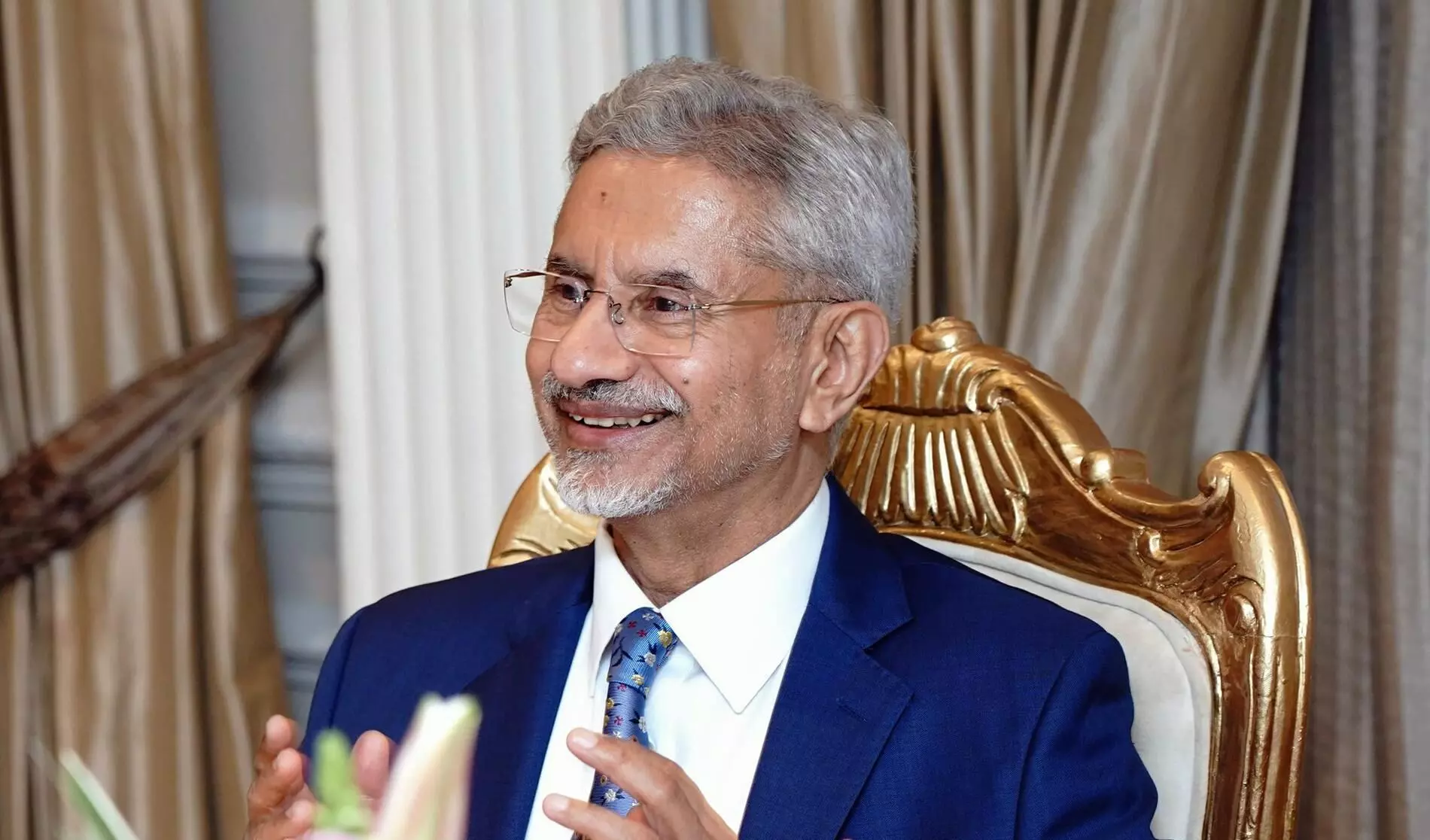


New Delhi: External Affairs Minister S Jaishankar on Thursday travelled to France for the G7 foreign ministers' meeting, which will discuss the West Asia crisis with a focus on coordinating efforts to ensure that the Strait of Hormuz remains open for international shipping. While India is not a G7 member, it has been invited as a partner country by France, the current chair of the powerful bloc. Top diplomats from the US, Canada, Germany, Italy, France, Japan and the UK are attending the meeting. The external affairs minister will visit Abbaye des-Vaux-de-Cernay in France on March 26 and 27 to participate in the G7 foreign ministers' meeting with partner countries, according to an official statement.
Jaishankar is also expected to hold bilateral discussions with his counterparts on the sidelines of the G7 meeting, it said. Besides India, France has invited Saudi Arabia, South Korea and Brazil. According to a French official, there will be a session dedicated to the crisis in West Asia. The ministers will deliberate on exploring different negotiation channels that could lead to de-escalation in the region and reopen maritime routes, the official said. The foreign ministers will also discuss how to "tackle the nuclear and ballistic programme of Iran," the official noted. Global oil and gas prices have surged after Iran virtually blocked the Strait of Hormuz, a narrow shipping lane between the Persian Gulf and the Gulf of Oman, which handles roughly 20 per cent of global oil and LNG (Liquefied Natural Gas). West Asia has been a major source of India's energy procurement. In the last couple of weeks, India has made diplomatic efforts focused on ending the conflict in West Asia as soon as possible and ensuring the unimpeded flow of energy through the Strait of Hormuz. New Delhi thinks there could be serious ramifications for fuel and fertiliser security for many countries, including India, if the blockade of the shipping lane continues. The Group of 7 (G7) brings together seven of the world's most advanced economies: Canada, France, Germany, Italy, Japan, the United Kingdom and the United States. The European Union is also a member of the bloc. The G7 serves as the forum of choice for its members to discuss and coordinate action in response to major economic, financial and geopolitical challenges on the global stage.