
US-Iran 2-week truce at risk as Israel kills 100 in Lebanon, Tehran shuts Hormuz again
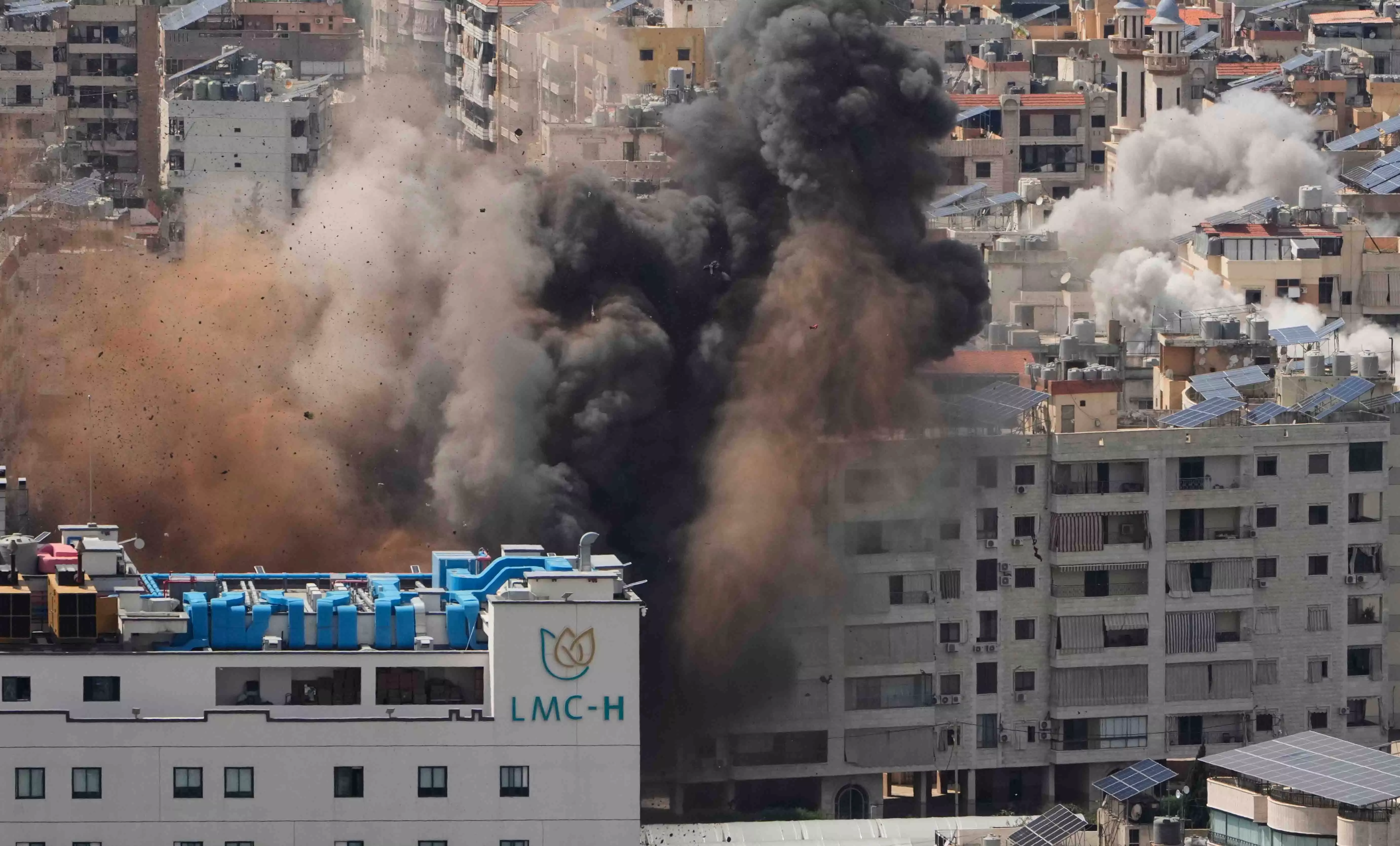


TEHRAN: Less than 24 hours after US President Donald Trump announced a ceasefire with Iran, the Islamic Republic has closed the Strait of Hormuz in response to Israeli attacks on Lebanon that have killed over 100 people and injured hundreds in one of the deadliest waves of strikes in recent weeks.
The US and Iran announced a two-week ceasefire early Wednesday, as part of which Iran agreed to reopen the Strait of Hormuz, potentially restoring global energy supplies. Iran warned ships passing through the Strait of Hormuz without permission will be “targeted and destroyed”, adding the route “remains closed”, according to the BBC.
Israeli Prime Minister Benjamin Netanyahu has publicly shown support for the United States’ decision for a ceasefire with Iran but said that it does not include Lebanon.
“Israel supports President Trump’s decision to suspend strikes against Iran for two weeks subject to Iran immediately opening the straits and stopping all attacks on the US, Israel and countries in the region,” Netanyahu wrote on X.
However, in a separate post, he stated, the two-week ceasefire does not include Lebanon.”
The Iranian Revolutionary Guard Corps (IRGC) said it will deliver a “regret-inducing response” if Israeli strikes on Lebanon don’t stop immediately, state media reported.
In another key development, Trump is sending his negotiating team to Islamabad, Pakistan, said White House Press Secretary Karoline Leavitt. The team will consist of Vice-President JD Vance, Trump adviser Steve Witkoff, and Trump’s son-in-law Jared Kushner. The talks will begin on Saturday morning local time, she said, adding: “We look forward to those in-person meetings.”
Earlier, Israel bombed locations across Lebanon, including the capital Beirut, in devastating attacks that authorities say have killed at least 254 people and wounded over 1,165.
Iran, the United States and Israel agreed to a two-week ceasefire in an 11th-hour deal that headed off US President Donald Trump’s threat to unleash a bombing campaign to destroy Iranian civilization. But hours after the announcement, Iran and Gulf Arab countries reported new attacks on Wednesday.
It was not clear if the strikes would scuttle the deal, which US Vice President JD Vance called “fragile”.
However, for now, both the US and Iran have claimed victory, and world leaders have expressed relief.
Even before the new attacks, much about the agreement was unclear as the sides presented vastly different visions of the terms.
Iran said the deal would allow it to formalise its new practice of charging ships passing through the Strait of Hormuz, a crucial transit lane for oil. But the details were not clear, nor was it known whether vessels would feel safe using the channel or whether ship traffic had resumed. It also was unclear whether any other country agreed to this condition.
Iran’s ability to control the Strait of Hormuz proved a tremendous strategic advantage.
Iranian attacks and threats deterred many commercial ships from passing through the waterway, through which 20 per cent of all traded oil and natural gas passes in peacetime. That roiled the world economy and raised the pressure on Trump both at home and abroad to find a way out of the standoff.
The ceasefire may formalise a system of charging fees in the strait that Iran instituted — and give it a new source of revenue.
The plan allows for both Iran and Oman to charge ships, according to a regional official who spoke on condition of anonymity to discuss negotiations they were directly involved in. The official said Iran would use the money it raised for reconstruction.
That would upend decades of precedent treating the strait as an international waterway that was free to transit and will likely not be acceptable to the Gulf Arab states, which also need to rebuild after repeated Iranian attacks targeting their oil fields.
Iranian Foreign Minister Abbas Araghchi said passage through the strait would be allowed under Iranian military management — further clouding the picture of who would be allowed to transit the waterway.
Trump said the US has received a 10-point proposal from Iran, which he called a “workable basis on which to negotiate”.
“Almost all of the various points of past contention have been agreed to between the United States and Iran, but a two-week period will allow the Agreement to be finalised and consummated,” he said on his social media platform Truth Social.
News of the ceasefire sent stock markets surging worldwide, and oil prices plunged back toward USD 90 per barrel.
Pakistan, which helped to mediate the deal, and others said fighting would pause in Lebanon, where Israel has launched a ground invasion against the Iran-backed Hezbollah militant group. Israel said it would not, and strikes hit Beirut on Wednesday.
The fate of Iran’s missile and nuclear programs — the elimination of which were major objectives for the US and Israel in going to war — also remained unclear. Trump said the US would work with Iran to remove buried enriched uranium, though Iran did not confirm that.
Iran’s demands for ending the war include a withdrawal of US combat forces from the region, the lifting of sanctions, and the release of its frozen assets.
In his post on Wednesday, Trump said, “We are, and will be, talking Tariff and Sanctions relief with Iran.”
Pakistan said talks to hammer out a permanent end to the war could begin in Islamabad as soon as Saturday.
Israel backed the US ceasefire with Iran, but Prime Minister Benjamin Netanyahu said the deal does not cover fighting against Hezbollah.
The Israeli military said it struck more than 100 targets within 10 minutes Wednesday across Lebanon, the largest wave of strikes since March 1.
News of the ceasefire sent stock markets surging worldwide, and oil prices plunged back toward USD 90 per barrel.
US-Israeli strikes have battered Iran and its leadership, but they have not entirely eliminated the threats posed by Tehran’s nuclear programme, its ballistic missiles or its support for regional proxies, like Hezbollah.
The US and Israel said addressing those threats was a key justification for going to war.
Trump said Wednesday that the US would work with Iran to “dig up and remove” enriched uranium that was buried under joint US-Israeli strikes in June. He added that none of the material had been touched since. Any retrieval is expected to be an intensive undertaking.
There was no confirmation from Iran on that.
Defence Secretary Pete Hegseth told a Pentagon briefing Wednesday that the US would do “something like” last June’s joint strikes with Israel on Iranian nuclear sites if the country refuses to surrender its enriched uranium voluntarily.
Tehran insisted for years that its nuclear program was peaceful, although it enriched uranium up to 60 per cent purity, a short, technical step from weapons-grade levels.
Hegseth said the US military has done its part “for now” but stands ready to ensure Iran complies with all the ceasefire’s terms.
Gen. Dan Caine, chairman of the US Joint Chiefs of Staff, said more than 13,000 targets have been struck in Iran, destroying 80 per cent of the country’s air defence systems and attacking 90 per cent of its weapons factories.
More than 90 per cent of Iran’s regular naval fleet has been sunk, “including all major surface combatants” with 150 ships now “at the bottom of the ocean”, Caine told reporters at a Pentagon briefing.
Shortly after the ceasefire announcement, Bahrain, Israel, Kuwait, Saudi Arabia and the United Arab Emirates all issued warnings about incoming missiles from Iran. That fire stopped for a time, then hostilities appeared to restart.



