
Iran vows to hunt down Netanyahu


Tehran/Tel Aviv: Iran on Sunday vowed to pursue and kill Israeli Prime Minister Benjamin Netanyahu as the escalating US–Israel war with Iran entered its third week, raising fears of a wider regional conflict and threatening oil supplies in the Gulf.
“IRGC vows to pursue and kill ‘child-killer’ Netanyahu if he is still alive,” Iran’s IRNA news agency said in a post on X, referring to the country’s Islamic Revolutionary Guard Corps. Rumours that the Israeli leader was dead circulated over the weekend, prompting his office to issue a statement calling the reports “fake.”
The conflict continued to intensify across the region on Sunday, with Gulf Arab states reporting fresh missile and drone attacks. Iran also threatened to widen its military campaign and called for the evacuation of three major ports in the United Arab Emirates, signalling the possibility of further escalation in the strategic Gulf region.
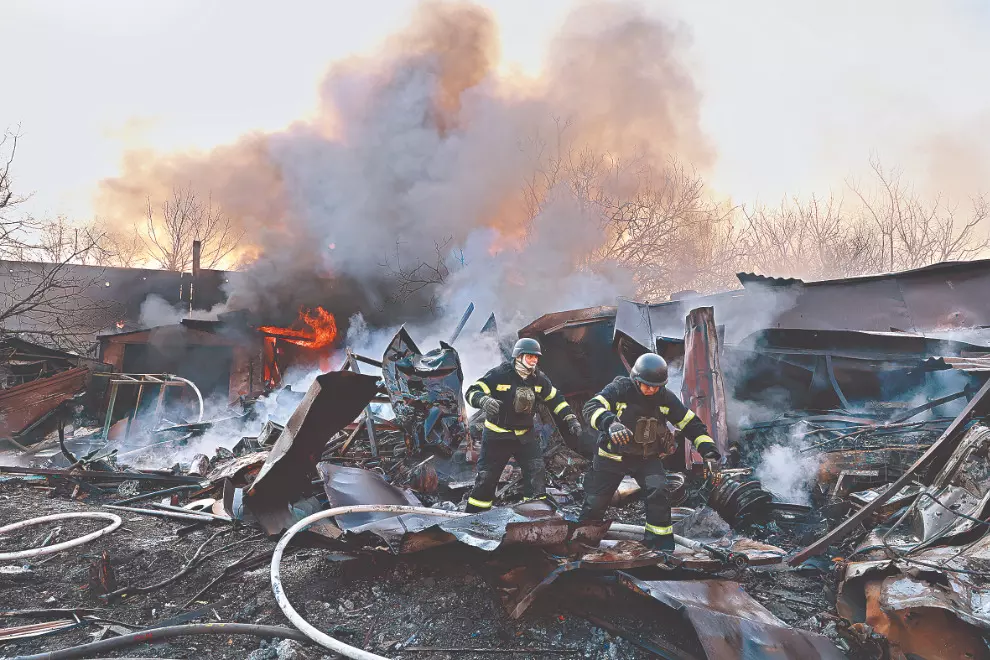
Iran launched several barrages of missiles toward Israel during the day, triggering air-raid sirens and forcing residents to rush to shelters. Multiple strikes hit central Israel, including areas around Tel Aviv. Israel’s national emergency service Magen David Adom released footage showing a large crater in a street and shrapnel damage to nearby apartment buildings.
Authorities said strikes in the Tel Aviv region caused damage at 23 sites and sparked a small fire. Israeli military officials said Iran has increasingly been using cluster munitions capable of scattering submunitions across multiple locations, making interception more difficult.
The war has already taken a heavy human toll across the region. According to the International Committee of the Red Cross, more than 1,300 people have been killed in Iran since the fighting began. Iran’s Health Ministry said the dead include 223 women and 202 children.
In Israel, Iranian missile strikes have killed at least 12 people and injured several others, including three people wounded in attacks on Sunday. At least 13 members of the United States Armed Forces have also died since the conflict began, six of them in a plane crash in Iraq last week.
The conflict has also severely affected Lebanon, where the Iran-backed militant group Hezbollah has been exchanging fire with Israel. Lebanon’s Health Ministry says at least 820 people have been killed and about 850,000 displaced since the clashes intensified.
In Beirut, displaced families were seen repairing rain-damaged tents while waiting for the violence to subside. Residents expressed uncertainty over when they might be able to return home as rescue crews continued clearing rubble from damaged neighbourhoods.
Meanwhile, US President Donald Trump’s appeal to China, France, Japan, South Korea, Britain and others to send warships to keep the Strait of Hormuz “open and safe” brought no commitments on Sunday as oil prices soar during the Iran war.
US Energy Secretary Chris Wright told NBC he has been “in dialogue” with some of the countries, and said he expected China “will be a constructive partner” in reopening the strait through which one-fifth of global oil exports normally pass.
Iran’s foreign minister, Abbas Araghchi, told CBS that Tehran has been “approached by a number of countries” seeking safe passage for their vessels, “and this is up to our military to decide.” He said a group of vessels from “different countries” had been allowed to pass, without providing details.
Iran has said the strait is open to all except the United States and its allies.
“We don’t see any reason why we should talk with Americans” about finding a way to end the war, Araghchi added, noting that Israel and the US started the fighting with coordinated attacks on Feb 28 during indirect US-Iran talks. The talks focused on Iran’s nuclear programme, and Araghchi said Tehran had “no plan to recover” enriched uranium that is under rubble following US and Israeli attacks last year.



