India’s fuel lifeline safe for now
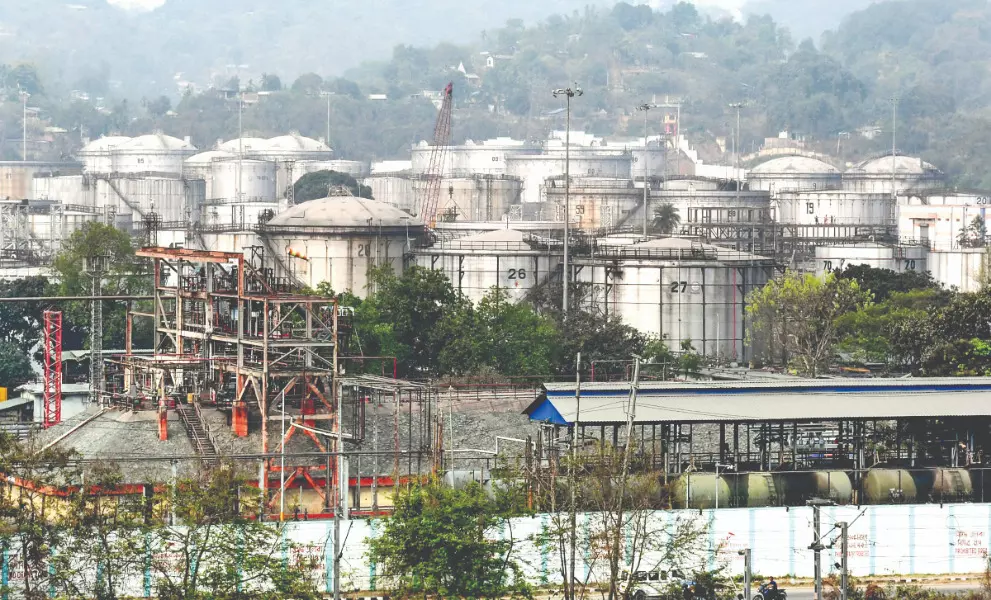


New Delhi: In a bid to reassure the citizens amid ongoing conflict in West Asia, the Centre announced on Wednesday that India’s fuel supplies remain secure and maritime activities continue smoothly, even as precautionary measures are in place.
At a media briefing, senior officials shared details on diversifying oil imports, bolstering LPG supplies, and safeguarding Indian sailors in the region. They said India has enough LPG stocks to fully meet household cooking gas requirements, even as it stepped up efforts to secure alternative supplies to replace volumes disrupted by the West Asia conflict.
Sujata Sharma, Joint Secretary (Marketing and Oil Refinery) in the Ministry of Petroleum and Natural Gas, affirmed that India’s oil supplies are stable despite global disruptions. She explained that with a daily requirement of 5.5 million barrels, strategic diversification has already exceeded normal supply levels.
“Feedback suggests that some panic booking and hoarding behaviour has been triggered by misinformation,” she said. “We have enough stocks. There is no need for panic. There is no need for the customer to rush and book cylinders.”
“Oil marketing companies have adopted diverse procurement strategies, ensuring supplies above normal levels. Currently, 70 per cent of India’s oil comes from routes outside the Straits of Hormuz, up from 55 per cent previously. Several additional cargoes are en route from alternative sources and expected to arrive soon,” Sharma stated.
Domestic refineries are operating at over 100 per cent capacity to further bolster fuel availability.
On LPG supplies, she highlighted that India’s daily gas demand is 189 million standard cubic meters per day, with 97.5 million met domestically and the rest imported. Due to force majeure, 47.4 million cubic meters have been impacted, but the government has activated alternative sources. Two additional cargoes are already on their way to mitigate this disruption.
To manage the supply crunch, a Natural Gas Control Order was implemented on March 9 under the Essential Commodities Act. Under this scheme, household PNG and transportation CNG will be maintained at full capacity, with industrial supplies kept at 100 per cent of their average six-month use. Fertiliser plants will receive about 70 per cent, while refineries and petrochemical plants will cut back by 35 per cent temporarily to prioritise critical sectors.
Regarding LPG, Sharma clarified that India imports 60 per cent of its requirement, with 90 per cent traditionally passing through the Strait of Hormuz. To safeguard supplies, refineries have been instructed to increase LPG production by diverting streams from hydrocarbon fractions like propane and butane, leading to a 25 per cent rise in domestic LPG availability, primarily for households.
Essential services such as hospitals and schools will be prioritised for non-domestic LPG, while a dedicated committee comprising leaders from Indian Oil, Hindustan Petroleum, and Bharat Petroleum has been tasked with overseeing supplies to commercial establishments like restaurants and hotels.
Officials emphasised that India has shouldered much of the global LPG price hike to protect consumers. The price of a domestic LPG cylinder in Delhi is now Rs 913 after a recent Rs 60 increase, and Rs 613 under the Pradhan Mantri Ujjwala Yojana.
Sharma also urged calm, dismissing misinformation about LPG booking delays, noting that the normal booking cycle is 2.5 days. To prevent panic, the interval between bookings has been extended from 21 to 25 days.
Rajesh Kumar Sinha, Special Secretary at the Ministry of Ports, Shipping, and Waterways, provided an update on India’s maritime situation. He announced that 28 Indian ships are currently operating in the Persian Gulf—24 ships with around 677 crew to the west of the Strait of Hormuz and 4 ships with 88 crew members to the east.
The government is actively collaborating with embassies and shipping companies to ensure the safety of Indian sailors. All ships have been issued advisory notices to enhance security and follow reporting protocols.
Furthermore, Indian ports continue to function smoothly, with dedicated control rooms overseeing shipping activities to sustain seamless trade. The government remains alert and prepared to take further measures to guarantee India’s energy security in these challenging times.
India, the world’s third-largest crude importer, sources 88 per cent of its oil needs from abroad. It consumes 5.8 million barrels per day, of which 2.5-2.7 million barrels come from Middle East countries like Saudi Arabia, Iraq, and the UAE via the Strait of Hormuz. The chokepoint also carried 55 per cent of India’s cooking gas (LPG) and 30 per cent of liquefied natural gas (LNG), used for power, fertilizers, CNG, and household cooking.