
India’s first digital census begins


NEW DELHI: Census process entered a new digital phase on Wednesday as the first-ever self-enumeration facility went live across eight states and Union territories, drawing participation from around 55,000 households on the opening day. The initiative, part of the Census 2027 exercise, allows citizens to submit their household details online ahead of traditional door-to-door visits, marking a shift in how data is collected for the country’s decadal population count.
The rollout covers the Andaman and Nicobar Islands, Goa, Karnataka, Sikkim, Odisha, Lakshadweep, Mizoram, and selected areas of the national capital under the New Delhi Municipal Council and Delhi Cantonment Board. Officials said the digital option is designed to complement, not replace, the conventional field survey, offering residents flexibility in how they participate.
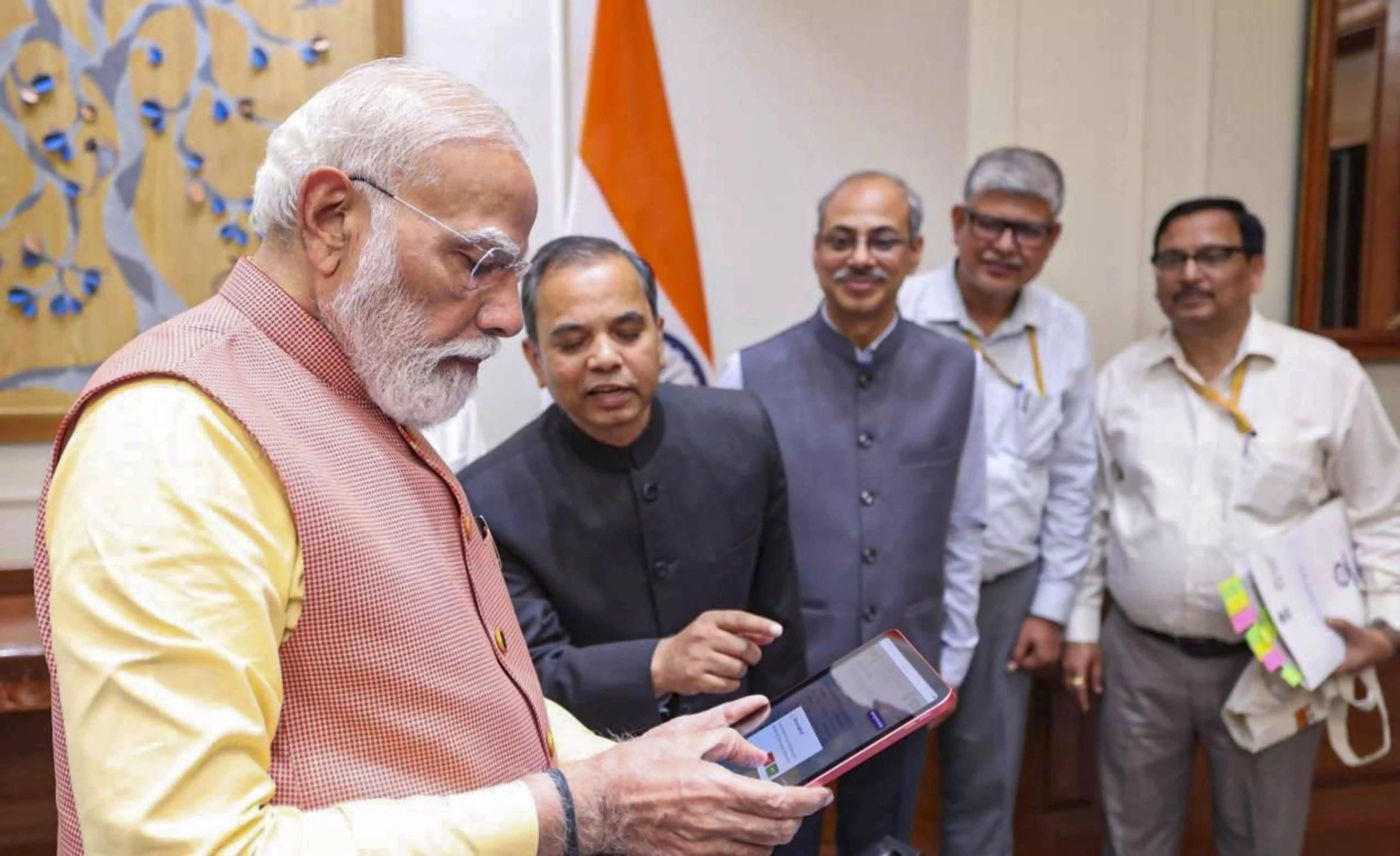
President Droupadi Murmu and Prime Minister Narendra Modi were among the first to use the system, completing their self-enumeration through the official portal. “Completed my self enumeration. Today marks the beginning of the first phase of Census 2027,” Modi said, adding that the exercise introduces digital data collection while giving people the ability to provide their details directly. He urged citizens to take part in the process.
Union Home Minister Amit Shah also filled out the form online, stating that the exercise would help ensure government schemes reach all sections of society. Similar participation was reported from several states, with governors and chief ministers joining the rollout to encourage wider public involvement.
The self-enumeration facility is accessible through a dedicated portal, where users can log in using their mobile number, identify their location, and fill in household details. Once submitted, a unique Self-Enumeration ID is generated, which must be shared with enumerators during subsequent verification visits. The platform supports 16 languages, making it accessible to a diverse population.
Officials described the portal as a secure, web-based system designed with multiple layers of verification to safeguard personal data. The exercise is conducted under the Census Act, 1948, ensuring confidentiality of the information collected.
The self-enumeration window is open for 15 days prior to the start of physical surveys. In the initial phase, it runs from April 1 to April 15 in areas under NDMC and Delhi Cantonment, while other parts of Delhi under the Municipal Corporation will have a similar window from May 1 to May 15.
Following this, enumerators will begin door-to-door visits for the House Listing and Housing Census from April 16 to May 15 in the first set of regions, and from May 16 to June 15 in remaining parts of the capital. Across the country, the houselisting phase will continue between April 1 and September 30, with each state and Union territory conducting a 30-day field operation within this period.
During these visits, enumerators will collect detailed information on housing conditions, assets, and basic amenities. A set of 33 questions has been prepared for this phase, covering aspects such as ownership status, access to water and sanitation, and other indicators of living standards. This data is intended to form the basis for planning and policy decisions.
The Census 2027 exercise, the 16th since Independence, will be conducted in two stages: the houselisting and housing census, followed by the population enumeration. For the first time, the entire process will be digital, with enumerators using mobile applications to record responses.
The Union Cabinet has allocated Rs 11,718 crore for the exercise, which will also include caste enumeration, a significant addition to the data collection process. The census, originally scheduled for 2021, had been delayed due to the COVID-19 pandemic.
Early trends from participating regions indicate steady uptake of the digital option. States such as Odisha and Karnataka reported strong initial participation, while smaller territories like Lakshadweep also saw residents engaging with the system despite limited population size. Officials said the response will be closely monitored to assess how digital tools can be further integrated into future data collection efforts.
While the online option offers convenience, authorities have reiterated that physical verification remains mandatory. Enumerators will visit every household to confirm the submitted information, ensuring accuracy and completeness of the final dataset.



