Indian exports hit by 10% US tariff starting today


New Delhi: Indian exporters are preparing for a temporary easing of tariff pressure in the US market after a Supreme Court ruling overturned the Trump administration’s earlier sweeping levies, even as uncertainty continues over what rate will ultimately apply.
Under the latest order, Indian goods entering the US will attract an additional 10 per cent tariff for 150 days starting Tuesday, replacing the 25 per cent reciprocal duty imposed earlier. The change follows a decision by the US Supreme Court, which last week struck down the Trump administration’s earlier global tariffs, ruling that President Donald Trump had exceeded his authority under the International Emergency Economic Powers Act of 1977.
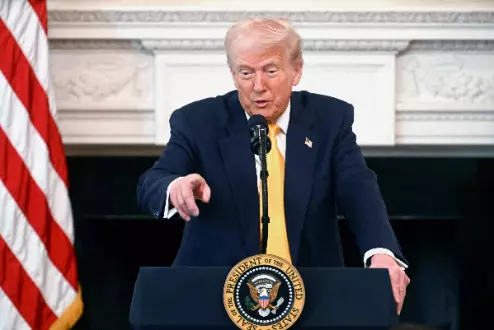
However, exporters say clarity remains elusive. Shortly after issuing the 10 per cent order on February 21, effective from February 24, Trump publicly announced a further hike to 15 per cent, though no formal notification has been released.
“As per the current order, Indian goods will attract 10 per cent tariffs from February 24. But we are keeping our fingers crossed, as a new order for 15 per cent tariffs has not been issued by the US so far. But uncertainty is there,” said Ajay Sahai, Director General of the Federation of Indian Export Organisations.
There is also confusion about what happens after the 150-day window expires. “We need to bring down the curtains on this tariff drama now,” said Sharad Kumar Saraf, Mumbai-based exporter and founder chairman of Technocraft Industries India. He added that the US remains a crucial destination for Indian exporters and that fluctuating duties directly affect business sentiment. “Clarity and certainty over these tariffs will help us in pushing exports to the US,” he said.
The new levy will be imposed over and above existing US most-favoured-nation duties. For example, a product facing a 5 per cent MFN duty will now effectively be taxed at 15 per cent with the additional 10 per cent. Earlier, the combined duty stood at 30 per cent. If the proposed 15 per cent rate is notified, the total would rise to 20 per cent.
Footwear and leather exporters say the Supreme Court ruling has improved visibility. Aqeel Panaruna, chairman of Florence shoe company, said effective duties are now expected to settle in the 10 to 15 per cent range across Asian sourcing countries, restoring predictability for US brands. He noted that tariff stability is vital for labour-intensive sectors with long product cycles and tight margins, and said India’s workforce depth and manufacturing scale support reliability and flexibility in a shifting trade environment.
Similar optimism was echoed by seafood exporters. Yogesh Gupta, managing director of Kolkata-based Megaa Moda, said the reduction to 10 per cent would help raise shipments to the US, while removal of uncertainty around a 15 per cent rate would allow clearer planning.
The latest development comes against a backdrop of sharp tariff escalation in recent years. In August 2025, the US imposed a 25 per cent reciprocal tariff on India, followed by another 25 per cent linked to India’s purchases of Russian crude oil, taking total duties to 50 per cent. Earlier this month, India and the US agreed on a framework for an interim trade deal under which Washington would cut tariffs to 18 per cent. The initial 25 per cent punitive levy has since been removed, while the remaining 25 per cent continues.
To implement the first phase of the bilateral agreement, the framework must be converted into a legal text. An Indian delegation was scheduled to visit Washington from February 23 to 26, 2026, to finalise the document, but the visit has been postponed.
The US has been India’s largest goods trading partner during 2021–25, accounting for about 18 per cent of India’s exports, 6.22 per cent of its imports, and 10.73 per cent of total bilateral trade. In 2024–25, two-way trade stood at USD 186 billion, including USD 86.5 billion in Indian exports and USD 45.3 billion in imports.