India-US trade pact: Interest of agriculture, dairy sector completely protected, says Goyal


New Delhi: India and the United States have reached the final stages of a sweeping bilateral trade framework that sharply reduces American tariffs on a wide range of Indian goods while preserving New Delhi’s policy space over sensitive farm and dairy products, marking one of the most significant resets in economic ties between the two countries in recent years. The agreement, negotiated over several months and now expected to be formalised through a joint statement “shortly”, will see Washington lower its reciprocal duties on most Indian exports to 18 per cent from as high as 50 per cent, a move officials say could immediately revive shipments worth tens of billions of dollars. Commerce and Industry Minister Piyush Goyal said the pact balances commercial gains with domestic sensitivities, opening the US market for labour-intensive industries such as textiles, leather, gems and jewellery, while keeping sectors like dairy, rice, wheat, meat and genetically modified crops outside the deal’s ambit. The development came hours after US President Donald Trump announced the tariff cut in return for what he described as “favourable treatment” from India, including a commitment to purchase up to USD 500 billion of American goods over five years.
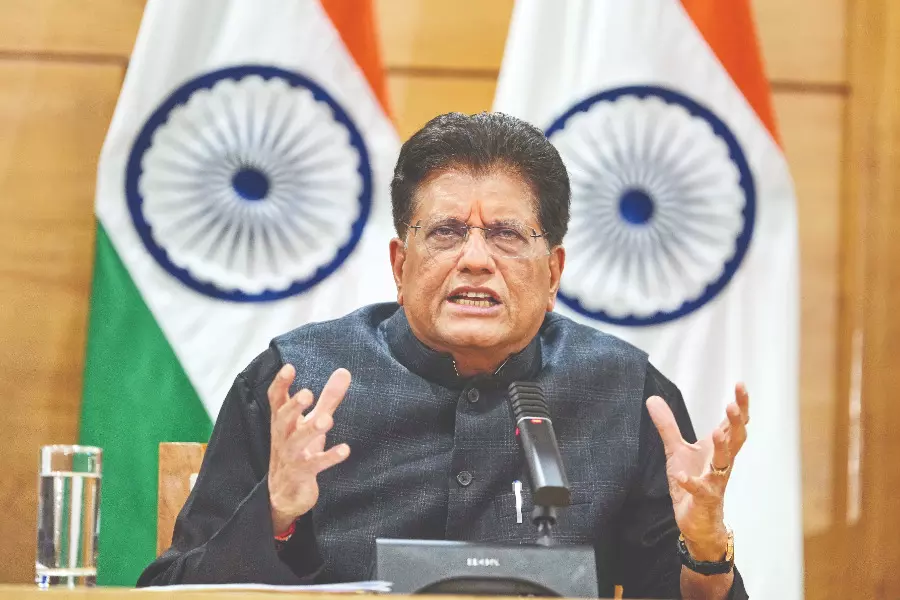
Briefing reporters in New Delhi, Goyal said a detailed Indo-US joint statement is being finalised and will spell out the contours of the agreement once technical processes are completed. He described the outcome as “very good” for India, noting that most competing exporters to the US, including Vietnam, Bangladesh, Malaysia, Thailand and Cambodia, still face duties of 19 to 20 per cent on similar products. “We will be shortly issuing a joint statement along with the details which we will be shortly inking with the US. And as soon as the final understanding of the deal is inked and the joint statement is finalised, technical processes are completed, full details will be shared,” he said.
According to government sources, the US has agreed to remove a 25 per cent punitive tariff earlier imposed on India in connection with its purchases of Russian oil, and the overall reciprocal rate applicable to Indian goods will settle at 18 per cent. This reduction is expected to deliver immediate gains for sectors such as leather and footwear, marine products including shrimp, chemicals, plastics, rubber goods, carpets, home decor, machinery and select processed agricultural items. Export clusters like Tirupur in Tamil Nadu, known for apparel, and Surat in Gujarat, a hub for gems and jewellery, are likely to benefit after having been affected by elevated US duties over the past year.
Officials estimate that exports worth about USD 30 billion to the US stand to gain directly from the tariff cut. Another USD 4 billion of Indian shipments, including minerals, natural resources and certain agri products, already fall in exempted categories. Pharmaceuticals and electronics, which together account for roughly USD 28 billion in exports, are also largely duty-free, as are several food and mineral items. However, around USD 28 billion of Indian exports remain subject to Section 232 national security tariffs on steel, aluminium, copper and auto products, which apply uniformly to all countries and carry a 50 per cent levy.
The pact will follow a differentiated implementation schedule. In some areas, duties will be eliminated on the day the agreement comes into force, while in others they will be phased out gradually. Certain sectors will see partial reductions, and quota-based concessions will apply in select categories. Goyal said India had consistently ring-fenced sensitive agricultural and dairy products from trade agreements, and this position remains unchanged.
The announcement arrives at a critical moment for Indian exporters. The US accounts for more than 20 per cent of India’s total exports, yet shipments faced headwinds late last year due to high American tariffs. India’s merchandise exports to the US fell 1.83 per cent to USD 6.88 billion in December 2025, after contracting in September and October, though they rebounded 22.61 per cent in November. Over April to December of the current fiscal year, exports to the US still grew 9.75 per cent to USD 65.87 billion, while imports from the US rose 12.85 per cent to USD 39.43 billion. In calendar year 2024, India exported USD 87.3 billion worth of goods to the US and imported USD 41.5 billion.
On the import side, sources said Trump’s reference to India buying USD 500 billion of American goods relates to a five-year horizon and includes aircraft and aircraft parts. “We will be importing goods worth USD 50-55 billion, for data centres alone we will need goods worth USD 20 billion a year,” a source said, adding that the 18 per cent tariff would apply after the joint statement is signed. India is expected to increase purchases of US oil and gas, advanced chips, data centre equipment, high-end technology, precious metals and aviation hardware. Officials noted that orders worth around USD 100 billion for aircraft and parts are already placed or in the pipeline.
Goyal said the deal would also help India access “best-in-class, world-class technologies” at a time when domestic demand for ICT products, data centre infrastructure, innovation equipment and raw materials is rising rapidly. He argued that this would support India’s broader growth trajectory without compromising domestic priorities.
Politically, the agreement received strong backing from the government’s top leadership. Prime Minister Narendra Modi described the pact as a “big decision” that would benefit the entire country during a meeting of the NDA Parliamentary Party on Tuesday. Coalition MPs congratulated him for concluding trade arrangements with both the US and the European Union, saying these steps would strengthen Indian manufacturers, exporters and entrepreneurs.
The deal builds on negotiations that formally began in February last year, when both sides launched talks for a Bilateral Trade Agreement with the stated goal of lifting two-way trade in goods and services to USD 500 billion by 2030 from about USD 191 billion at present. While the final legal text is still awaited, officials and industry groups have signalled that the tariff rollback alone could provide a near-term boost to employment-intensive sectors and revive momentum in the world’s most important export market for India.