India sets ‘Humanity First’ agenda ahead of BRICS 2026 Chairship
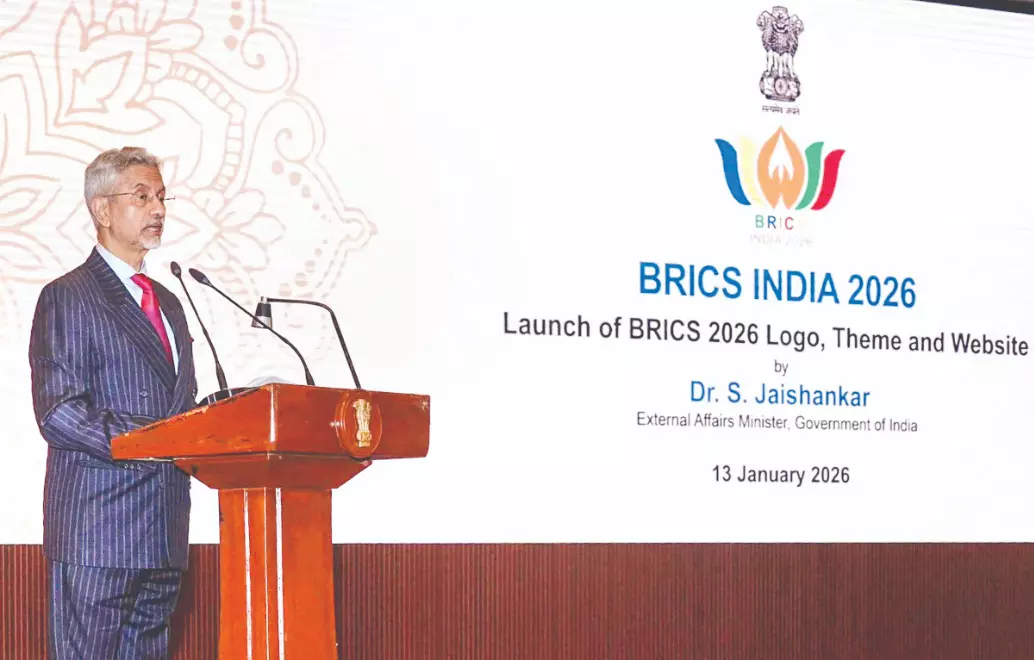


New Delhi: As India prepares to take over the Chairship of BRICS in 2026, the government has outlined an ambitious and people-centric vision for steering the grouping at a time of profound global uncertainty. Speaking ahead of the Chairship, External Affairs Minister S Jaishankar said the international landscape is increasingly shaped by complex and interconnected challenges, including geopolitical tensions, economic pressures, climate-related risks, rapid technological disruptions and persistent development gaps. In such circumstances, he underlined, BRICS remains a relevant and necessary forum for dialogue and coordinated responses that respect national priorities and different stages of development.
The minister said India would approach its Chairship with a “humanity first” outlook, inspired by Prime Minister Narendra Modi’s vision of inclusive and people-oriented global cooperation. Reflecting this approach, India has chosen the theme “Building for Resilience, Innovation, Cooperation and Sustainability” for its BRICS Chairship. The theme, officials said, captures New Delhi’s belief that closer cooperation among BRICS members can help address shared global challenges in a balanced, inclusive and practical manner, with a strong emphasis on capacity-building, innovation and sustainable development.
On Tuesday, India also unveiled the official logo for its BRICS Chairship. The logo has been described as a blend of tradition and modernity, with petals incorporating the colours of all BRICS member countries. It symbolises unity in diversity and conveys the idea that the strength of the grouping lies in the collective contributions of its members, even as each retains its distinct identity. Alongside the logo, India launched the BRICS India website, which will function as a common digital platform during its Chairship. The website will provide information on meetings, initiatives and outcomes, while enabling greater transparency, engagement and timely dissemination of information related to BRICS activities.
India has outlined four broad priorities—Resilience, Innovation, Cooperation and Sustainability—that will guide its Chairship and form a coherent framework across the three pillars of BRICS cooperation: political and security affairs, economic and financial cooperation, and cultural and people-to-people exchanges. Under the resilience pillar, India intends to work closely with partner countries to strengthen institutional and structural capacities to withstand global shocks. This will include cooperation in critical sectors such as agriculture, health, disaster risk reduction, energy and supply chains, with a focus on enhancing preparedness, response and long-term resilience through collaborative mechanisms. Innovation has been highlighted as a key driver of global economic development, particularly for developing countries. India stressed that deeper cooperation in areas such as startups, micro, small and medium enterprises, and new and emerging technologies can play a meaningful role in addressing socio-economic challenges. At the same time, New Delhi emphasised that technological advancement must remain people-centric, ensuring that innovation contributes to inclusive growth and improved livelihoods rather than widening existing inequalities.
India’s assumption of the BRICS Chairship in 2026 will coincide with a significant milestone for the grouping, which will complete two decades since its inception. Over the past twenty years, BRICS has evolved into an important platform for cooperation among emerging markets and developing economies. Its agenda and membership have expanded in response to changing global realities, while it has retained a strong focus on people-centric development, dialogue and practical cooperation.
Reaffirming the importance of cooperation and sustainability, India reiterated its commitment to advancing climate action, promoting clean energy and supporting sustainable development pathways in a manner that is fair, inclusive and sensitive to national circumstances. At a time when the world is grappling with multiple, overlapping crises, India stressed the urgent need for a reinvigorated, inclusive and effective multilateral order. It said BRICS must support reformed multilateralism that reflects contemporary realities, with global institutions such as the United Nations, the World Trade Organisation, the International Monetary Fund and the World Bank becoming more representative, inclusive and responsive.
The New Development Bank, established by BRICS countries, was described as a key instrument of economic cooperation that has played an important role in promoting infrastructure development and sustainability among its members. India reaffirmed its commitment to supporting efforts to further strengthen the Bank as a credible, responsive and financially sustainable institution capable of meeting the evolving needs of developing economies.
People-to-people exchanges will remain a central element of India’s BRICS Chairship, with continued focus on youth, culture, education, sports, tourism and academic interactions. Such engagements, India said, are essential for building mutual understanding, strengthening a sense of community within BRICS and laying a strong foundation for long-term cooperation. Reiterating its view of BRICS as a constructive platform that complements the broader multilateral system, India said its Chairship would be guided by the principles of mutual respect, sovereign equality and consensus. Expressing confidence in the collective strength of the grouping, New Delhi said that with the cooperation and support of all BRICS members, partner countries and stakeholders, its Chairship would be inclusive, practical, people-centric and firmly oriented towards tangible outcomes.