Health impacts due to plastics worldwide may double by 2040
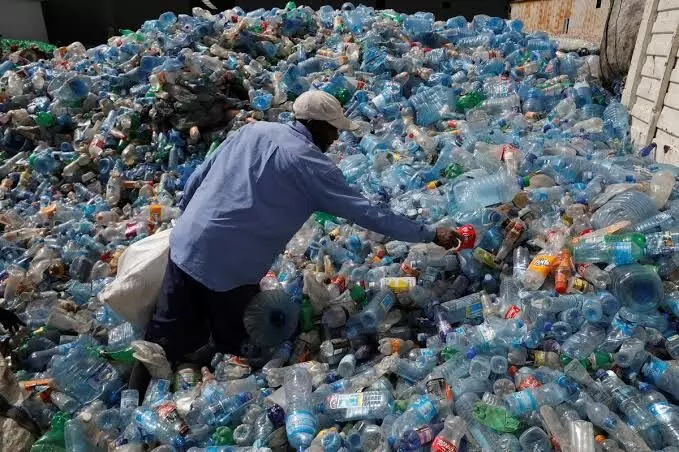


New Delhi: Adverse effects on health due to emissions from the world's plastics system, including greenhouse gases, air-polluting particles and toxic chemicals released from production, could more than double by 2040, compared to levels in 2016, if current trends continue, according to a study. The study, published in The Lancet Planetary Health journal, also highlighted that the global production of plastics may not peak until beyond 2100, worsening environmental and health burdens in an already overwhelmed system. Plastic pollution and emissions released across its lifecycle are increasingly recognised for their potential impacts on human health, yet the overall scale of the impact is only beginning to be fully quantified, researchers from the London School of Hygiene and Tropical Medicine and institutes in France, said. Quantifying health impacts throughout plastics' lifecycles can inform global action against pollution, promoting sustainability across the environment, economy and health, they said. The team added that a non-disclosure of the chemical composition of plastics is "severely limiting" lifecycle assessments in informing effective policy.
The plastics lifecycle assessment study is the first global-scale one to estimate health impacts in terms of 'disability-adjusted life-years' related to greenhouse gases, air pollutants and chemicals released, the researchers said. Lifecycles of plastic products analysed include raw material extraction to polymer production to post-consumption waste collection, recycling technologies, dumpsites and open burning and environmental pollution. The model put forth in the study contributes a flexible framework that can be expanded to include new data and methods and improve precision in health impact estimates associated with plastics, their alternatives and substitutes -- the information can contribute towards a rapidly changing policy landscape, the authors said. The framework currently recommends a deep reduction in primary plastic (virgin plastic) production in leading a transition away from substances, along with assessments that account for plastics' functions across sectors. A globally coordinated policy that addresses upstream effects through a full lifecycle approach is crucial to protecting human health, the researchers said. "We found that emissions throughout plastics lifecycles contributed to human health burdens of global warming, air pollution, toxicity-related cancers, and non-communicable diseases, with greatest harms from primary plastics production and open burning," the authors wrote. "Adverse health effects associated with the global plastics system more than doubled under P2O (plastics-to-ocean) BAU (business-as-usual) projections for 2016-40," they said. The authors say to effectively reduce plastic emissions and their impact on health, policymakers must better regulate and significantly reduce the production of new plastics for non-essential uses to effectively reduce plastic emissions and health impacts. Over 175 countries have agreed to develop a Global Plastics Treaty, which is under negotiation.