
ED has no right to restrict movement, confine people during search at their premises: HC
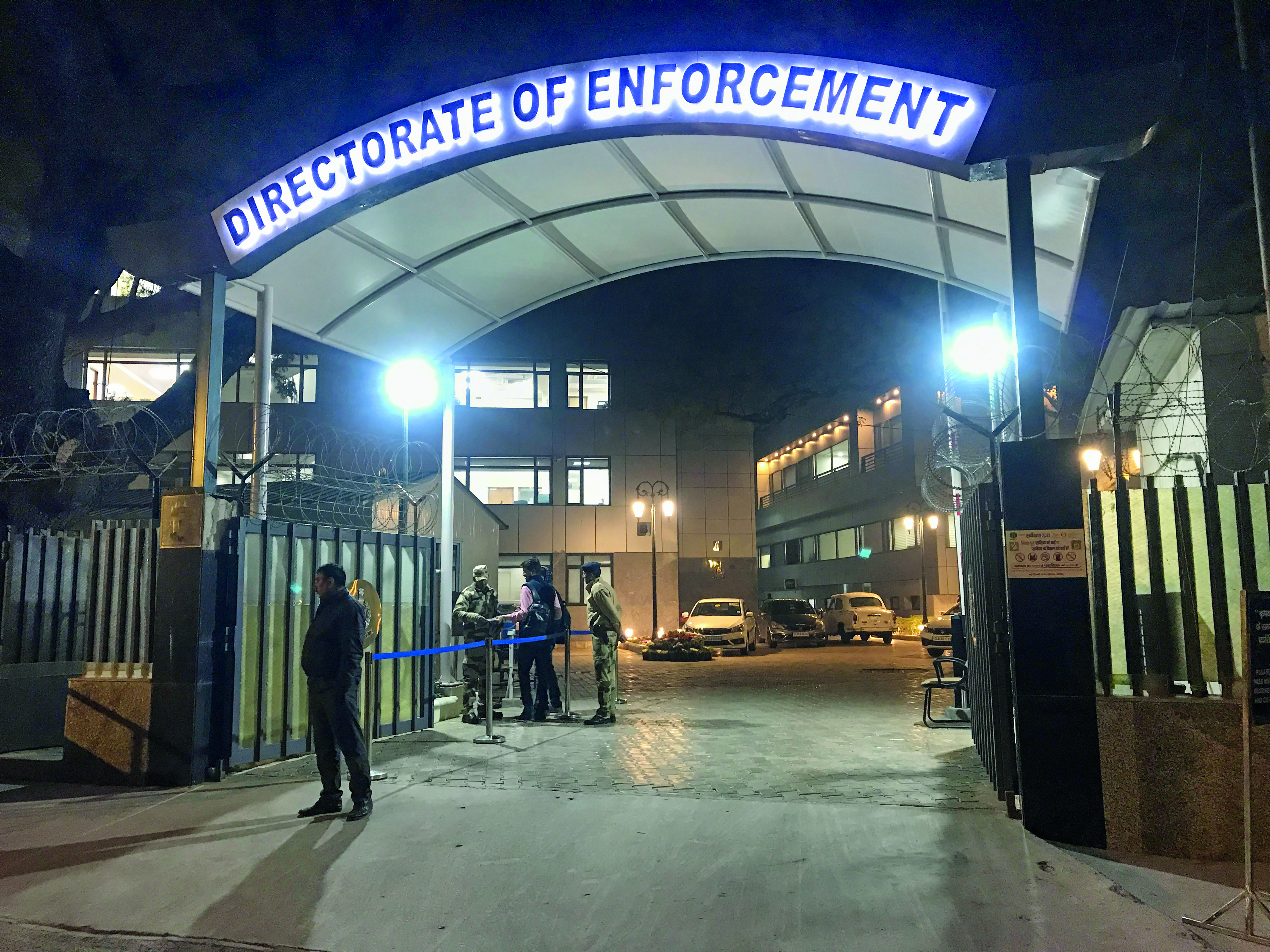


Chandigarh: In a recent order, the Punjab and Haryana High Court said that the Enforcement Directorate (ED) cannot confine a person within a premises during its search and seizure operation in a money laundering case, Bar and Bench reported.
Justice Vikas Bahl made the observation while setting aside the arrest of former Indian National Lok Dal legislator Dilbagh Singh and another accused Kulwinder Singh in a money laundering case related to allegations of illegal mining.
“There is nothing which stops the persons whose premises are being searched from carrying out their daily routine including going to their offices/place of work,” the Court observed.
The Court added that while ED officers have a right to require the persons to open any lock, safe, almirah and break open the items in case of non-compliance, they do not “have a right to restrain the movements of the said persons i.e. the petitioners in the present case within the premises.”
Dilbagh Singh and Kulwinder Singh - the petitioners, had challenged their arrest and the orders remanding them to the ED custody in the case under Prevention of Money Laundering Act (PMLA).
One of the allegations was that the petitioners along with their family members were illegally detained by the ED from January 4 to January 8 when the search and seizure at their houses took place. They were illegally shown to have been arrested on January 8, the Court was told.
The Court considered whether the detention was illegal, and found it proven from the record that the petitioners were not permitted to leave their house during the time of search.
The ED had relied upon its rules on search and seizure to contend that presence of the petitioners and other persons was essential as they were in possession of the locker, safe, almirah, documents and other material.
However, the Court examined the rules and found that while the rules give an occupant of a building an enabling right to attend or be present during the search, that does not translate to ED having a right to demand their presence during such search.
“Reading of the said provision would show that the occupant of the building cannot be forced to attend the search much less to stay confined in the premises for days altogether till the time the search is concluded,” it added.
It also reasoned that the ED already has the power to break open the lock of a locker, safe or almirah in case its request for keys is not complied with.
The Court also examined Section 18 of the PMLA (provision enabling personal search by ED) and concluded that the authority cannot detain the person so searched for more than 24 hours prior to taking him before the Gazetted Officer or to the Magistrate. In the present case, the Court found that the ED had not invoked Section 18 and thus could not have detained or restrained the petitioners. Thus, the Court said the petitioners would be deemed to have been arrested on January 4. It rejected the argument that the petitioners were in the premises out of their own will.
Justice Bahl also found that the Special Court under PMLA, while remanding the accused to custody, had not applied its mind to see whether there was compliance with Section 19 of the PMLA in the arrest of the two petitioners.
The Court further found there was no full compliance of Section 19 of the Act by the ED.



