Delhi Metro to add 16 km, 13 stations at Rs 12,015 cr
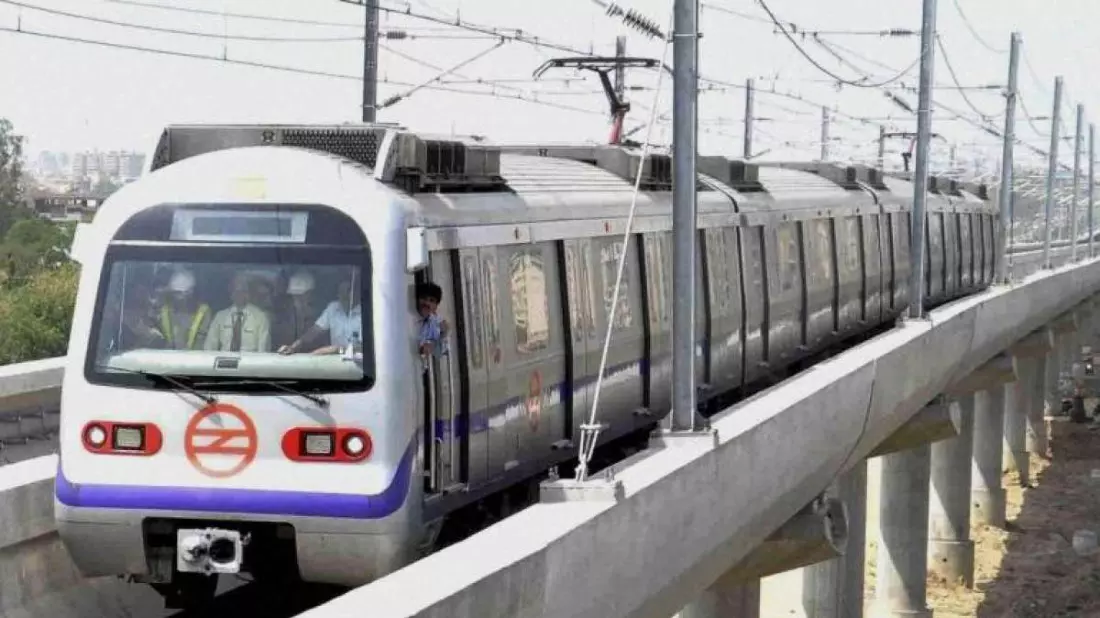


NEW DELHI: The Union Cabinet on Wednesday cleared Phase V(A) of the Delhi Metro Rail Project, approving a fresh expansion of the national capital’s mass rapid transit system aimed at improving connectivity, easing congestion and supporting cleaner urban mobility.
Under the approved plan, 16 km of new Metro lines will be added across three corridors, with the construction of 13 stations, including 10 underground and three elevated. The project will be executed over a three-year period at an estimated cost of Rs 12,015 crore. Officials said the new corridors are expected to help cut nearly 33,000 tonnes of carbon emissions annually once operations begin.
Announcing the decision, Information and Broadcasting Minister Ashwini Vaishnaw said the expansion would build on the transformative role played by the Metro in Delhi’s daily life. “We all know how the Delhi Metro has positively transformed the lives of residents of Delhi and everyone who travels in and out of the city. With this expansion, a new chapter will be added to the Delhi Metro,” he said, adding that the sanctioned outlay stands at Rs 12,015 crore. Prime Minister Narendra Modi described the approval as a major infrastructure push for the capital. In a post on X, he said, “Delhi’s infrastructure gets a major boost! Cabinet’s approval for three new corridors as part of Delhi Metro’s Phase V(A) Project will expand our capital’s metro network, thus boosting ‘Ease of Living’ and reducing congestion.”
The largest of the three corridors will be the 9.91 km RK Ashram Marg to Indraprastha stretch, costing Rs 9,570.4 crore. This section will extend the existing Botanical Garden–RK Ashram Marg corridor and provide direct Metro access to the Central Vista area, which is undergoing redevelopment. Stations along this route will include RK Ashram Marg, Shivaji Stadium, Central Secretariat, Kartavya Bhawan, India Gate, War Memorial–High Court, Baroda House, Bharat Mandapam and Indraprastha. According to the government, the corridor will serve around 60,000 office goers and nearly two lakh visitors daily by connecting Kartavya Bhavans, India Gate and other key installations in Lutyens’ Delhi.
The Cabinet also approved two smaller extensions. The 2.263 km Aerocity to Indira Gandhi Domestic Airport Terminal 1 corridor will be built at a cost of Rs 1,419.6 crore, while the 3.9 km Tughlakabad to Kalindi Kunj corridor will cost Rs 1,024.8 crore. These stretches will extend the Aerocity–Tughlakabad corridor, improving links between south Delhi, areas such as Saket and Chhatarpur, and the domestic airport. Stations on the Tughlakabad–Kalindi Kunj section will include Sarita Vihar Depot, Madanpur Khadar and Kalindi Kunj.
An official statement said these extensions of the Magenta Line and the proposed Golden Line would expand Metro reach in central Delhi and near the domestic airport, reduce road congestion and lower pollution from motor vehicles. Construction of Phase IV, comprising 111 km and 83 stations, is already underway. The government said 80.43 per cent of civil work on three priority Phase IV corridors has been completed, with phased commissioning expected by December 2026.
At present, the Delhi Metro Rail Corporation operates 12 lines spanning about 395 km with 289 stations across Delhi and the NCR. The Metro handles an average of 65 lakh passenger journeys daily, with a record 81.87 lakh trips logged on August 8 this year. Separately, DMRC recently received the Outstanding Prestressed Concrete Structure in the Country Award from the Indian Concrete Institute for the Maujpur to Majlis Park corridor, a key Phase IV project that will form India’s first circular ring Metro line.