Delhi logs highest temp of season at 49.9 0C
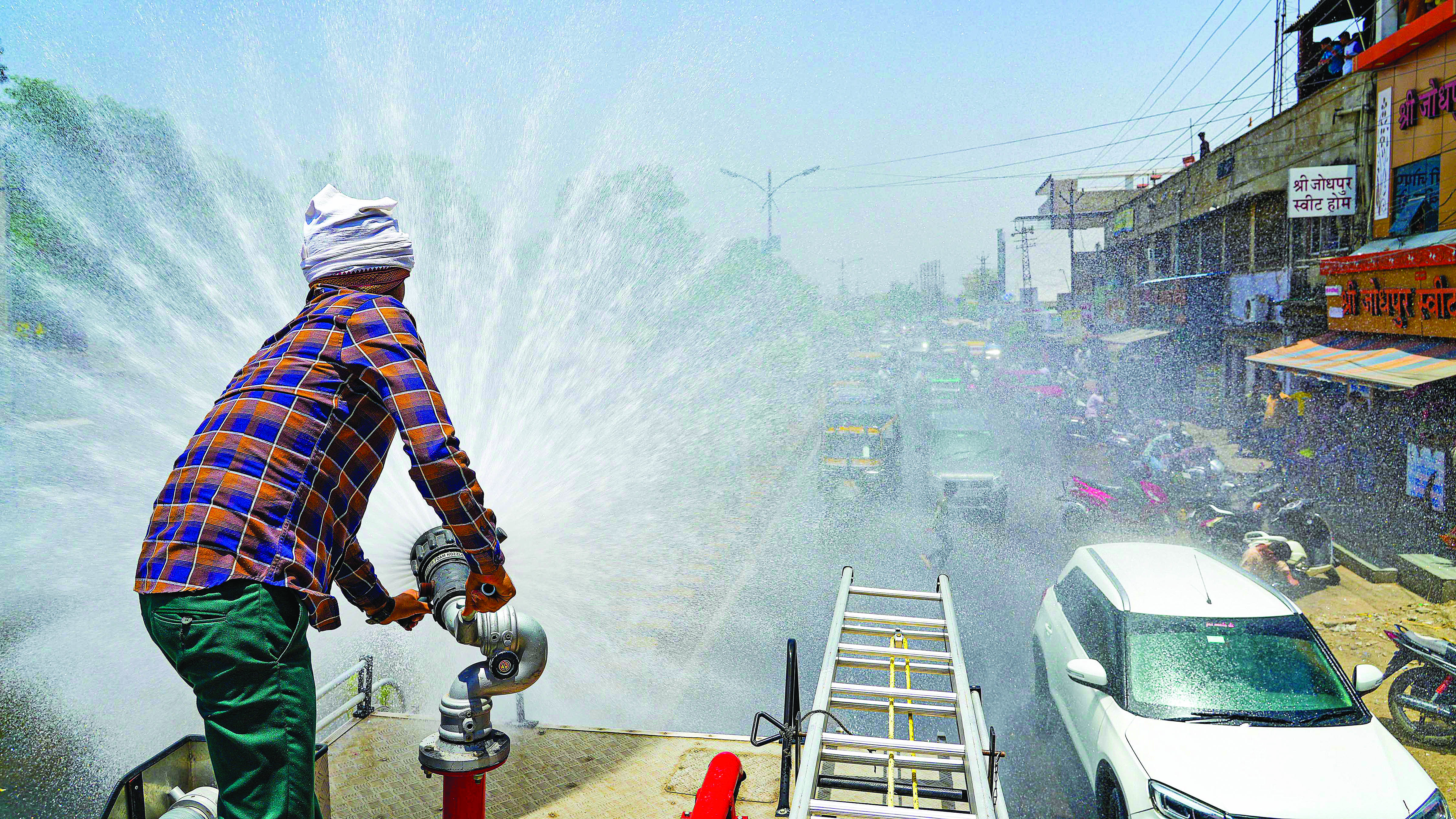


New Delhi: Large parts of northern and central India were gripped by extreme heatwave conditions on Tuesday, with temperatures surpassing 50 degrees Celsius in Churu, Rajasthan, and Sirsa, Haryana. The national capital also sizzled, with temperatures settling nine notches above normal for the season.
In Delhi, at least three weather stations recorded maximum temperatures of 49 degrees Celsius or more. Mungeshpur and Narela clocked 49.9 degrees, followed by Najafgarh at 49.8 degrees, according to the weather office. This was the highest temperature recorded in Delhi this season. However, it is noteworthy that the Mungeshpur and Narela weather stations, established in 2022, have only three years of records.
The India Meteorological Department (IMD) indicated no immediate respite from the heatwave conditions for at least the next two days. IMD Director General Mrutyunjay Mohapatra attributed the heatwave to the absence of Western Disturbances during the latter half of May. Western Disturbances are extra-tropical weather systems formed over the Mediterranean Sea, moving from west to east.
“Today, heatwave to severe heatwave conditions prevailed over most parts of Rajasthan, Haryana-Chandigarh-Delhi, many parts of Uttar Pradesh, Madhya Pradesh, and isolated pockets of Bihar and Himachal Pradesh,” the IMD reported. It added that heatwave conditions also prevailed in many places over Vidarbha, some pockets of Jammu and Kashmir, and isolated pockets of Uttarakhand and Chhattisgarh.
Churu in Rajasthan was the hottest place in the country, with a maximum temperature of 50.5 degrees Celsius, followed by Sirsa-AWS in Haryana (50.3), Mungeshpur and Narela (49.9), Najafgarh (49.8), Sirsa (49.5), Ganganagar in Rajasthan (49.4), Pilani and Phalodi in Rajasthan, and Jhansi in Uttar Pradesh (49).
The weather office warned that warm night conditions are likely to prevail in isolated pockets over Uttar Pradesh, East Madhya Pradesh, Punjab, Haryana, Chandigarh, and Delhi in the coming days.
The scorching heat prompted the Haryana government to advance summer vacations in state-run and private schools to Tuesday. The intense heatwave is testing power grids and causing water shortages across the country.
The Central Water Commission reported that water storage in 150 major reservoirs in India dropped to just 24 per cent of their live storage last week, exacerbating water shortages in many states and significantly affecting hydropower generation. The Maharashtra irrigation department noted that the water stock in Jayakwadi dam in the drought-prone Marathwada region stood at a mere 5.19 per cent of its capacity on Monday, following an evaporation loss of 1.15 MCM (million cubic metres) in a single day due to the heat.
The intense heat has driven India’s power demand to 239.96 gigawatts, the highest so far this season, with air conditioners and coolers in homes and offices running at full capacity. Experts anticipate that power demand could rise further, potentially surpassing the all-time high of 243.27 GW recorded in September 2023.
Severe heat waves have impacted large parts of India for three consecutive years, affecting health, water availability, agriculture, power generation, and other sectors of the economy.