Day 9: Oil, water in war’s crosshairs - Israel suffers first troop losses | Saudi Arabia reports 2 deaths
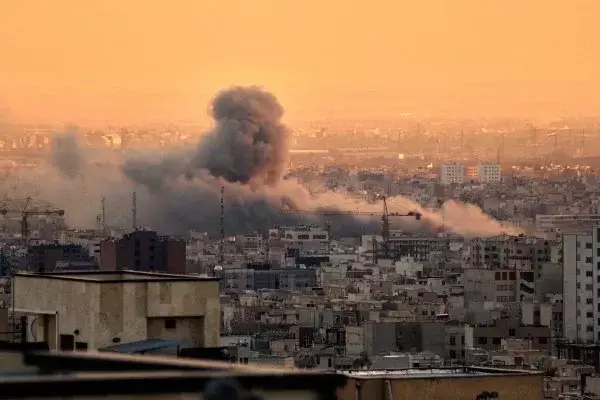


DUBAI: The US and Israel continue to strike Iran, hitting oil storage depots and refining facilities in Tehran for the first time on Sunday. An Iranian drone attack caused material damage to a water desalination plant in Bahrain, the country’s interior ministry said.
Israel on Sunday struck southern Lebanon, Beirut and oil storage facilities in Tehran as the war in the Middle East keeps escalating, and Prime Minister Benjamin Netanyahu promised “many surprises” for the next phase of the conflict.
Earlier Sunday, Iran’s Foreign Minister Abbas Araghchi said a US airstrike damaged an Iranian desalination plant on Qeshm Island, warning that in doing so “the U.S. set this precedent, not Iran.” Such infrastructure is critical for drinking water supplies in the parched deserts of the Gulf. An Israeli attack on oil storage sites in Tehran sent up pillars of fire that could be seen in Associated Press video as a glow against the Saturday night sky. It appeared to be the first time a civil industrial facility has been targeted in the war.
The war, which erupted on Feb. 28 after joint U.S.-Israeli strikes hit Iran, has so far killed at least 1,230 people in the Islamic Republic, more than 300 in Lebanon and around a dozen in Israel, according to officials.
Iran foreign minister said his country is looking for a permanent end to the war, not a ceasefire. But before Tehran might even consider a ceasefire, Abbas Araghch said “they have to explain why they started this aggression.” Araghch did not specify about whom he was speaking.
Araghchi also told NBC’s “Meet the Press” that “there should be a permanent end of the war and unless we get to that, I think we need to continue fighting for the sake of our people and our security.”
He said the war “was imposed on us” by the United States and Israel, and that “what we are doing is legal acts of self-defense and we have every right to do that.”
The US State Department said more than 32,000 Americans have left the Middle East since the start of the Iran war last week.
Although most of them departed on commercial flights without government assistance, the department said Sunday that it had organized nearly two dozen charter flights that had carried several thousand US citizens from the Mideast to destinations in Europe and the United States.
The Israeli military announced that two soldiers were killed in fighting in southern Lebanon on Sunday.
They are the first military fatalities since the start of the war with Iran last week.
One of the soldiers was identified as 38-year-old Maher Khatar, from the Druze village of Majdal Shams in the Israeli-annexed Golan Heights. The military has not published the name of the second soldier as his family is still being notified.
An Iranian official deplored the U.S.-Israeli strikes on oil facilities in Iran, saying they pushed the war into a “dangerous phase.”
“These attacks on fuel storage facilities amount to nothing less than intentional chemical warfare against the Iranian citizens,” Foreign Ministry spokesman Esmaeil Baqaei said in a social media post.
He said such attacks will have “devastating the environment, and endangering lives on a massive scale” because of hazardous materials and toxic substances they release into the air.
“The consequences of this environmental and humanitarian catastrophe will not be confined within Iran’s borders,” he said.
Lebanon’s top diplomat has condemned a drone attack apparently launched from Lebanese territory that hit a British airbase on the southern coast of Cyprus.
Youssef Rajji’s remarks Sunday come after his Cypriot counterpart Constantinos Kombos said an exploding drone that hit the British Royal Air Force’s Akrotiri on Monday originated from Lebanese territory, where the Hezbollah militant group is at war with Israel. Hezbollah’s arsenal notably includes exploding drones, similar to the ones used by Iran.
As Beirut scrambles to make amends, French President Emmanuel Macron will visit the European Union island nation Monday. The attack puts Lebanon in a predicament, as Macron is leading the only diplomatic endeavor to try to halt the conflict, which has killed almost 400 people in Lebanon and displaced hundreds of thousands.
Firefighters have controlled fires at the Kuwait International Airport and a government agency in Kuwait City, hours after both facilities were hit in missile and drone attacks early Sunday.
The General Fire Force said in a statement that it managed to control fires at fuel tanks in the airport as well as the headquarters of the state-run Public Institution for Social Insurance.
Spokesman Brig. Gen. Mohammed Badr said the fire damaged both the tanks and the insurance agency building. No causalities were reported, he said.
Meanwhile, President Abdel-Fattah el-Sissi of Egypt expressed concerns about the war in the Middle East and its “grave repercussions, including rising energy prices and disruptions to supply chains and air and maritime traffic.”
He warned of the dangers of the conflict expansion which he said could plunge the entire region into chaos, the Egyptian president said. He called for intensified international efforts to stop the war.