
Centre, states must forget politics and stop crop residue burning: SC
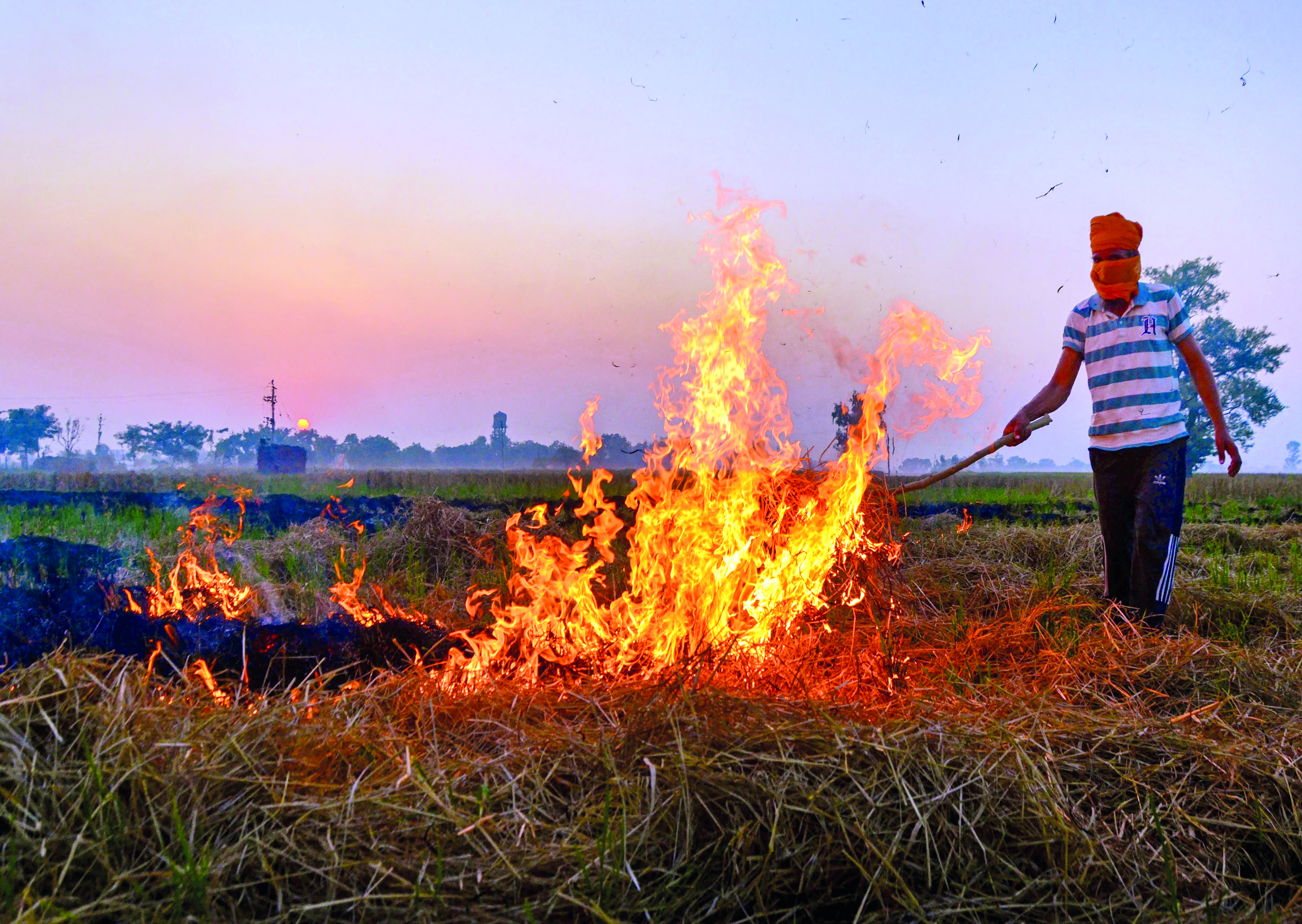


New Delhi: The Centre and the states must “forget politics” and apply their minds to see how crop residue burning can be stopped, the Supreme Court said on Tuesday while observing that people will be affected due to air pollution if the blame game continues.
The Punjab government told the apex court that 984 FIRs have been lodged against land owners over crop residue burning, environment compensation charge amounting to over Rs two crore has been imposed and recovery of about Rs 18 lakh has been made.
“The states and Union must forget politics of it and apply their minds to it to see how to stop it (residue burning). That is the bottom line,” the bench said while referring to crop residue burning.
“People are not concerned with how you do it and what you do and the court’s job is not to get into the nitty-gritty. The court’s job is to make you do your job, which is to stop pollution. How you do it is your problem,” a bench of justices Sanjay Kishan Kaul and Sudhanshu Dhulia said.
It was informed by senior advocate Aparajita Singh, who is assisting the top court as an amicus curiae in the pollution matter, that even on Sunday, over 700 farm fire incidents were reported from Punjab.
“The only person who can answer this is the farmers. He can tell you why he is doing it. He is not here. The farmer is being made a villain and the villain has not been heard,” the bench observed, adding, “He (farmer) must be having some reasons”.
The top court was hearing a matter related to crippling air pollution that chokes the Delhi-National Capital Region (NCR) every winter.
Besides the issue concerning crop residue burning, the bench also took up other matters like the one related to open waste burning in Delhi and Uttar Pradesh.
The bench asked Delhi and Uttar Pradesh governments to take action in this regard and file reports before it.
During the hearing, the apex court referred to the declining water table in Punjab and said the land there was running arid slowly due to the amount of water being utilised.
“If the land runs dry, then everything else also gets affected. Someway, the farmers must understand or be made to understand the consequences of cultivating paddy,” it said.
Observing that it had flagged the issue earlier also, the bench said in Punjab the growth of paddy was one of the reasons for the water table’s decline.
The bench observed that it had earlier flagged that paddy cultivation must be phased out in Punjab and be substituted with other crops and the authorities should explore the aspect of giving minimum support price (MSP) for alternative crops.
It said people people are burning residue despite the observations from the court and counselling and the fact that citizens and children were affected due to pollution.
“Then the stick must also follow the carrot. Why should there be any purchase under the MSP system from people who have lit the fire?” the bench suggested.



