
Centre approves increase in MSP for 14 kharif crops


New Delhi: In a significant move ahead of Assembly elections in states like Haryana, Maharashtra, Jharkhand and Delhi, the Central government has announced a substantial increase in Minimum Support Prices (MSPs) for kharif crops. The decision marks Prime Minister Narendra Modi’s first major agricultural policy initiative in his third term.
The Cabinet, acting on recommendations from the Commission for Agricultural Costs and Prices (CACP), approved the MSP hike for 14 kharif crops, underscoring its commitment to ensure farmers receive at least 1.5 times the cost of production. Union minister Ashwini Vaishnaw emphasised that the decision reflects the government’s steadfast approach to supporting agricultural livelihoods.
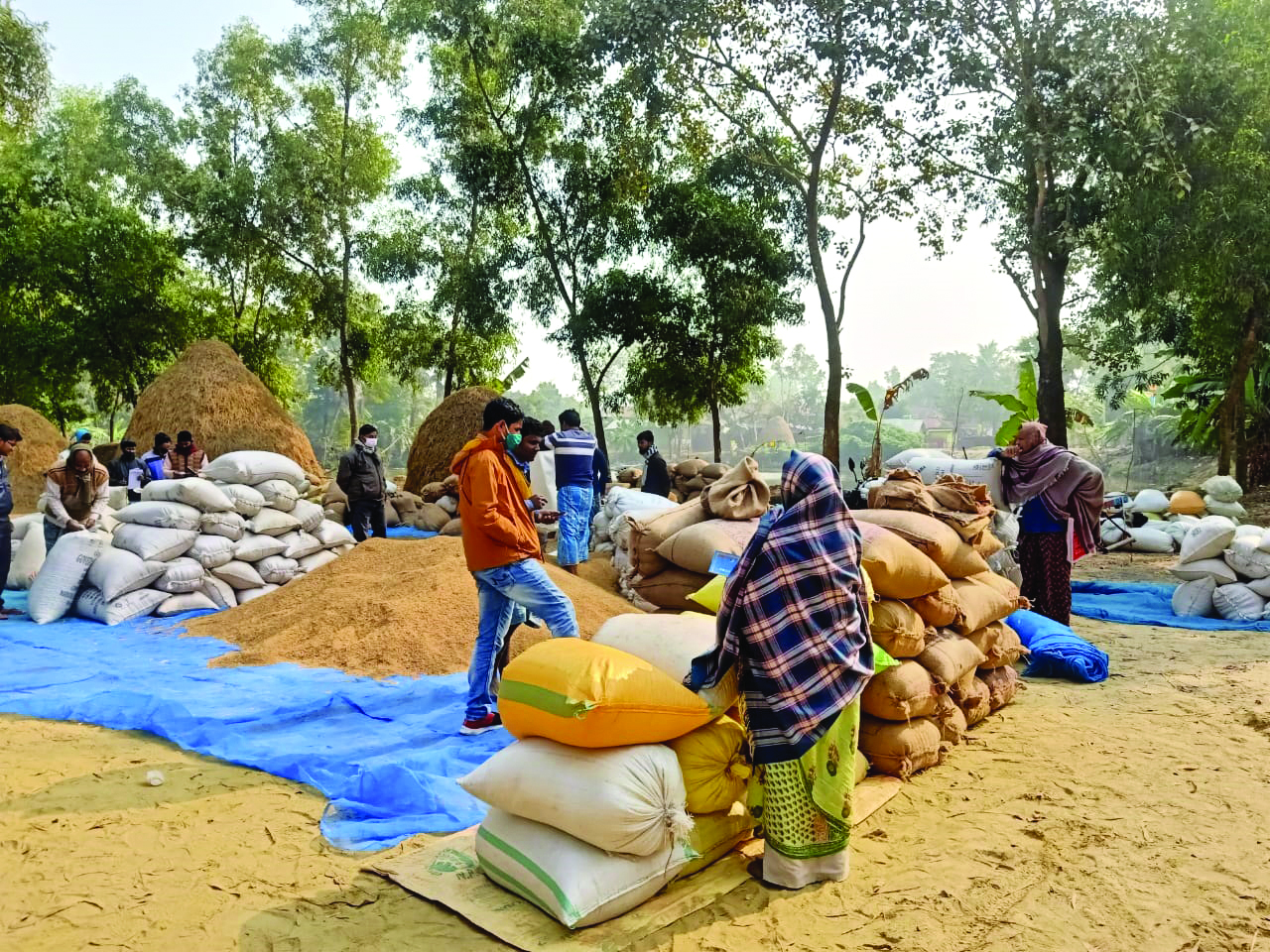
Paddy, the predominant kharif crop, saw its MSP raised by Rs 117 per quintal to Rs 2,300 for the upcoming marketing season. The ‘A’ grade variety of paddy will now fetch Rs 2,320 per quintal. This increase comes amid concerns over surplus rice stocks but is strategically timed ahead of elections in states such as Haryana, Maharashtra, Jharkhand, and Delhi.
The total financial implication from the MSP hike is estimated at Rs 2,00,000 crore, about Rs 35,000 crore higher than the previous season, significantly boosting farmers’ income, the minister said.
Among cereals, the MSP for ‘hybrid’ grade jowar has been raised by Rs 191 to Rs 3,371 per quintal, while for the ‘Maldani’ variety, it has been hiked by Rs 196 to Rs 3,421 per quintal for the 2024-25 marketing season (October-September).
The support price for bajra has been increased by Rs 125 to Rs 2,625 per quintal, ragi by Rs 444 to Rs 4290 per quintal and maize by Rs 135 to Rs 2,225 per quintal for 2024-25.
To reduce the country’s dependence on import of pulses, the MSP for tur has been raised by Rs 550 to Rs 7,550 per quintal, for urad by Rs 450 to Rs 7,400 per quintal and for moong by Rs 124 to Rs 8,682 per quintal for 2024-25 kharif marketing season.
Similarly, the support price for sunflower seed has been raised by Rs 520 to Rs 7,280 per quintal, for groundnut by Rs 406 to Rs 6,783 per quintal, for soybean (yellow) by Rs 292 to Rs 4,892 per quintal for the upcoming kharif season.
The support price for sesamum has been increased by Rs 632 to Rs 9,267 per quintal, and for nigerseed by Rs 983 to Rs 8717 per quintal for 2024-25.
In the case of commercial crops, the support price for cotton has been raised by Rs 501 each to Rs 7,121 per quintal for ‘medium staple’ and Rs 7,521 per quintal for the long staple variety.
Vaishnaw affirmed the government’s commitment to the holistic welfare of farmers, encapsulating the philosophy of “Beej se bazaar tak (from seed to market)”. He underscored continuity in policy aimed at fortifying the agricultural sector, building upon earlier initiatives to ensure sustainable economic growth and enhanced farmer prosperity.
According to the government, the expected margin to farmers over their cost of production is estimated to be highest in the case of bajra (77 per cent), followed by tur (59 per cent), maize (54 per cent) and urad (52 per cent).
For the rest of the crops, the margin to farmers over their cost of production is estimated to be at 50 per cent, an official statement said.
The announcement comes amidst a backdrop of reduced monsoon rainfall across India, with meteorological forecasts indicating favourable conditions for the monsoon’s advancement, critical for the upcoming sowing season.
The Food Corporation of India currently maintains a substantial buffer stock of rice, totalling around 53.4 million tonnes, sufficient to meet welfare scheme demands for a year without additional procurement.



