CAQM revokes GRAP-4 curbs in Delhi-NCR
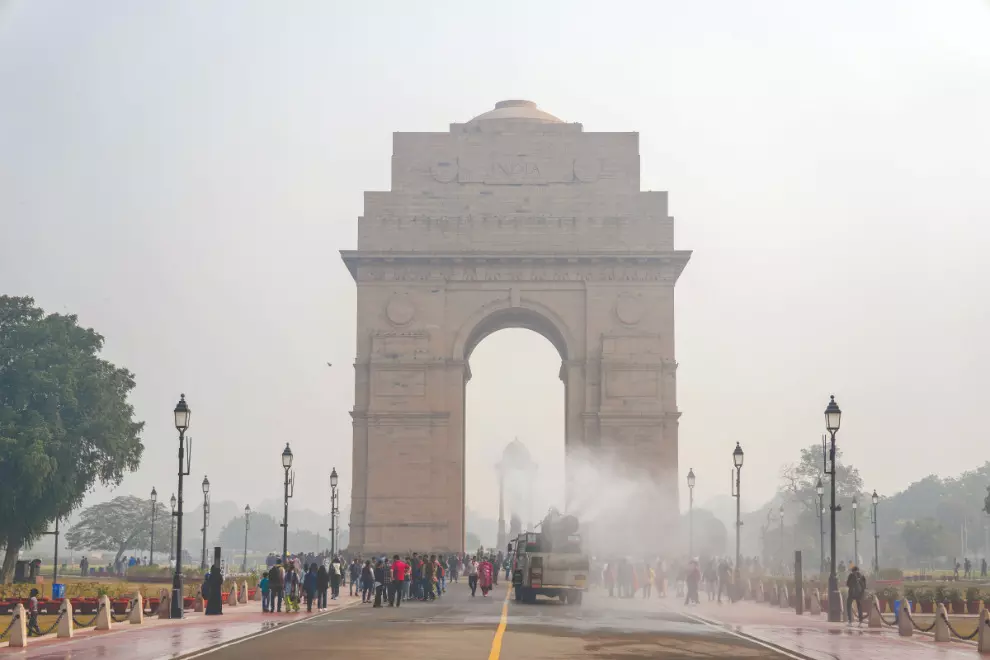


New Delhi: Delhi-NCR authorities on Tuesday withdrew the strictest set of anti-pollution restrictions under Stage-4 of the Graded Response Action Plan (GRAP) after a marginal improvement in air quality brought the city’s 24-hour average Air Quality Index (AQI) down to 378, though pollution levels continued to remain in the “very poor” category across most monitoring stations.
The Commission for Air Quality Management (CAQM) in NCR and adjoining areas said curbs under GRAP Stage-4 were being revoked, while measures under Stages 1, 2 and 3 of the revised GRAP would remain in force. “While GRAP Stage-4 is being revoked, keeping in view the winter season when weather conditions may not be always favourable and in order to ensure that the AQI levels do not slip further, citizens are requested to strictly adhere to the citizen charter under GRAP Stage-1, 2 and 3,” the CAQM order said.
Delhi had seen three consecutive days of “severe” air pollution on Saturday, Sunday and Monday, with AQI levels crossing the 400 mark, triggering Stage-4 restrictions. The three-day run ended on Tuesday morning when the average AQI was recorded at 395, before settling at 378 over the 24-hour period.
Station-wise data highlighted continuing concerns. By evening, 29 stations reported “very poor” air quality, five were in the “severe” category and four in “poor”, according to the Central Pollution Control Board (CPCB) Sameer app. Wazirpur recorded the worst AQI at 414. Earlier in the day, Wazirpur had touched 445, followed by Anand Vihar at 444 and Jahangirpuri at 443.
Under CPCB norms, AQI between 301 and 400 is classified as “very poor” and 401 to 500 as “severe”.
Delhi’s Decision Support System (DSS) attributed 11.1 per cent of the city’s pollution load to the transport sector, followed by Delhi and peripheral industries at 8.7 per cent. Energy generation contributed 1 per cent, construction activities 1.4 per cent and the residential sector 2.7 per cent. Among NCR districts, Sonipat was the largest contributor at 11.3 per cent, followed by Gautam Buddha Nagar (6.2 per cent), Baghpat (5.4 per cent), Muzaffarnagar (4.3 per cent), Panipat (4.1 per cent), Karnal (3.3 per cent), Ghaziabad (2.7 per cent) and Meerut (1.6 per cent).
Separately, Union Environment Minister Bhupender Yadav chaired a review meeting on action plans for Rohtak, Manesar, Panipat and Karnal. He flagged high PM10 levels and persistent solid waste management issues, including construction and demolition waste in industrial areas, and said a meeting with the Haryana chief minister would be convened to address funding and approvals.
Yadav also directed officials to compile comprehensive data on industries operating with and without Consent to Establish and Consent to Operate and to correlate permissions, commercial electricity connections and GST registration details to identify illegally operating units, including violations related to Online Continuous Emission/Effluent Monitoring Systems and air pollution control devices.
The Air Quality Warning System has forecast that air quality is likely to remain in the “very poor” category from Wednesday to Friday.