Yogendra Yadav flags ‘unprecedented’ voter drop in Bengal SIR
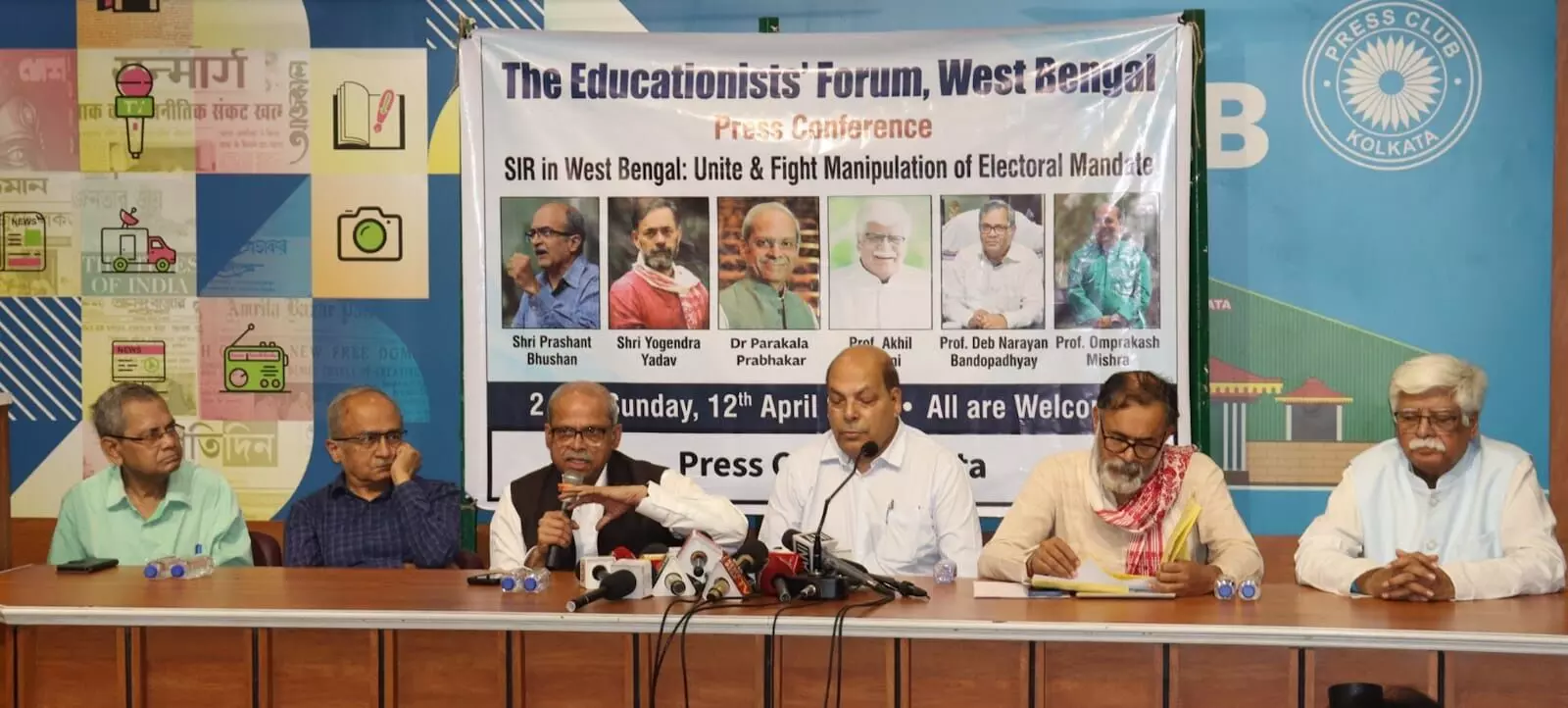


Kolkata: Political activist Yogendra Yadav on Sunday alleged that over 33 lakh voters were removed from West Bengal’s rolls after the draft revision, calling the process “unprecedented”, targeted and politically driven and reiterating that “Bihar was the trial run, the real target is West Bengal.”
At a press conference organised by the Educationists’ Forum, West Bengal, he termed the Special Intensive Revision (SIR) in West Bengal a “special impediment removal exercise” by the Bharatiya Janata Party to reshape the electorate.
He said West Bengal was the only state where voter numbers declined after the draft, from about 7.08 crore to 6.75 crore, with nearly 27 lakh deletions in the final phase.
At the start of the SIR, he said, the adult population was about 7.67 crore and the voter roll 7.66 crore, a 99.67 per cent match, rejecting claims of large-scale additions and noting that 41 per cent of July–August 2025 inclusion applications were rejected.
On “unmapped” voters, he put West Bengal at about 4.5 per cent, compared with around 3.5 per cent in Chhattisgarh and about 1.6 per cent in Madhya Pradesh and Rajasthan, questioning why the state was singled out. Initial exclusions of around 7.7 per cent, he said, were comparable to other states. Calling the outcome “extraordinary”, he noted that rolls rose after revision in Uttar Pradesh, Rajasthan, Kerala, Madhya Pradesh and Tamil Nadu, but declined in West Bengal. Alleging irregularities, he cited more observers and the transfer of 604 officials, including 590 from West Bengal and questioned the use of “logical discrepancies”, saying similar data elsewhere did not lead to comparable deletions.
On adjudication, he said about 60 lakh cases were decided in around 35 days, with some officers disposing of up to 250 cases a day, or about 25 per hour, without hearings. “How can anyone decide citizenship or voter eligibility at that speed?” he asked.
He alleged targeted exclusion, claiming that Muslims, who constitute about 25–27 per cent of the population, accounted for a disproportionate share of deletions.
Responding to questions, he said the Supreme Court of India could grant relief under Article 142, including supplementary lists or restoration of earlier rolls if cases remain pending. Senior advocate Prashant Bhushan termed the exercise “illegal”, citing Section 21 of the Representation of the People Act, alleging a lack of transparency and the use of minor discrepancies to flag voters, with documents such as Aadhaar cards and passports not accepted.
Economist Parakala Prabhakar warned of nationwide implications, calling it a shift from voters deciding governments to those in power determining voters, risking “two classes of citizens—those with franchise and those without” and urging judicial intervention. Prof Akhil Swami termed the developments “deeply distressing”, warning that labelling citizens as having “disputed identity” and removing them from the rolls risked denial of rights and erosion of trust.
Others present, including Prof Deb Narayan Bandyopadhyay and Prof Omprakash Mishra, called for judicial intervention and protection of voting rights.