Village ditches pottery as momo trade delivers steadier income
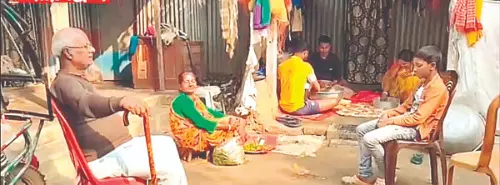


Raiganj: Momos have proved more lucrative than pottery for residents of Palpara village in Subashganj in North Dinajpur district. As a result, a majority of traditional potter families have abandoned their age-old craft and taken up momo making as their primary occupation. The village is now popularly known as “Momo Para.” The transformation of Palpara into “Momo Para” not only reflects changing economic realities but also raises concern over the disappearance of a traditional craft from the village.
Around 25 families are engaged in preparing Momos throughout the day, with both men and women actively participating in the business. Once the rhythmic sound of potters’ wheels filled the air of Palpara, but today visitors are welcomed by the aroma of steamed momos. The traditional art of pottery is gradually moving towards extinction in the area.
Sukumar Ranjan Paul, a senior potter of Palpara, said that earlier they used to prepare earthen pots and utensils for livelihood. “With the growing use of plastic and steel utensils, demand for mud containers has almost vanished. On the other hand, momos have become highly profitable. For the last eight years, my two sons have been running Momo stalls in Raiganj town, and all female members of our family help them. Following their success, several other families also started selling momos,” Paul added. Ashim Paul, a momo seller, said: “I learnt the skill of preparing momos nearly ten years ago from Malda and Siliguri. We first opened a temporary roadside stall.
As profits increased, my entire family joined the business. Pottery became difficult due to low profit margins and problems in procuring raw materials. Now we earn more than Rs 1,000 profit every day from momo selling.”
Supti Paul, a housewife, said around 1,000 momos are made daily at home with family support and supplied to stalls in Raiganj town, adding that momo-making is more profitable than pottery.