Synthetic athletics track: Safety concerns raised, plaint lodged
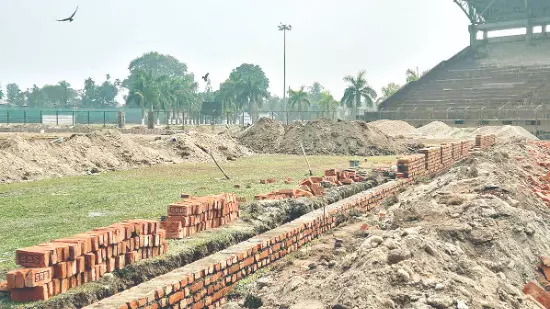


Jalpaiguri: Barely 10 days after construction began on the synthetic athletics track at Biswa Bangla Krirangan, controversy has emerged over alleged safety concerns, prompting a complaint at the Sports Authority of India (SAI) training centre in Jalpaiguri.
The Rs 10 crore project, funded by SAI and virtually inaugurated on February 3 by Union Sports minister Mansukh Mandaviya, is being developed as North Bengal’s first synthetic track facility. After Kolkata, it will be the second such track in West Bengal.
Designed in accordance with international standards, the 400-metre track will feature eight lanes and is expected to host major track and field disciplines, including long jump, high jump, pole vault, hurdles, and throwing events. According to Wasim Ahmed, in charge of the Jalpaiguri SAI training centre, the project is likely to be completed within three months.
However, several athletes and members of the local sporting fraternity have raised objections after inspecting the under-construction site. They allege that a four-foot-high concrete boundary wall being built along the outer edge of the track could pose safety risks. Concerns include limited space for officials during competitions, potential difficulties in hurdles events, and the possibility of athletes sustaining injuries if they collide with the wall during falls.
Some have also questioned the reduction from the earlier 10-lane grass track to an eight-lane synthetic facility.
In response, SAI Project Engineer Hari Krishna, accompanied by Ahmed, inspected the site and dismissed the allegations. “The track is being constructed strictly as per international specifications. Similar boundary structures exist at synthetic tracks in Chennai. Once completed, the synthetic surface will remain six inches below the top of the wall, and steel netting will be installed above it,” he said.
He added that the facility will incorporate sensor-based digital systems to automatically record and display performance data, reducing the need for officials to stand close to the track.
SAI officials maintained that the design prioritises both safety and compliance with global athletics norms, even as sections of the athletics community continue to voice apprehensions.