SIR process: Desh Bachao Ganamancha flags voters’ ordeal
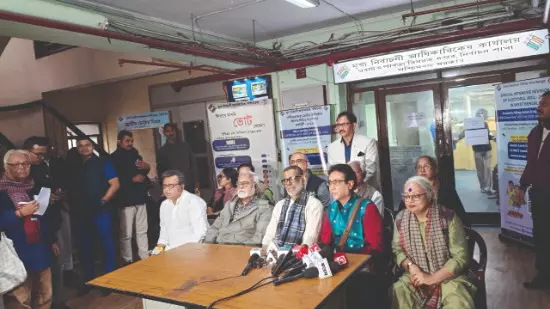


Kolkata: Desh Bachao Ganamancha has raised concerns over the manner in which the ongoing Special Intensive Revision (SIR) of electoral rolls is being conducted, alleging that the process has led to “widespread harassment” of voters and raised questions about the neutrality of the Election Commission (EC).
Former TMC MLA Purnendu Basu, who led a delegation of the organisation to the office of the Chief Electoral Officer (CEO), West Bengal, told the media that although voter list revision is a routine pre-election exercise, the present revision has begun unusually early and is being carried out with unprecedented intensity. He alleged that such large-scale verification was last seen nearly five decades ago, causing confusion, anxiety and distress among voters.
According to the organisation, door-to-door verification during the first phase has resulted in several voters being marked “absent” despite residing at their addresses. It claimed that many people found their names missing from the electoral rolls, while the names of deceased persons allegedly continued to remain. The organisation also cited instances where the names of family members of elected representatives were reportedly missing from draft rolls.
In a press statement, it further alleged that voters marked absent were asked to submit multiple documents and make repeated visits to offices, causing hardship to elderly citizens, daily wage earners and women. In several cases, people reportedly had to wait for long hours in queues to establish their eligibility.
The organisation claimed that the Election Commission had earlier stated that the 2002 electoral roll would serve as the base document for verification. However, it alleged that voters whose names appeared in the 2002 rolls were also being subjected to scrutiny, adding to confusion and uncertainty.
Desh Banchao Ganamancha questioned why electoral rolls prepared over the past two decades were not being accepted as valid reference documents. It alleged that the lack of clarity and consistency in the verification process has eroded public trust and raised doubts about the Commission’s intentions. The organisation asserted that the revision exercise has disproportionately affected marginalised sections, including rural residents and economically weaker groups, and claimed that several voters have been effectively deprived of their voting rights due to procedural hurdles.
Calling for immediate corrective measures, the organisation urged the Election Commission to ensure transparency, uniform guidelines and sensitivity towards voters, and to prevent the exclusion of genuine electors during the revision process.