S Dinajpur: Family’s survival hinges on state welfare schemes in border village
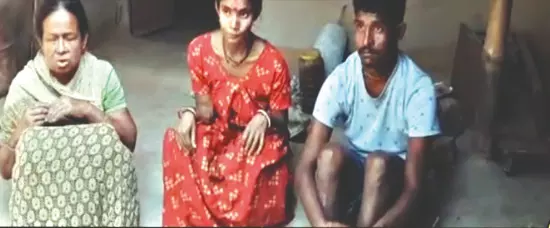


BALURGHAT: Just a few kilometres from the Bangladesh border lies East Chakram under Bhatpara Gram Panchayat of Balurghat block — a village where poverty casts a long, unrelenting shadow. At one corner of the settlement stands a small mud hut, its walls cracked and ageing. From the outside, it appears abandoned. But inside lives a family fighting a daily battle for survival, clinging to life with the help of Rs 4,000 provided every month through three welfare schemes of the state government.
The five-member Barman family is almost entirely dependent on state assistance. The head of the family, elderly Suryabala Barman, carries the weight of age and responsibility. Her trembling hands and frail frame reveal years of hardship, yet she remains the backbone of the household. She receives Rs 2,000 every month from the widow pension and the Lakshmir Bhandar scheme.
The remaining income comes from her physically disabled son, Madan Barman and daughter-in-law, Beauty Barman — both nearly 100 per cent disabled. Their combined disability pension amounts to another Rs 2,000, forming the only steady income that keeps the family alive.
Inside the crumbling hut live two young children. Whether the cooking fire will burn each day is uncertain. The food bag rarely holds enough to ensure the next meal and no one knows what the following day will bring. Had the monthly government aid not existed, neighbours say starvation would have been inevitable.
Beauty Barman’s voice trembles with helplessness as she says: “None of us can work. We survive only on the money given by the State government. If these allowances stop, we don’t know what we will eat. The thought itself is terrifying.”
Elderly Suryabala echoes the same pain: “Without the Chief Minister’s support, we would not have survived. There is no earning member. These grants are our world.”
Neighbours, too, recognise the struggle. “This is not just a family — this is a chilling story of survival,” said Gopal Mondal. Another neighbour, Binodan Barman, added: “Three disabled people and two children — their suffering is beyond words. The State government’s schemes are their only lifeline. We hope they receive more facilities from the government.”
In this border-side village, the dimly lit mud hut stands as a stark reflection of how crucial welfare schemes are for the poorest. Five lives survive on Rs 4,000 a month, proving how deep and urgent the need for state support remains. For the Barman family, the Chief Minister’s welfare initiatives offer not just financial assistance but also the courage, shelter, and human dignity to continue their fight for survival.