
Prepare for AI future or fall behind: Governor Ravi at CU convocation
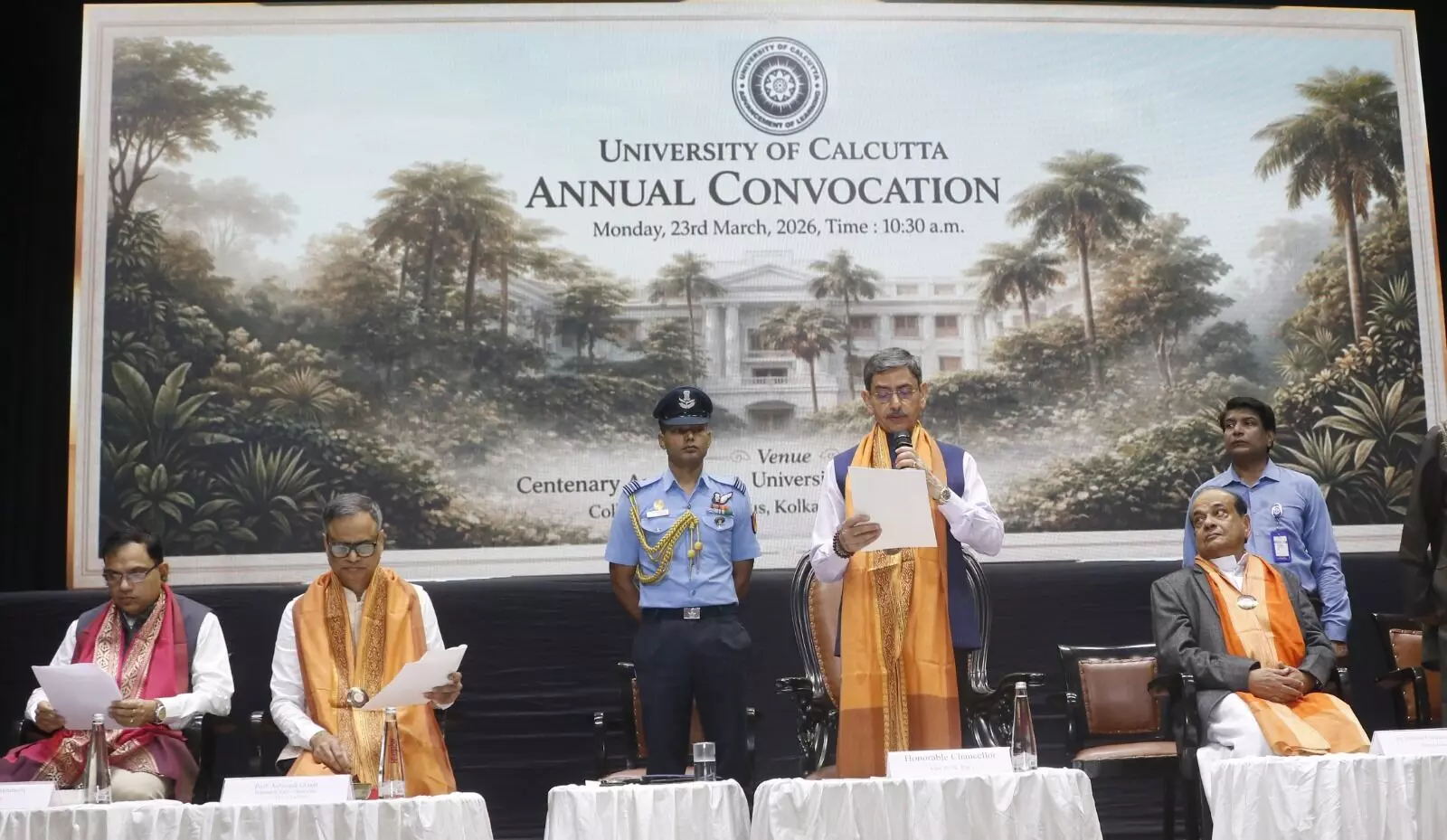


Kolkata: A call for artificial intelligence literacy and a return to questioning as the core of learning dominated the convocation at Calcutta University on Monday, with Governor-Chancellor R. N. Ravi and IIT Kharagpur Director Suman Chakraborty urging graduates to prepare for rapid technological change.
Ravi warned of a widening divide between those who understand artificial intelligence and those who do not, and asked students across disciplines to familiarise themselves with emerging technologies. “The world increasingly is getting divided between those who are AI literate and those who are not and the gap is going to widen enormously,” he said.
Linking individual ambition with national priorities, he urged graduates to align their goals with India’s target of becoming a developed nation by 2047. He cited India’s rise from the 11th to the fourth-largest economy in the past decade and asked students to assess their contribution to the country’s progress. “Ask yourself what I did to make this country great,” he said.
He said advances in nanotechnology, quantum computing and robotics would reshape multiple sectors and called for translating knowledge into application. Referring to India’s historical economic position, he said the country was once a major contributor to global output and was now at a turning point. He also urged students to maintain physical and mental discipline, recommending yoga as part of daily life.
Chakraborty said the future of learning lay in asking questions rather than reproducing answers, especially in an AI-driven world. “The greatest revolutions in knowledge rarely begin with answers; they begin with questions that refuse to go away,” he said. “AI can generate answers, but it cannot generate the deepest of questions.”
He said artificial intelligence was already reshaping science, medicine, economics and governance, with the ability to analyse vast amounts of data and simulate complex systems, but argued that curiosity remained central to knowledge. “Do not seek answers; interrogate reality itself,” he said.
The convocation, held at the College Street campus after six years, saw around 1,100 research scholars who completed doctoral studies between 2024 and 2026 receive PhD degrees. Eight MPhil degrees were conferred, while 12 distinguished personalities received special medals and prizes and eight teachers were honoured with eminent teacher awards.
Honorary degrees were conferred on scientist Vijay Pandurang Bhatkar (DSc), educationist Ranajit Das (DLitt) and former Christ University vice-chancellor Father Thomas Chatamparampil (DLitt).
Vice-Chancellor Ashutosh Ghosh said the university’s priorities included strengthening affiliated colleges through decentralisation, expanding industry partnerships, increasing international collaborations, accelerating digitalisation and building infrastructure for interdisciplinary research, alongside a focus on equity and inclusion.



