Netaji’s relief mission in flood-ravaged Balurghat
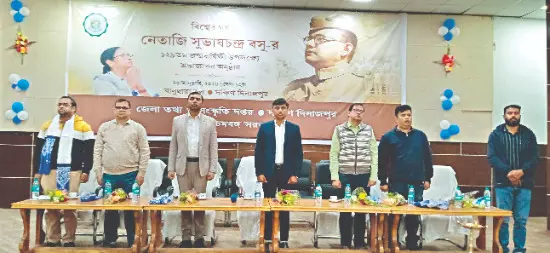


BALURGHAT: Netaji Subhash Chandra Bose, one of the foremost leaders of India’s freedom struggle, had once visited Balurghat and several parts of the then undivided Dinajpur district to witness first-hand the massive devastation caused by flood and famine in North Bengal. Though lesser known, this chapter of his life reflects his deep humanitarian concern beyond political movements.
Historical records reveal that towards the end of September 1922, a catastrophic flood struck four districts of North Bengal. Vast stretches along the Atreyee River were submerged, affecting over 15 lakh people. A large section of the affected population belonged to the Muslim community. The worst-hit areas included the Balurghat subdivision of undivided Dinajpur district, along with the Natore and Naogaon subdivisions of the then Rajshahi district.
In the aftermath of the floods, a severe famine broke out in regions such as Dhamoirhat and Patnitala under the Balurghat subdivision. Disturbed by the scale of human misery, Netaji Subhash Chandra Bose visited the flood and famine-affected areas accompanied by his close associate Dr Jatindranath Sengupta. Around the same time, the Bengal Relief Committee was formed, through which Netaji appealed to people across the country to come forward to help the victims. His call reportedly led to the collection of nearly Rs 4,00,000 as relief funds—an enormous sum for that era.
Netaji’s association with the region continued in later years. On May 26, 1928, he arrived at Hili by the North Bengal Express and was accorded a civic reception at Hili Railway Station, now located in present-day Bangladesh. Archival documents point to his close association with Hili’s then zamindar Kumudnath Ray. During the visit, Netaji toured the Sarada Bhavan Library and recorded his remarks in the visitors’ book. Congress leaders Pratap Chandra Majumdar and Nishith Kundu were among those who maintained close contact with him.
In Balurghat, Netaji spent a night at the residence of noted freedom fighter Saroj Ranjan Chattopadhyay and inaugurated the Congress Bhavan at present-day Congress Para. The structure, however, was later washed away by floods of the Atreyee River.
Contemporary reports painted a grim picture. Probasi magazine edited by Ramananda Chattopadhyay wrote that the famine situation “remained as before,” with reports of parents selling their children due to extreme food scarcity.