Methodology of crocodile census in Sunderbans: Training to be held today
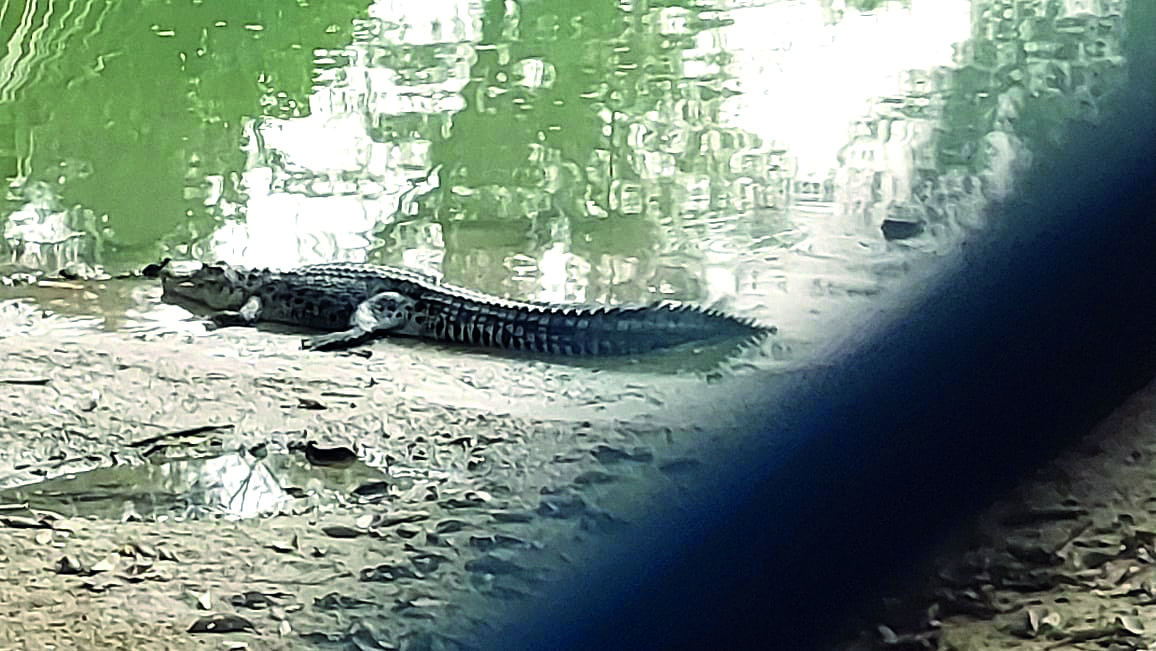


Kolkata: The state Forest department will hold training of team members involved in the census of saltwater crocodiles in the Sunderbans on Tuesday at Sajnekhali to explain the methodology of the survey which is being held after more than a decade.
The two-day census based on physical observation of the crocodiles is scheduled to be held on January 18 and 19. However, the schedule may change one or two days, if the weather conditions are not congenial.
The exercise will be held in the entire Sunderbans in Indian part that comprise Sunderban Tiger Reserve (STR) and South 24-Parganas Forest Division.
“Sunderbans has been divided into various sectors and one team each will be deployed per sector for conducting the survey. The team members will wade across multiple creeks of the islands on vessels in pre-defined stretches for the exercise. There will be at least one spotter and one confirmer in each team which is the standard practice. There will be at least one representative from the civil society in each of the teams for ensuring openness and credibility,” Debal Roy, state Chief Wildlife Warden said.
Justin Jones, Deputy Field Director of STR said that after rigorous statistical analysis, the department will come up with a per kilometre density data.
“Crocodiles are cold-blooded reptiles that thermoregulate by sunning themselves. Adults need to maintain a stable body temperature in the preferred range of 30–32 degrees C. In the summers, crocodiles bask in the morning and evening — retreating to the water when the sun is sharp. But in winter, they bask from morning until the sun sets, warming their bodies as much as they can. So chances of sighting are much higher. The length and maturity level of the reptiles will also be determined through a formula , “ a senior official of the state Forest department said.
In 2012, the first and only survey on saltwater crocodiles in Sunderban had put the figure to 99.
The saltwater crocodile is the largest and heaviest living reptile in the world. Males can grow up to 20 feet and weigh over 1,000 kg. The largest one recorded in India, in Bhitarkanika National Park, Odisha, was 22 feet long. Its skull is displayed in the national park’s museum.