
Mega 4-month wildlife survey begins at Buxa Tiger Reserve
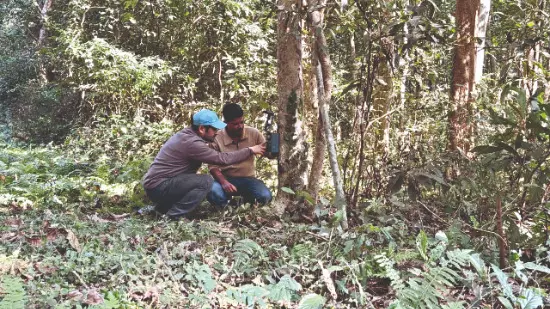


Alipurduar: The year’s largest wildlife survey has begun across the Buxa Tiger Reserve, with an extensive four-month monitoring exercise kicking off on Monday. The survey, which will continue from December to March, covers the reserve’s sprawling 760 sq km landscape and includes both carnivorous and herbivorous species.
At the core of the study is advanced camera-trap monitoring. Around 450 high-resolution cameras are being installed across the forest, placed strategically in grids of 2 sq km each. To execute the massive operation, the Forest department has deployed 60 specialised teams, each comprising seven trained personnel. In total, more than 400 forest staff will be engaged in continuous field monitoring throughout the winter.
Every 7–10 days, teams will replace camera batteries and memory cards, collect data, and begin immediate analysis. The entire methodology has been formulated in line with the guidelines of the National Tiger Conservation Authority (NTCA).
According to Forest Department officials, the objective goes beyond estimating animal populations. The survey aims to build a detailed scientific map of species distribution, habitat use, and the relationship between wildlife, grasses, and vegetation across diverse landscapes — from rugged hill tracts to dense forest plains.
Since 2020, tigers have been photographed multiple times in camera traps at Buxa and Neora Valley. Experts are hopeful that this year’s extensive effort may yield clearer and more definitive evidence of the presence of the Royal Bengal Tiger in the region.
Debashish Sharma, Deputy Field Director (East) of Buxa Tiger Reserve, said, “Camera monitoring has officially begun following all guidelines. We are hopeful that the findings will help keep Buxa’s forests natural and healthy. Human intrusion, forest degradation, corridor encroachment, and climate change have made conservation more challenging. This is why technology-driven, data-based protection is now our priority.”
The survey, officials say, is expected to generate the most accurate wildlife census data in recent years and may also reveal unexpected insights. Many believe the study will provide fresh direction for wildlife conservation efforts across North Bengal.



