Lemon cultivation helps Dooars farmers shield paddy fields from elephant raids
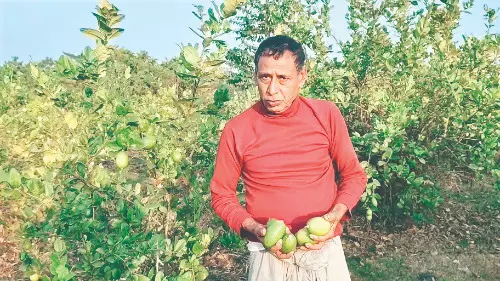


Jalpaiguri: Until a few years ago, protecting paddy fields from frequent elephant incursions was a major challenge for farmers living along forest fringes in the Dooars. Today, cultivating lemon trees along field boundaries has emerged as a simple yet effective deterrent.
Farmers such as Bablu Mahato of Dakshin Dhupjhora village in the Matiali block and Sakil Ahmed have managed to keep elephants away from their paddy and maize fields by growing thorny lemon plants along the periphery of their land.
Elephant raids are a long-standing problem in villages bordering the Chapramari Wildlife Sanctuary and Gorumara National Park. Most residents depend on paddy and maize cultivation for their livelihood. This has resulted in recurring human–elephant conflict. Though lemon cultivation has not yielded significant profits, farmers say it has helped them protect their main crops and avoid losses.
“I planted kagzi lemon along the boundaries of my paddy fields and separately on four bighas. The price is low—around 80 paise per lemon—but by protecting my 12 bighas of paddy, I avoided major losses,” said Bablu Mahato. “For over a year now, elephant herds have not come near my fields.”
Sakil Ahmed said the influx of lemons from Assam has kept prices depressed. “Lemon cultivation is not very profitable, but it acts as an effective barrier. It is best suited for
boundary planting,” he said. DFO of Gorumara Wildlife Division, Dwija Pratim Sen, said forest officials have been encouraging farmers in forest-fringe villages to adopt alternative cultivation. “Our wildlife squads and quick response teams regularly recommend lemon and spice crops, but wider adoption is still needed,” he said. Khurshid Alam, assistant director of the district Horticulture department, said free lemon saplings have been distributed in elephant-affected blocks such as Mal, Meteli, Nagrakata and Banarhat. “Boundary cultivation of lemon has helped prevent elephant incursions while providing some additional income,” he said.
Arun Sheet, principal scientist at the Central Plantation Crops Research Institute, said farmers in Chalsa and Nagrakata are also earning additional income by growing cinnamon and cloves alongside areca nut and coconut trees, crops that wild animals generally avoid.