
Jorasanko non-Bengali vote holds key as SIR prunes electoral roll


Kolkata: “A little more than kin, but less than kind.” Shakespeare’s line from Hamlet captures the irony of north Kolkata’s Jorasanko Assembly seat — the birthplace of Rabindranath Tagore, yet a constituency where electoral outcomes are shaped largely by the non-Bengali community.
Steeped in the legacy of the Bengal Renaissance, Jorasanko today tells a different story at the ballot box. The trading hub of Burrabazar and adjoining areas has, over the years, come to be dominated by non-Bengali voters, who now hold the key to victory.
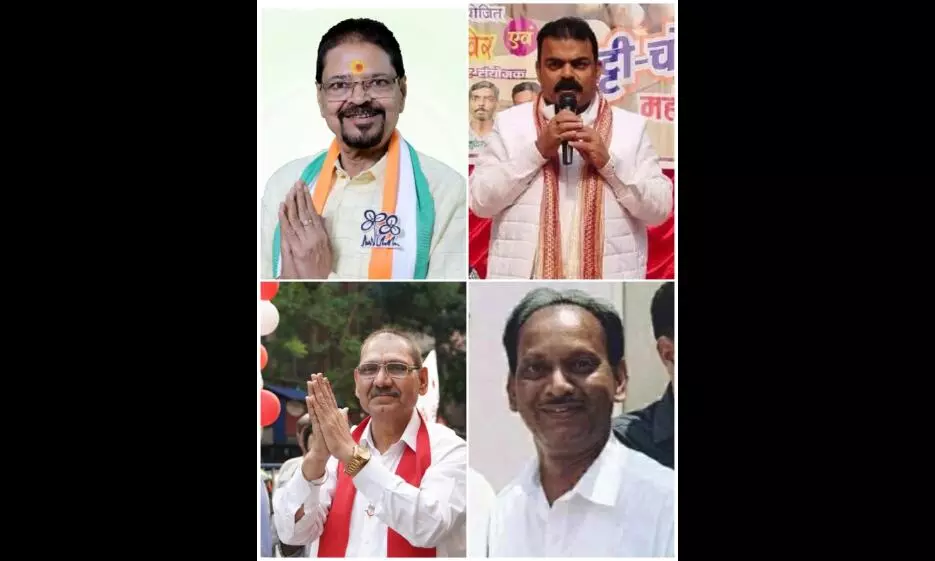
Reflecting this reality, all four major contenders — Trinamool Congress, BJP, Left Front and Congress — have fielded non-Bengali candidates. The Trinamool has replaced sitting MLA Vivek Gupta with Vijay Upadhyay, a two-time Kolkata Municipal Corporation (KMC) councillor, in a clear bid to consolidate this voter base. The BJP has put up Vijay Ojha, also a KMC corporator, known for his sharp oratory and political shayari that often livens up civic debates. His appeal cuts across party lines within the corporation.
The Left Front has fielded Bharat Ram Tiwari, while the Congress has chosen Deepak Singh, completing a line-up that underlines how central this voter segment is to the contest.
In this business-heavy seat, especially across Burrabazar, many observers see the BJP as having an edge. But past trends suggest a more mixed picture. The Constituency was long with the Congress, with the Janata Party and Forward Bloc winning it once each. Since 2011, however, Trinamool has held on to it.
In 2021, Trinamool’s Vivek Gupta secured 52,123 votes (52.67 per cent), defeating BJP’s Meena Devi Purohit, who polled 39,380 votes (39.80 per cent), by a margin of 12,743 votes. The total electorate stood at 1,97,901, with 99,115 votes cast.
This time, the contest comes with a significant shift — nearly 72,900 names, about 36.85 per cent of voters, have been deleted in the revision of rolls. In Jorasanko, where history meets commerce, the question is simple: who connects better with the voters who matter most.



