Irrigation dept floats tender for Karala River dredging to address Jalpaiguri’s flood woes
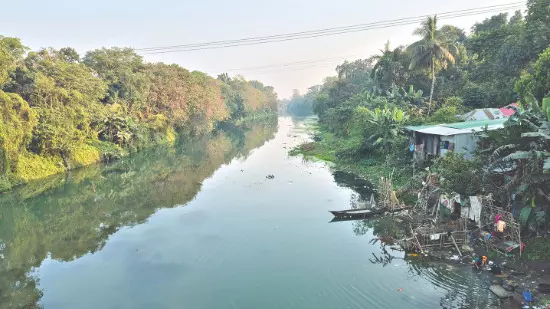


Jalpaiguri: In a significant move to tackle persistent flooding and waterlogging in Jalpaiguri town, the state Irrigation department has floated a tender for dredging the Karala River. The project will span a 15-kilometre stretch from the town limits to the river’s confluence with the Teesta and is slated to begin in February, with completion targeted within six months.
Irrigation minister Manas Bhuiya said the initiative aims to strengthen flood control and drainage systems without imposing any financial burden on the state exchequer. “The dredging of the Karala River will ensure proper water flow, prevent flooding, and generate government revenue at no cost,” the minister said.
Often described as the lifeline of Jalpaiguri, the Karala River carries household wastewater and rainwater runoff from the town. During the monsoon, several localities—including Samaj Para, Paresh Mitra Colony, Pabitra Para, Hospital Para, Dinbazar, Sen Para, and parts of Babu Para—frequently face inundation due to the river overflowing its banks. Officials noted that Paresh Mitra Colony was spared flooding last year after the embankment height was increased.
Over the years, silt accumulation has severely reduced the river’s carrying capacity, turning large stretches of the Karala into a stagnant drain during the dry season, with water levels dropping to knee-deep even in winter. Geographer Jatiswar Bharati welcomed the dredging move but stressed the need for long-term safeguards. “Dredging is necessary, but it must be accompanied by strict measures to prevent domestic waste, industrial effluents, pesticide-laden runoff from tea gardens, and plastic waste from entering the river,” he said.
According to departmental sources, dredging will be carried out from near National Highway 27 in front of the Engineering College, passing through Arvinda Gram Panchayat, Paharpur, Kharia, Mandalghat, and the Jalpaiguri municipal area, up to the Teesta–Karala confluence. Approximately 1,27,730 cubic metres of sand and silt will be removed. The minister clarified that a specialised agency selected through the tender process will execute the work and pay royalty to the government as per norms, ensuring zero expenditure by the state while significantly reducing flood risks in Jalpaiguri.