
Hundreds scramble for documents in bid to get listed in electoral rolls
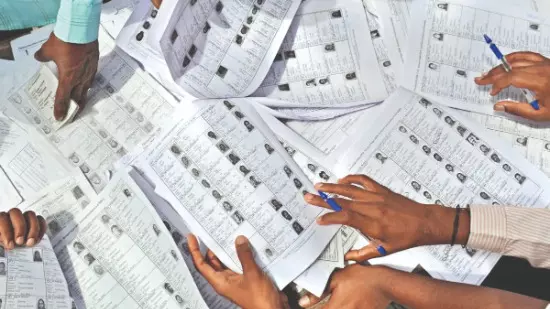


Malda: Hundreds of residents across several blocks in Malda district are running from office to office in a desperate bid to get their names registered in the revised electoral rolls, after the Election Commission identified them as having “missing links” in the 2002 Special Intensive Revision (SIR) voter list.
Despite possessing Aadhaar cards, ration cards, PAN cards and even existing voter IDs, many residents have been told these documents are insufficient. Instead, the Commission has asked for 11 specific documents to establish lineage and residence, including family certificates and government-recognised school certificates—documents many economically backward and displaced families never possessed or have long since lost.
In Manikchak Assembly constituency, the problem is most acute in Dharampur gram panchayat’s Barabagan area. According to local residents, nearly 800 voters from four booths were excluded from the 2002 SIR list. In the 2025 draft electoral roll, the total number of voters across four booths stood at 3,851, but a large section has now been flagged as “Missing Link.”
At Booth No. 183 alone, 117 voters have reportedly lost their linkage. “The root cause is the incomplete 2002 SIR list,” said Sheikh Safikul Islam, a resident of Barabagan. “Why should we suffer today for mistakes made over two decades ago?”
Villagers cited numerous anomalies. Former panchayat pradhan and schoolteacher Kalimuddin Ahmed’s name was missing from the 2002 list, while his daughter-in-law’s name appeared. In several households, wives were listed, but husbands were not; in others, children were included while parents were excluded. “Every adult in this village should have been on that list,” a resident at Kachari More said. “But no one is answering why we were left out.”
The issue has hit river erosion victims particularly hard. Mosharrekul Anwar, convenor of the Ganga Erosion Prevention Action Citizens’ Committee, said entire mouzas were lost to the Ganga well before 2002. “At least five mouzas in Manikchak block were washed away. People relocated long ago and voted without problem for years. Now, because of a flawed 2002 list, they are branded as ‘link missing’,” he said.
Similar cases have surfaced in Bangitola in Kaliachak-2 and Ratua-I block, where nearly 400 voters from a single booth have received notices to appear for hearings. Those flagged have been summoned with documents to hearings monitored by a Central government micro-observer, alongside panchayat supervisors and electoral officials. Each voter has three days to present proof. “If the observer is not satisfied, our names won’t appear in the final list,” said a worried resident. “After that, what will happen to our right to vote?”
As uncertainty looms, thousands of marginalised voters continue their frantic search for documents—and answers.



